
The History of the Albany Tulip Festival
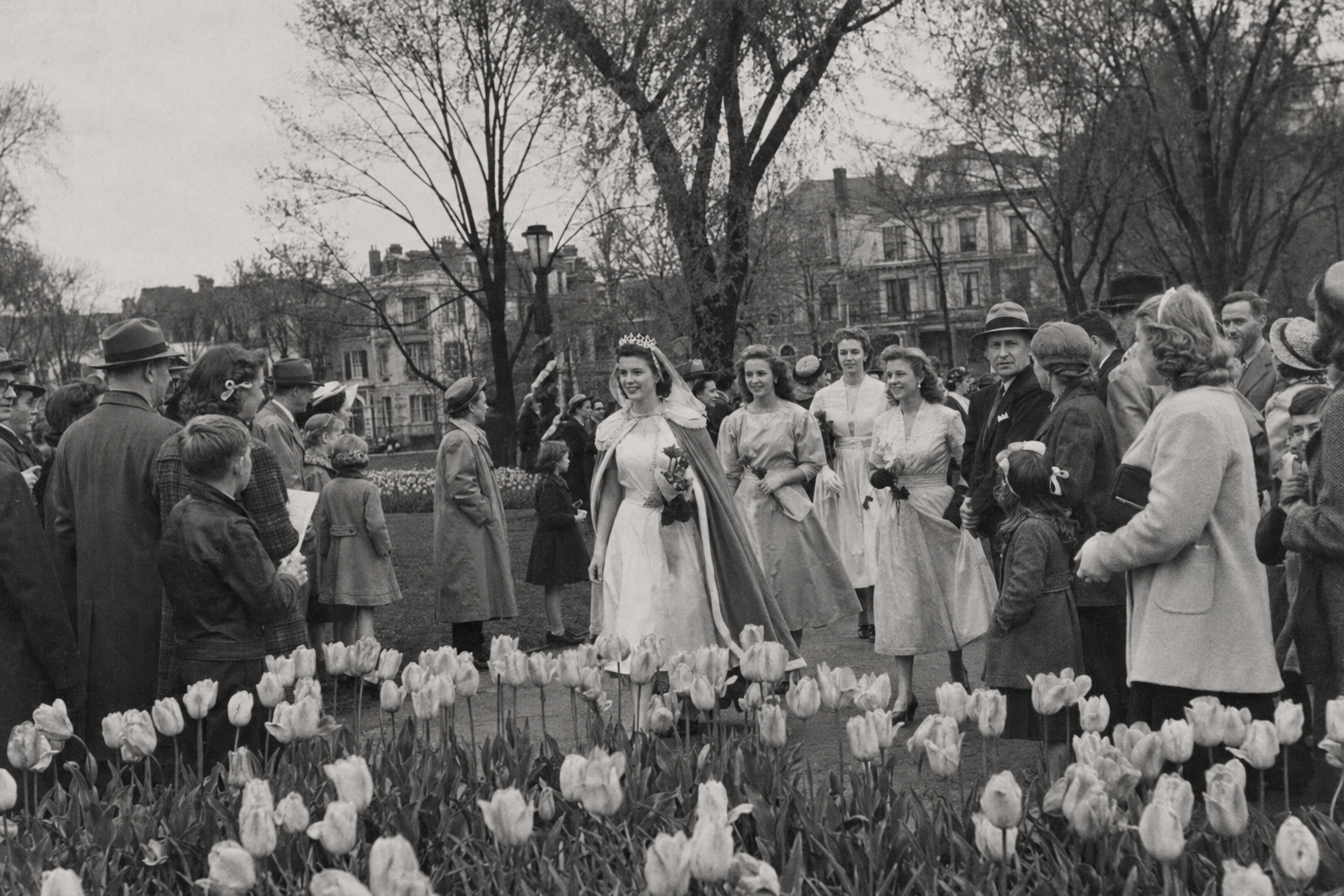
The first Albany Tulip Festival, May 1949. A Ball Club Register historical reconstruction.
How postwar friendship, Dutch heritage, and the Orange Wonder tulip created an Albany tradition
Each May, Washington Park becomes the center of Albany.
Tulips fill the beds along its winding paths. Crowds gather beneath the elms. State Street is scrubbed in preparation for the festivities, a Tulip Queen is crowned, and one of the oldest cities in the United States turns toward a tradition that now appears inseparable from its identity.
The Albany Tulip Festival is often described as a celebration of the city’s Dutch heritage. It is that, but its history is more specific and more consequential. The festival grew from a relationship formed after the destruction of the Second World War, when residents of Albany extended help to the people of Nijmegen in the Netherlands.
The tulips came later. Before them came food, clothing, building materials, books, medical supplies, and the determination of one city to help another recover.
The festival that followed transformed an act of postwar relief into an enduring civic tradition.
Albany’s Dutch inheritance
Albany’s association with the Netherlands began more than three centuries before the first Tulip Festival.
In 1624, the Dutch West India Company established Fort Orange near the western bank of the Hudson River. The trading post became one of the principal northern settlements of New Netherland and the foundation of the city that would eventually become Albany.
Although English control followed in 1664, traces of the Dutch period remained throughout the region. They survived in family names, architecture, religious congregations, legal traditions, foodways, and the language of the Hudson Valley. Even the city’s political and commercial character bore the influence of its early position as a meeting place between river commerce and the interior.
By the twentieth century, Albany’s Dutch origins had become an established part of its civic identity. Local historical societies preserved the record. Public ceremonies recalled the city’s earliest settlers. Dutch imagery appeared in commemorations and promotions.
The tulip, however, had not yet become Albany’s flower.
That connection would emerge from a much more recent chapter in the relationship between Albany and the Netherlands.
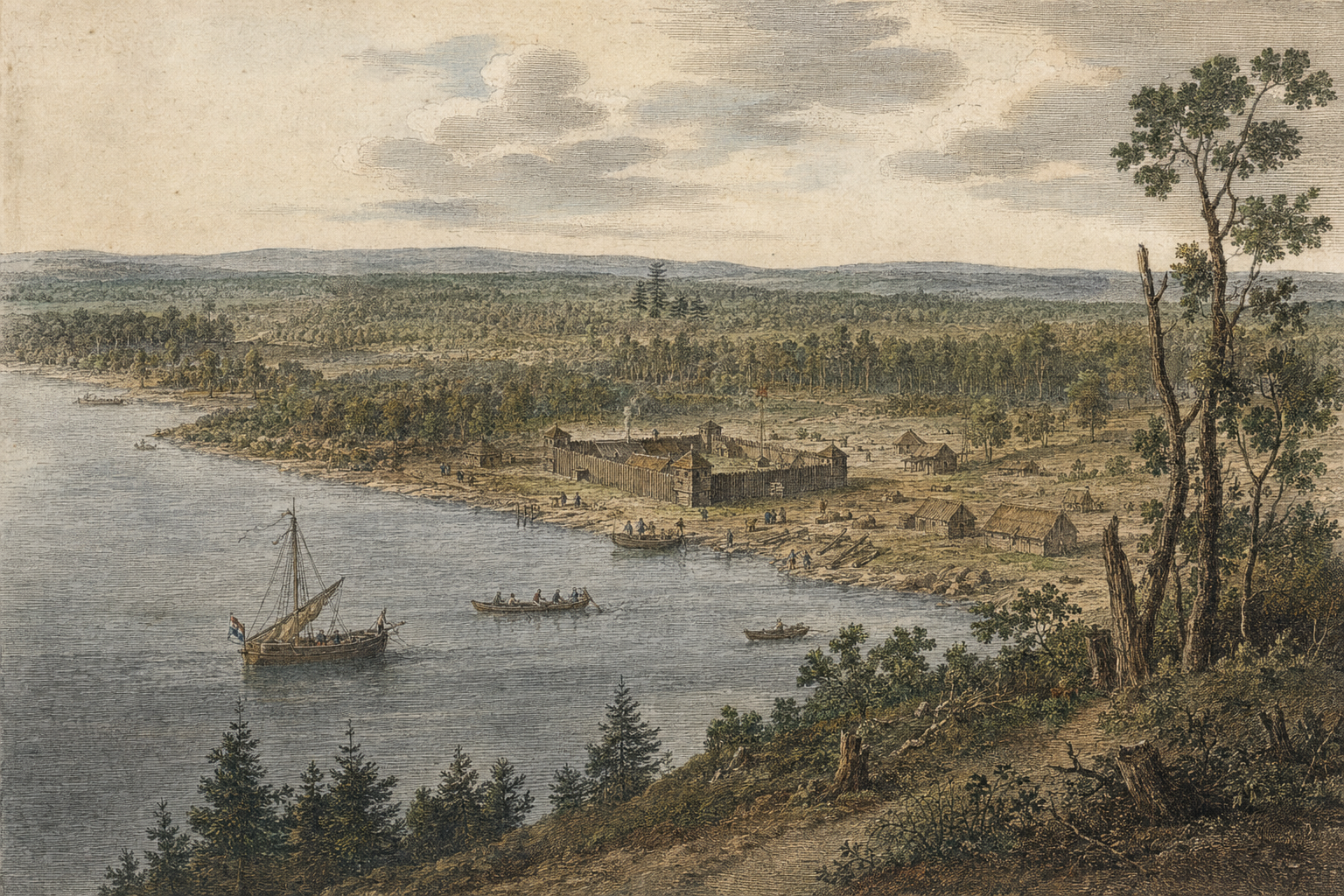
Fort Orange and the upper Hudson River during the early Dutch period. A Ball Club Register historical reconstruction.
Albany and Nijmegen after the war
Nijmegen stands near the eastern border of the Netherlands, not far from Germany. Its location placed the city directly in the path of the Second World War.
The city suffered devastating wartime destruction. Its center was heavily damaged, homes and public buildings were lost, and the population entered the postwar period facing the immense work of recovery.
Albany responded.
Residents organized relief for Nijmegen and collected materials the Dutch city urgently needed. Food, clothing, medical goods, office supplies, building materials, and other necessities crossed the Atlantic. Educational institutions also participated in the effort. Books collected in the Albany area helped restore the damaged library of the Catholic University of Nijmegen.
The exchange joined two cities that were separated by an ocean but connected by history. Albany had begun as a Dutch settlement. Nijmegen was a Dutch city rebuilding after occupation and war. The relationship gave Albany’s inherited Dutch identity a new and immediate meaning.
It was no longer concerned only with seventeenth-century settlement. It had become a living relationship between communities.
In gratitude, tulip bulbs were sent from the Netherlands to Albany. The flowers provided a natural symbol for what had taken place: something carried across the Atlantic, planted in damaged ground, and expected to return with the spring.
The bulbs were planted in Albany, including in Washington Park, where they would help establish the setting for the city’s new celebration.
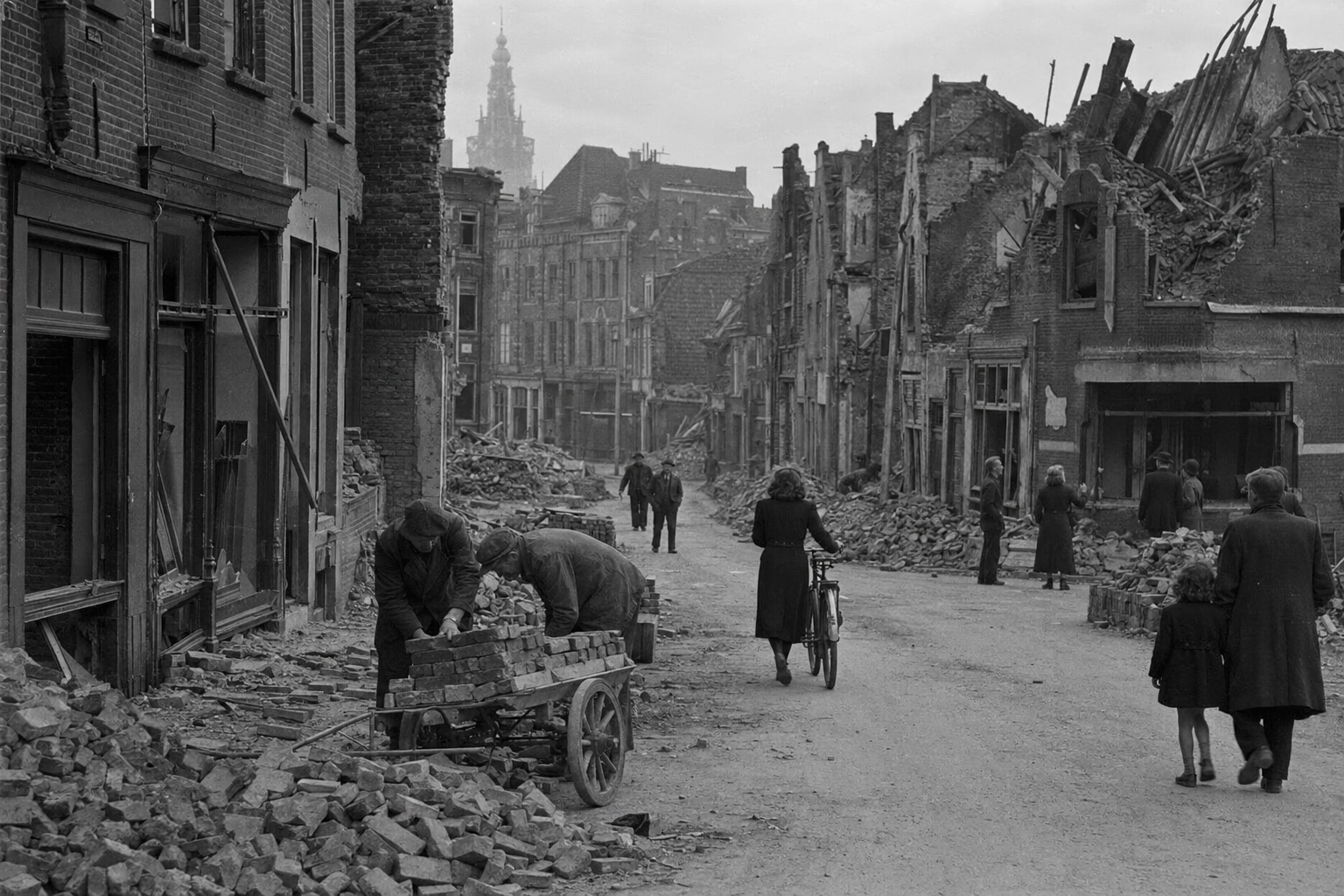
Nijmegen began the work of recovery amid the destruction left by the Second World War. A Ball Club Register historical reconstruction.
The Orange Wonder
In 1948, Mayor Erastus Corning 2nd and the Albany Common Council moved to make the tulip the city’s official flower.
Corning then asked Queen Wilhelmina of the Netherlands to select a particular variety as Albany’s official tulip. Her choice was the Orange Wonder, an orange flower shaded toward scarlet.
The name suited Albany unusually well.
Orange connected the flower to the Netherlands and the House of Orange. Wonder gave it a sense of occasion. Its coloring was warm, conspicuous, and distinct enough to become a civic emblem. The selection also gave Albany something more particular than the tulip alone. Other cities could plant the flower, but the Orange Wonder belonged to Albany’s version of the story.
The designation transformed the tulip from a general reference to the city’s Dutch past into a symbol of its postwar relationship with Nijmegen. It joined several periods of Albany history in a single flower: the Dutch settlement on the Hudson, the relief effort following the Second World War, and the modern city’s search for a public tradition of its own.
Washington Park became the principal stage on which that tradition would appear.
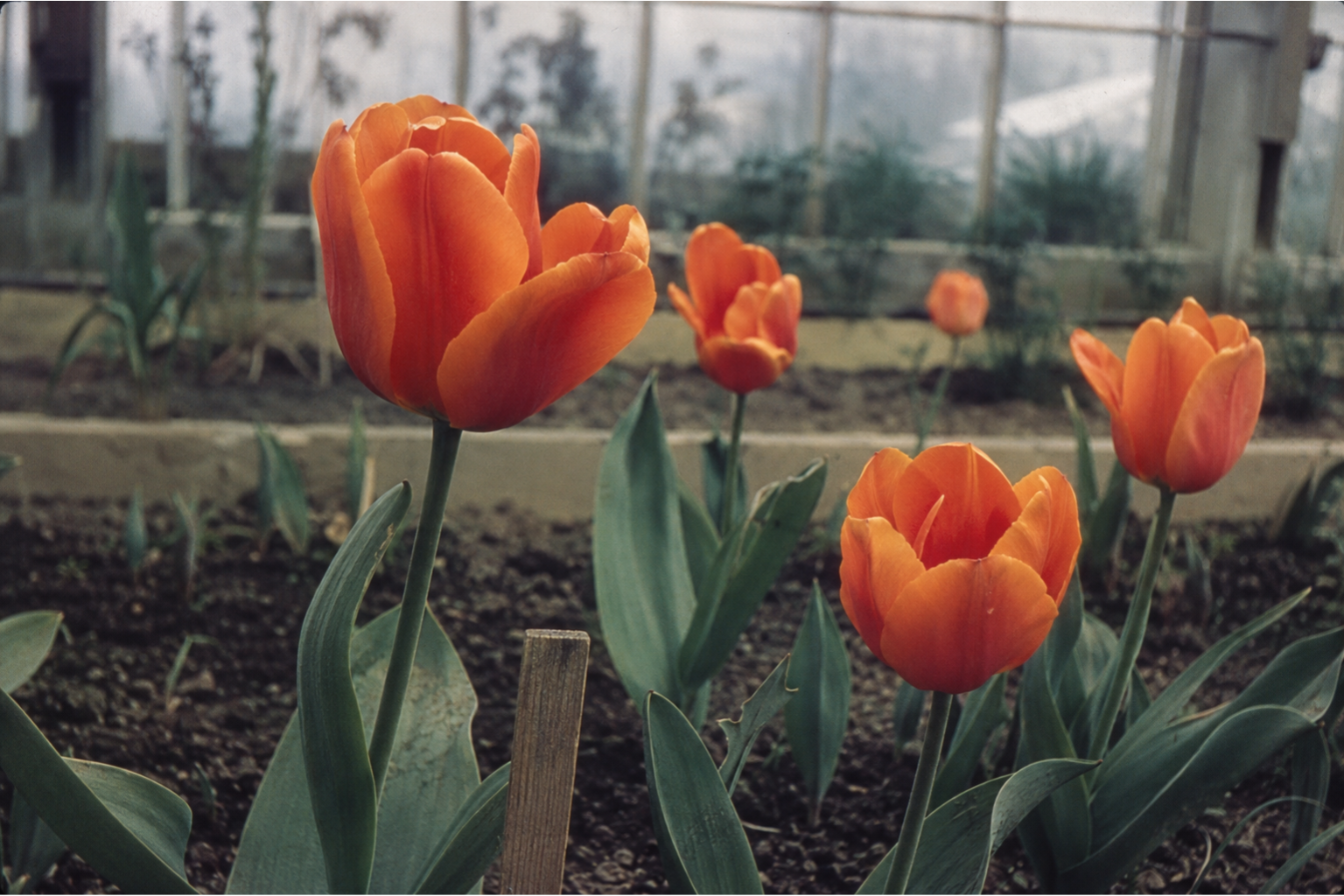
Orange Wonder tulips, the bronzy orange and scarlet-shaded variety selected for Albany in 1948. A Ball Club Register historical reconstruction.
The first Albany Tulip Festival
Mayor Corning opened Albany’s first Tulip Festival on May 14, 1949.
The original celebration extended beyond the boundaries of Washington Park. Organizers encouraged residents to plant tulips at their homes, while public beds brought the flowers into prominent locations around the city. The intention was not simply to hold an event beside a collection of blooms. Albany itself was to become a tulip city.
Many of the ceremonies now associated with the festival were present at its beginning.
State Street was ceremonially scrubbed in preparation for the celebration, following a custom associated with Dutch festivities. A royal court was selected. Jeanne Coakley, a twenty-year-old employee of Associated Hospital Service, became Albany’s first Tulip Queen. Kenneth Irish, a student at Philip Schuyler High School, was crowned Tulip King.
Their crowns were designed by Albany artist Hajo Christoph and made by George Righthand of Metal Arts Craft. A Tulip Ball accompanied the coronation, giving the new festival both a public celebration and a formal civic occasion.
The first festival did more than commemorate a gift of flowers. It established a complete visual and ceremonial language for Albany’s spring.
There were tulips, Dutch dress, a cleaned ceremonial street, a proclamation, a royal court, music, and public gathering. Together, these elements made the festival feel less like a newly invented promotion and more like a tradition the city had recovered.
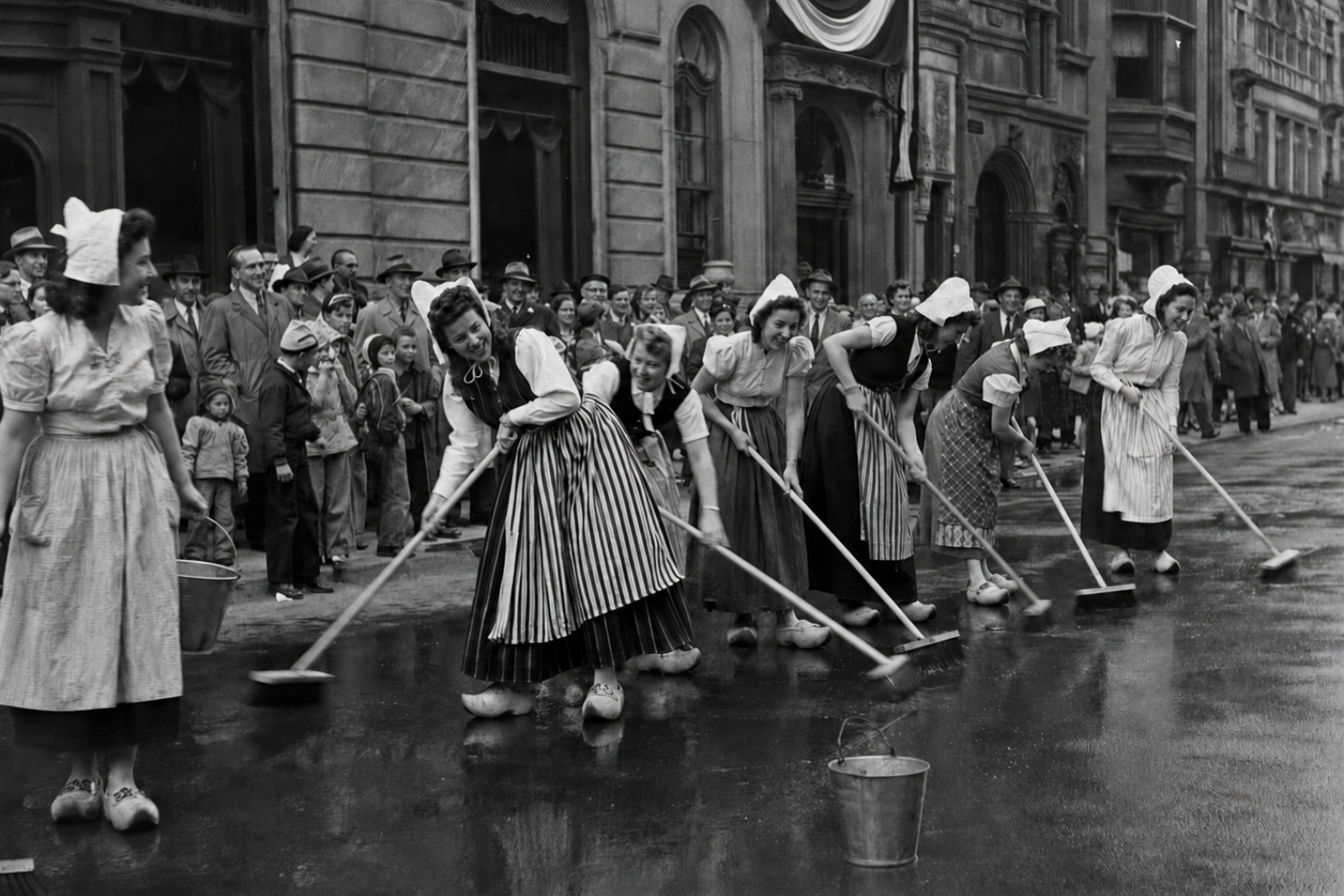
The ceremonial scrubbing of State Street became part of Albany’s Tulip Festival from its first celebration in 1949. A Ball Club Register historical reconstruction.
Washington Park in bloom
Washington Park gave the festival an environment equal to its ambitions.
The park’s curving paths, open lawns, lake, mature trees, and formal flower beds allowed the tulips to be encountered gradually. They could appear in broad bands of color, small arrangements, and concentrated beds framed by the park’s nineteenth-century landscape.
Over time, the annual planting became an attraction in its own right. City gardeners arranged immense displays composed of numerous varieties, colors, heights, and blooming periods. The work began long before the festival weekend, with bulbs planted in the fall and tended through the uncertain spring weather of upstate New York.
The timing could never be controlled completely. A warm spring might bring an early bloom. Cold weather could hold the flowers back. Heavy rain might alter the weekend. The condition of the tulips became part of the annual conversation, another way in which the city measured the arrival of spring.
Washington Park remained the festival’s center, but the meaning of the celebration continued to extend beyond its flower beds. The festival belonged to the city as much as it belonged to the park.
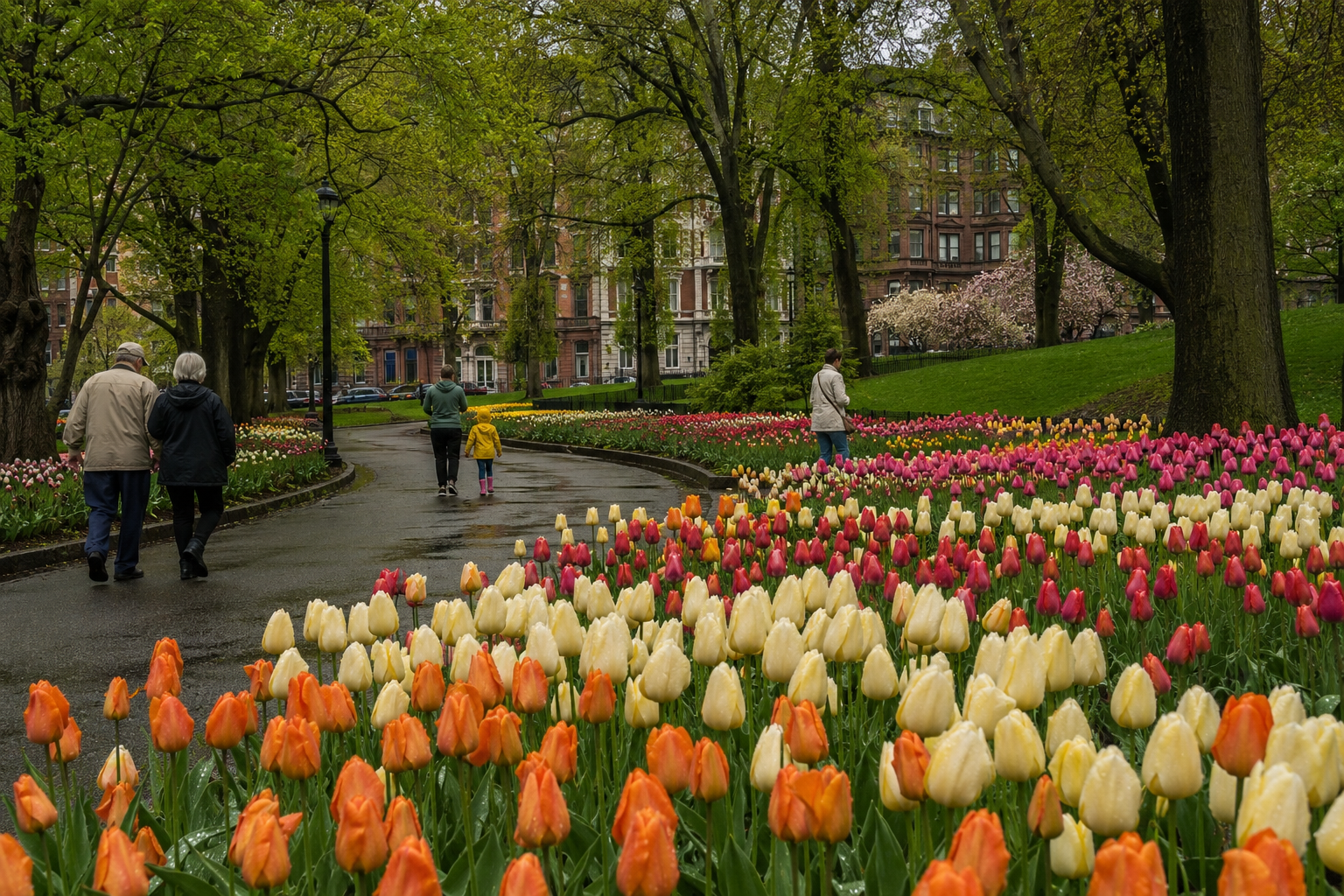
Tulips in bloom along the paths of Washington Park, the enduring center of Albany’s annual spring tradition.
The traditions that remained
The Albany Tulip Festival changed as the city changed.
The Tulip King disappeared from the royal court, while the role of the Tulip Queen developed into one centered on community leadership and service. The Tulip Court became active beyond the festival weekend, participating in literacy initiatives and other civic programs.
Music, food, art, vendors, family activities, and additional ceremonies expanded the event. The festival became both a historical commemoration and one of the largest annual public gatherings in the Capital Region.
Yet the central traditions remained recognizable.
The streets are still scrubbed before the celebration. A Tulip Queen is still crowned. Washington Park is still planted with tulips each year. The festival is still held in May, when the condition of the flowers and the uncertainty of the weather make the arrival of spring feel earned.
Most importantly, the connection to Nijmegen has not disappeared.
The festival continues to recall the moment when Albany’s Dutch inheritance became something more than ancestry. Through the postwar relief effort, it became an obligation between cities. The flowers represented gratitude, renewal, and the possibility of beginning again after ruin.
Why Albany celebrates the tulip
Albany celebrates the tulip because the flower holds several histories at once.
It recalls the Dutch settlement that became the city. It represents the relationship between Albany and Nijmegen after the Second World War. It honors the relief sent by Albany residents and the gratitude returned from the Netherlands. It marks the arrival of spring in Washington Park. It also gives Albany a civic symbol unlike that of any other American city.
The Orange Wonder stands at the center of those histories.
Its selection in 1948 gave Albany more than an official flower. It provided the city with a name, a color, and an image through which its past could be reorganized. What began with postwar assistance became a festival. What began with imported bulbs became a local tradition.
Every May, the city plants the story again.
Baseball in the Tulip City
In the records of The Ball Club Register, the Albany Orange Wonders grew from this same historical moment.
The club’s identity was shaped by the relationship between Albany and Nijmegen, the selection of the Orange Wonder, and the citywide enthusiasm surrounding the first Tulip Festival. Its name did not refer simply to a flower. It represented the new civic identity Albany was constructing during the late 1940s.
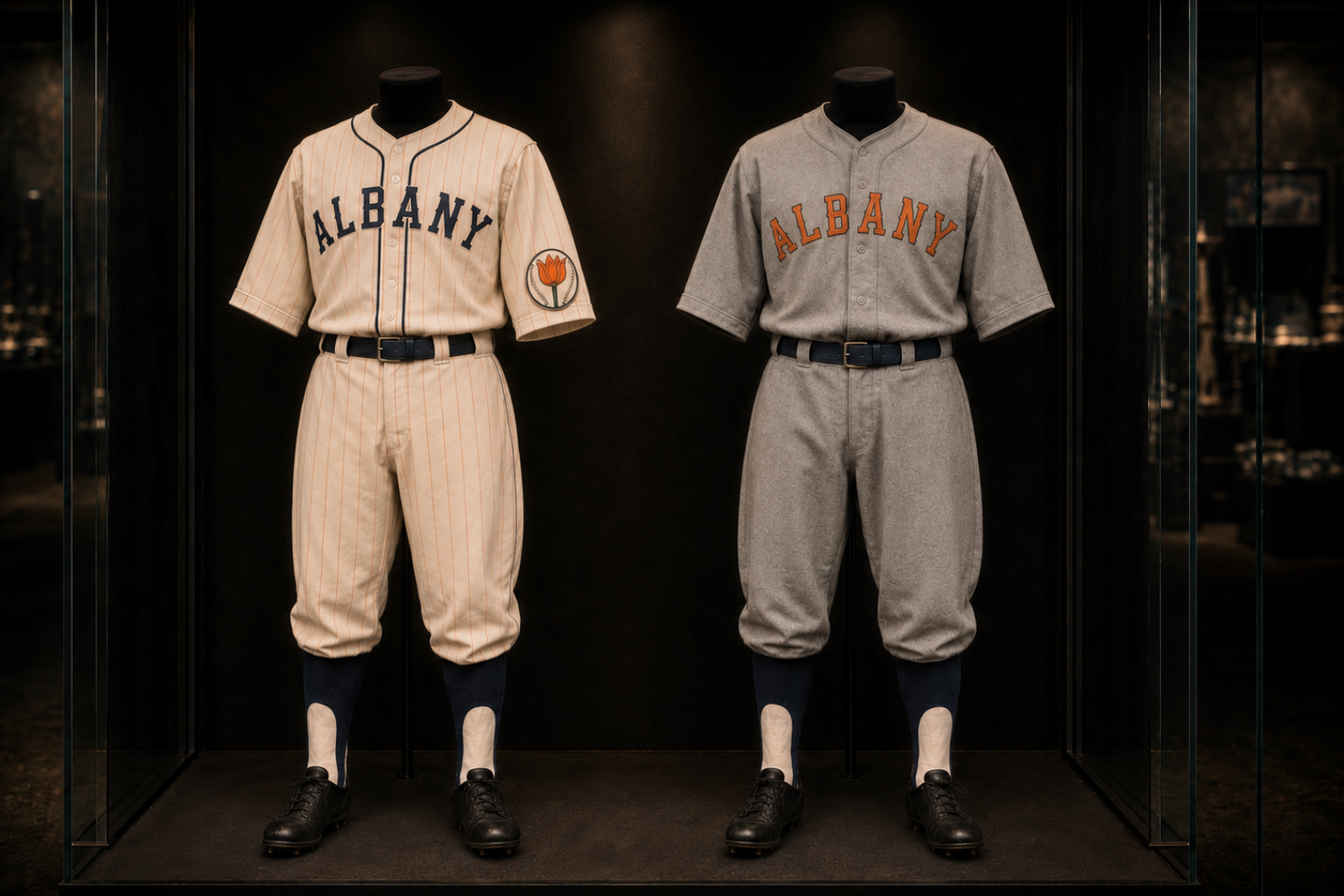
The Orange Wonders wore Dutch navy, cream, and orange. A tulip rose from the club’s block A. Their uniforms carried an emblem joining a tulip bloom to a stitched baseball. In June 1949, shortly after Albany’s first Tulip Festival, the club crossed the Atlantic for a three-game tour of the Netherlands.
The itinerary followed the history that had produced the team: Rotterdam, Haarlem, and finally Nijmegen.
There, baseball became another form of exchange. It carried Albany’s colors back across the Atlantic and extended the relationship between the two cities into the public language of a ball game.
The Albany Orange Wonders are an original ball club of The Ball Club Register, developed from the documented history of Albany, Nijmegen, and the Tulip Festival.
Sources and further reading
