
PERMANENT COLLECTION · GALLERY 001
Saratoga Springs Fascinators
After the Final Race
Saratoga Springs, New York · 1928–1942
Independent Collegiate Resort Club
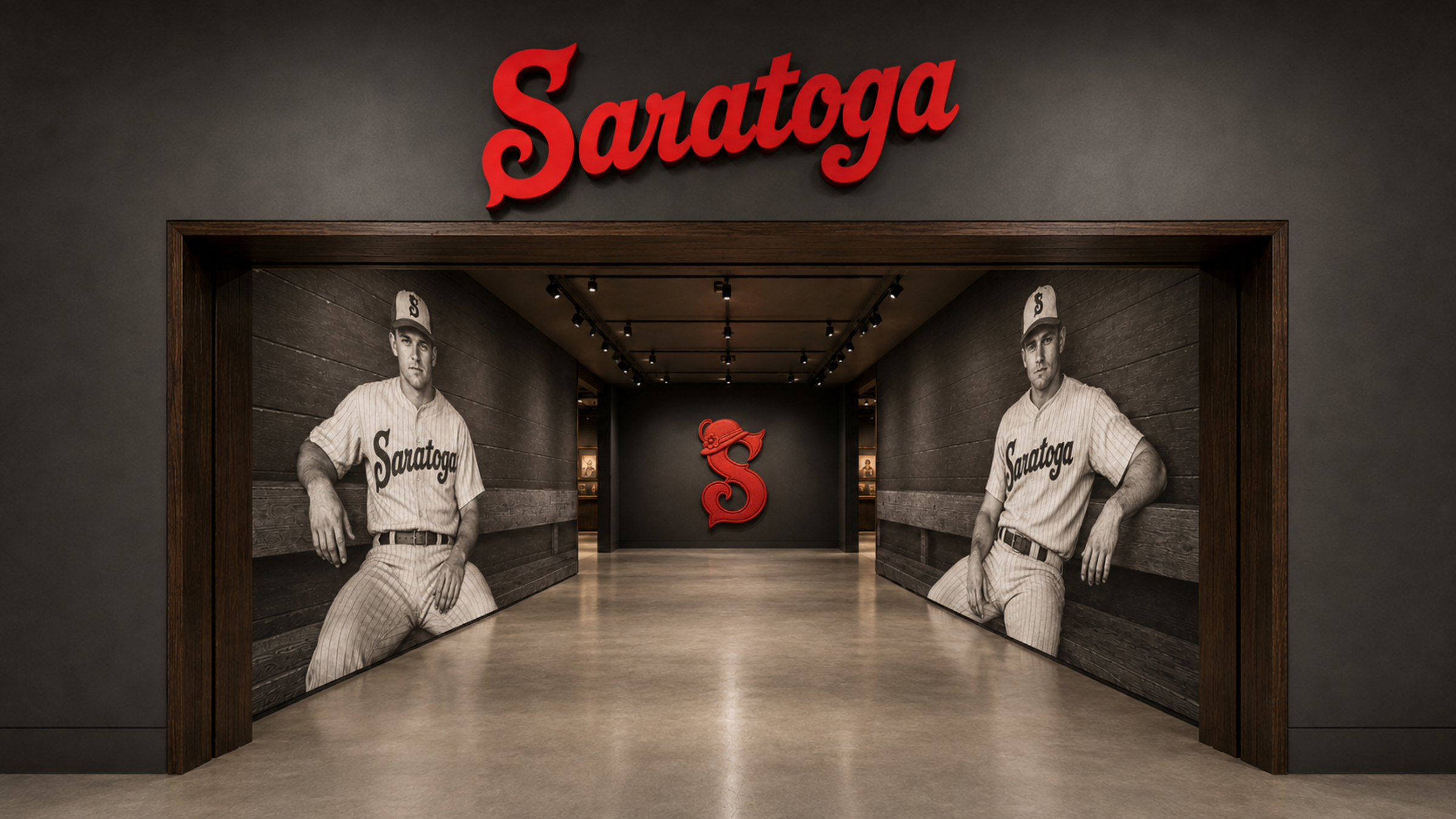
For thirteen summers, a ballpark called The Hatbox opened its gates as the Saratoga Race Course closed for the day. Inside, two squads wearing the same cap played in the fading light while supper was served above the field.
The Saratoga Springs Fascinators belonged to no league and played no outside opponents. Their schedule followed the horses, their Red and White squads were reassembled each evening and their ballpark operated with the studied hospitality of a resort hotel.
Drawn from photographs, records and surviving objects, this exhibition preserves the club and the particular hour of Saratoga life it occupied: the interval between the final race and nightfall.
| Name | Saratoga Springs Fascinators Baseball Club |
|---|---|
| Established | 1928 |
| Years Active | 1928–1942 |
| Classification | Independent collegiate summer club |
| Club Type | Resort club |
| Home Park | The Hatbox, 1928–1940 |
| Playing Format | Two nightly squads under one club name |
| Squads | White and Red |
| First Pitch | Fifteen minutes after final post |
| Club Colors | Saratoga red and white |
| Motto | After the last race, first pitch. |
I · ORIGINS
The Hour After Racing
Saratoga’s summer day belonged to the Race Course. The horses worked in the morning. The grandstand filled in the afternoon. By the time the final race had been run, thousands of visitors were moving back toward the hotels, boardinghouses and restaurants with several hours of daylight remaining.
The city had no shortage of places to dine, socialize or wager. What it lacked was a place where that procession could continue without requiring racegoers to change clothes or surrender the mood of the afternoon.
Julian P. “Jules” Devereux was a Saratoga hotel man who understood that the town’s most valuable commodity was not lodging, mineral water or even racing. It was momentum. Saratoga worked best when one attraction carried naturally into the next.
In 1928, he proposed an evening ball club whose schedule would be set by the Race Course. First pitch would be announced not at a fixed hour, but fifteen minutes after the final post.
Devereux had little interest in operating an ordinary independent club. A conventional team required outside opponents, reciprocal travel dates and long stretches when the ballpark stood empty. None of that suited a resort town whose population swelled for a few intense summer weeks.
Instead, he recruited enough college players to form two complete squads and placed both under the same name.
Every player was a Fascinator.
One squad wore white flannel with red pinstripes. The other wore solid Saratoga red. Players moved freely between them. A pitcher who wore White on Tuesday might start at third base wearing Red on Thursday. A shortstop could be reassigned overnight to strengthen an infield. Rosters were posted each afternoon after the club manager had considered the available pitchers, minor injuries and the previous evening’s result.
There were no league standings to follow. The attraction was the club itself.
The Fascinators were created for the hours between the final race and nightfall.
-
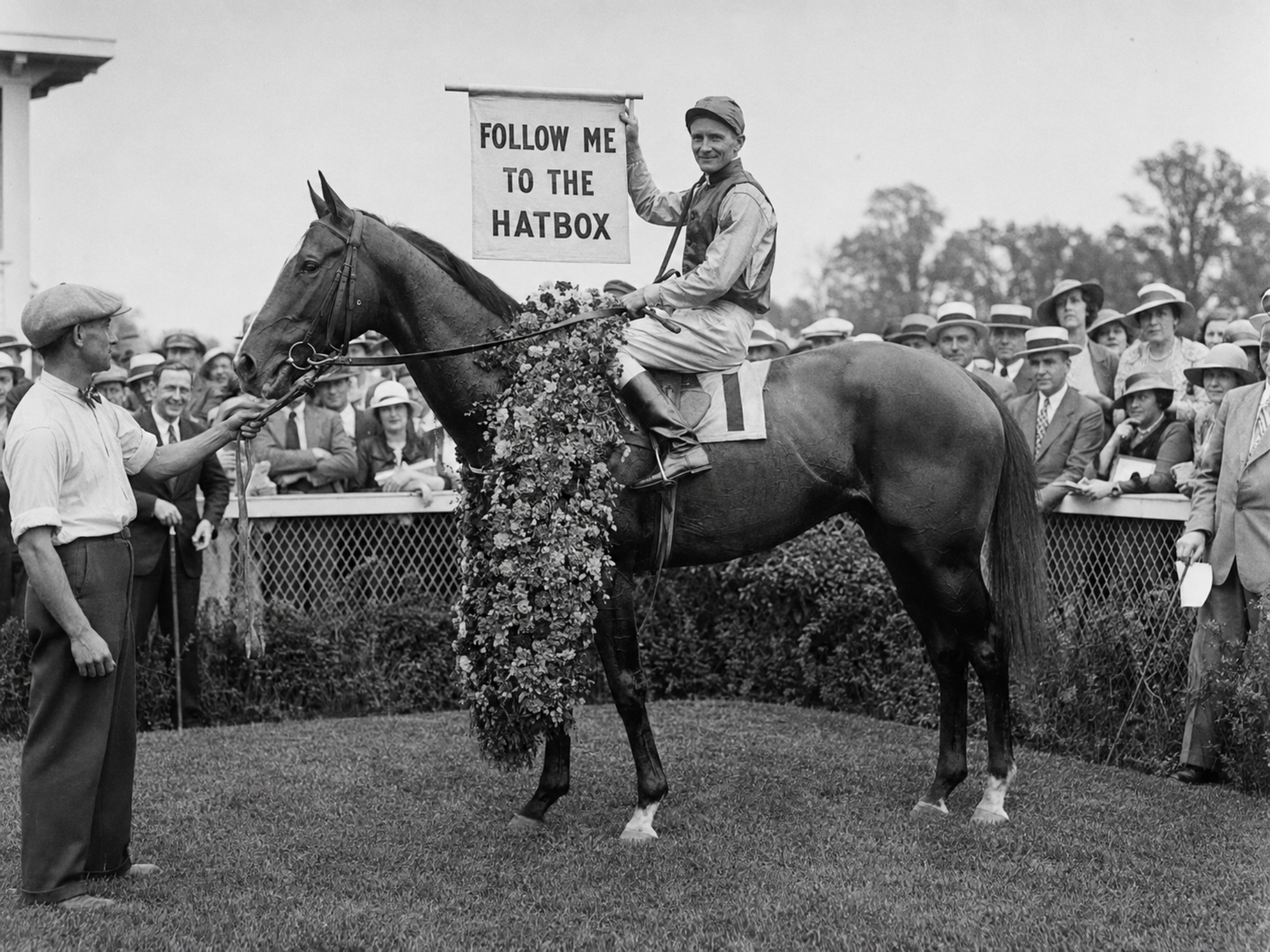
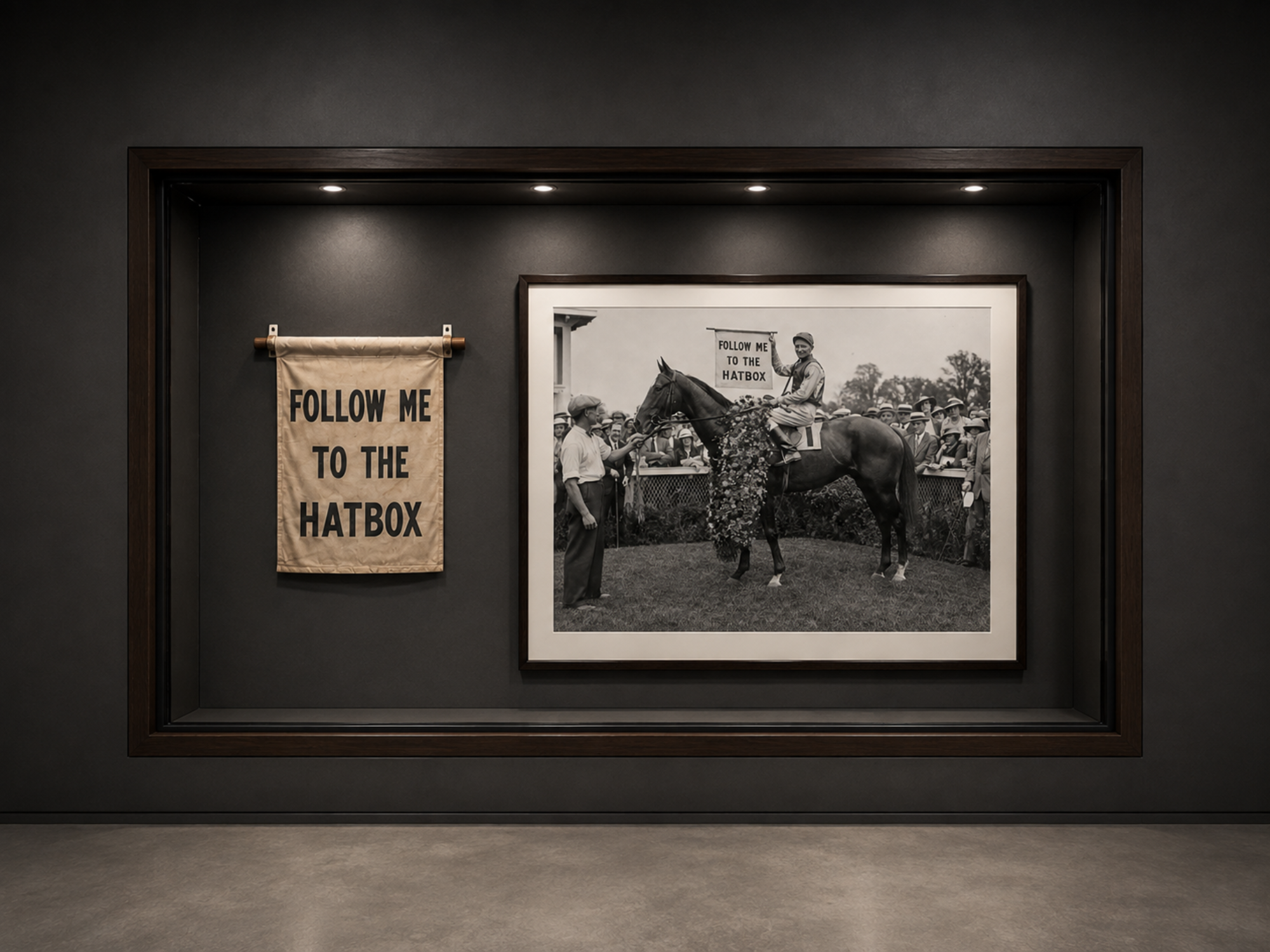
![A jockey aboard a winning horse holds a “Follow Me to The Hatbox” banner in the winner’s circle at Saratoga Race Course.]()
Winner’s Circle Promotion
Historical Photograph · c. 1930s
A victorious jockey raises a “Follow Me to The Hatbox” banner while the winning horse wears its floral winner’s garland. The promotion directed racegoers toward the evening’s next attraction as soon as the afternoon card had ended.
-
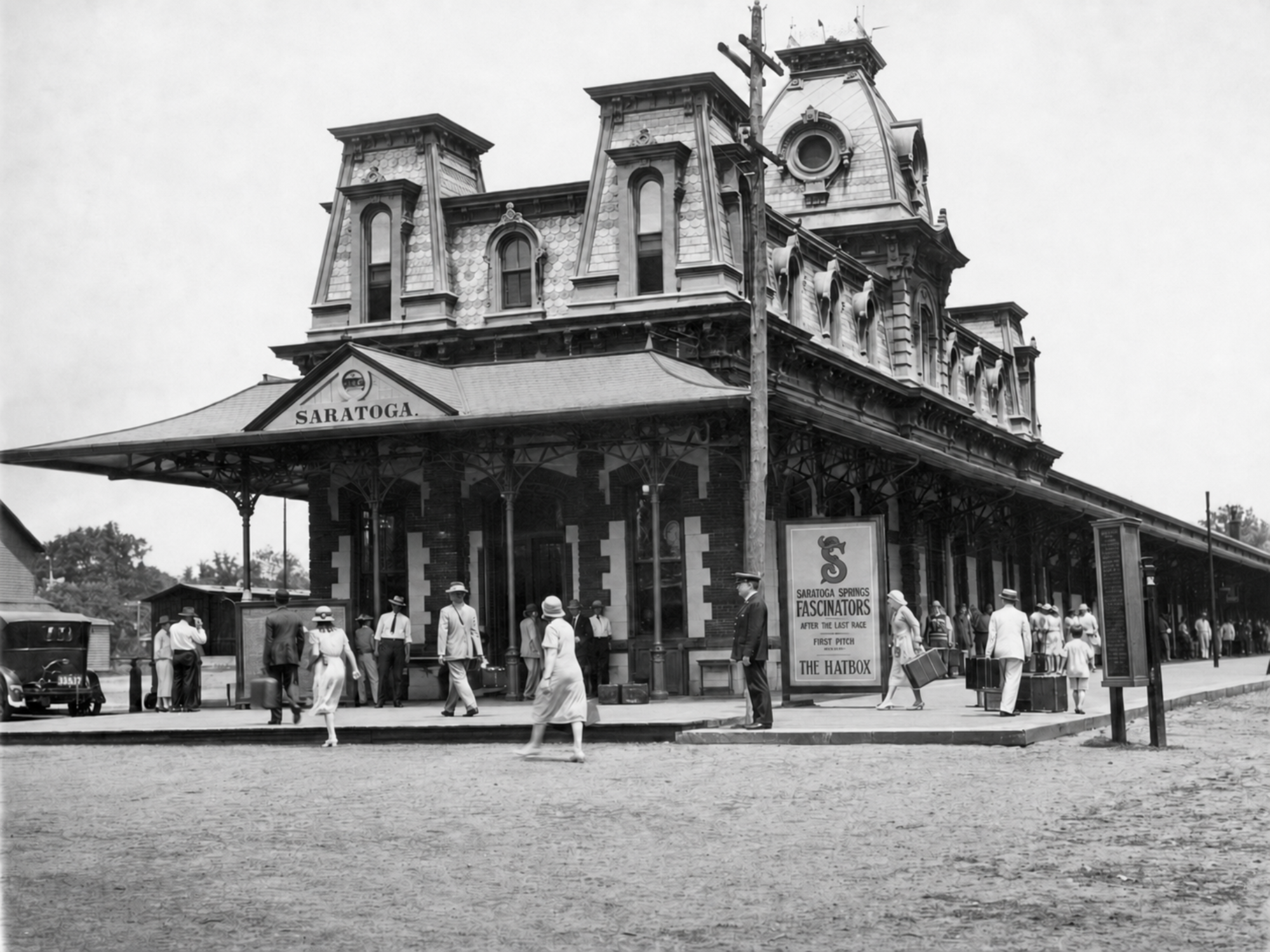
![Travelers outside the Saratoga Springs train station pass a painted notice promoting the Fascinators and The Hatbox.]()
Fascinators Station Notice
Historical Photograph · c. 1930s
A painted notice outside the Saratoga Springs station directs arriving visitors to The Hatbox after the final race. Its placement introduced the Fascinators as part of the city’s summer routine before many guests had reached their hotels.
-
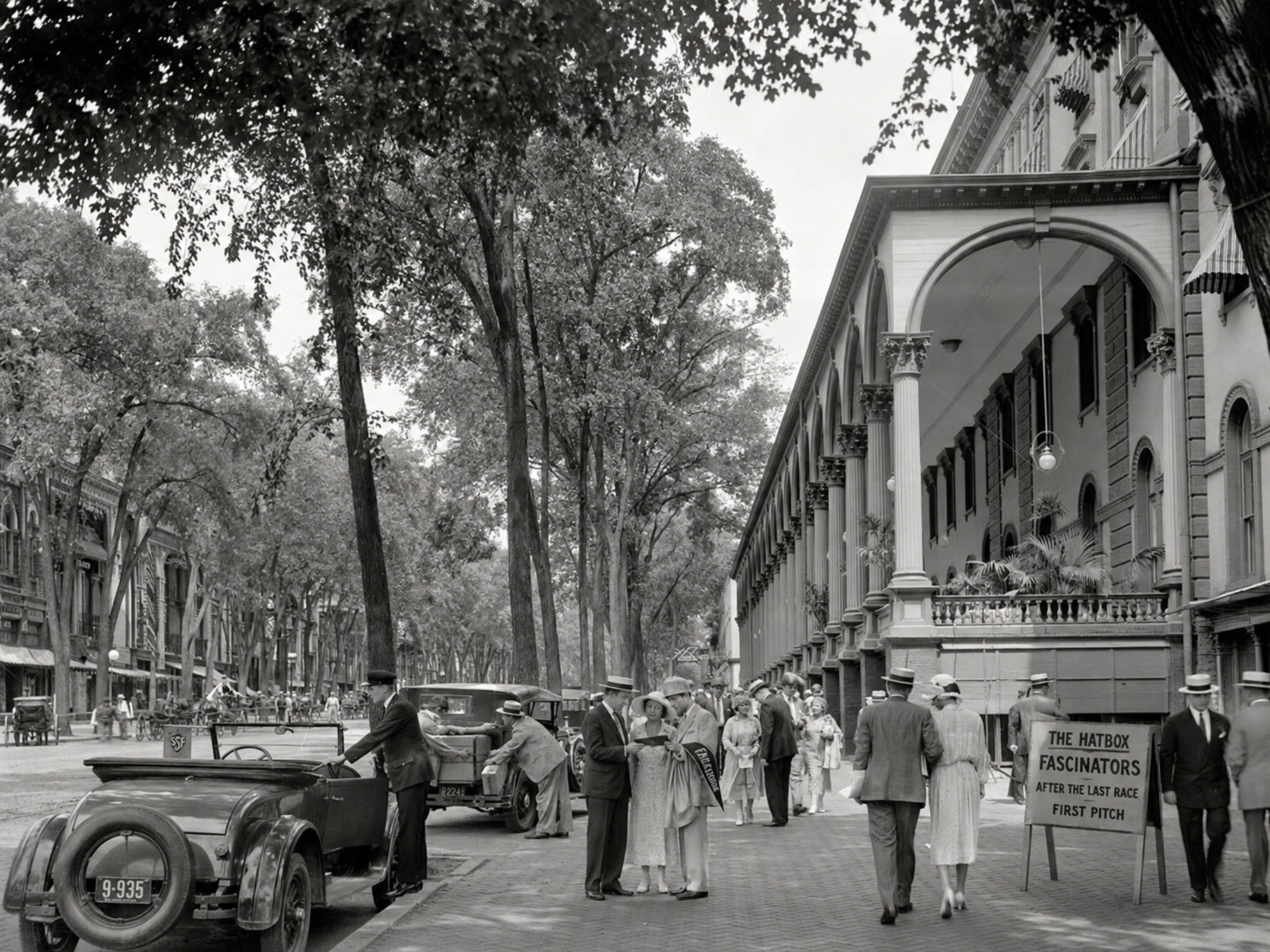
![Pedestrians outside the Grand Union Hotel pass a sidewalk placard advertising a Fascinators game after the final race.]()
Grand Union Hotel Promotion
Historical Photograph · c. 1930s
A sidewalk placard outside the Grand Union Hotel directs summer guests to The Hatbox following the afternoon racing card. Positioned along the Broadway frontage, it placed the Fascinators within the daily life of Saratoga’s resort hotels.
-
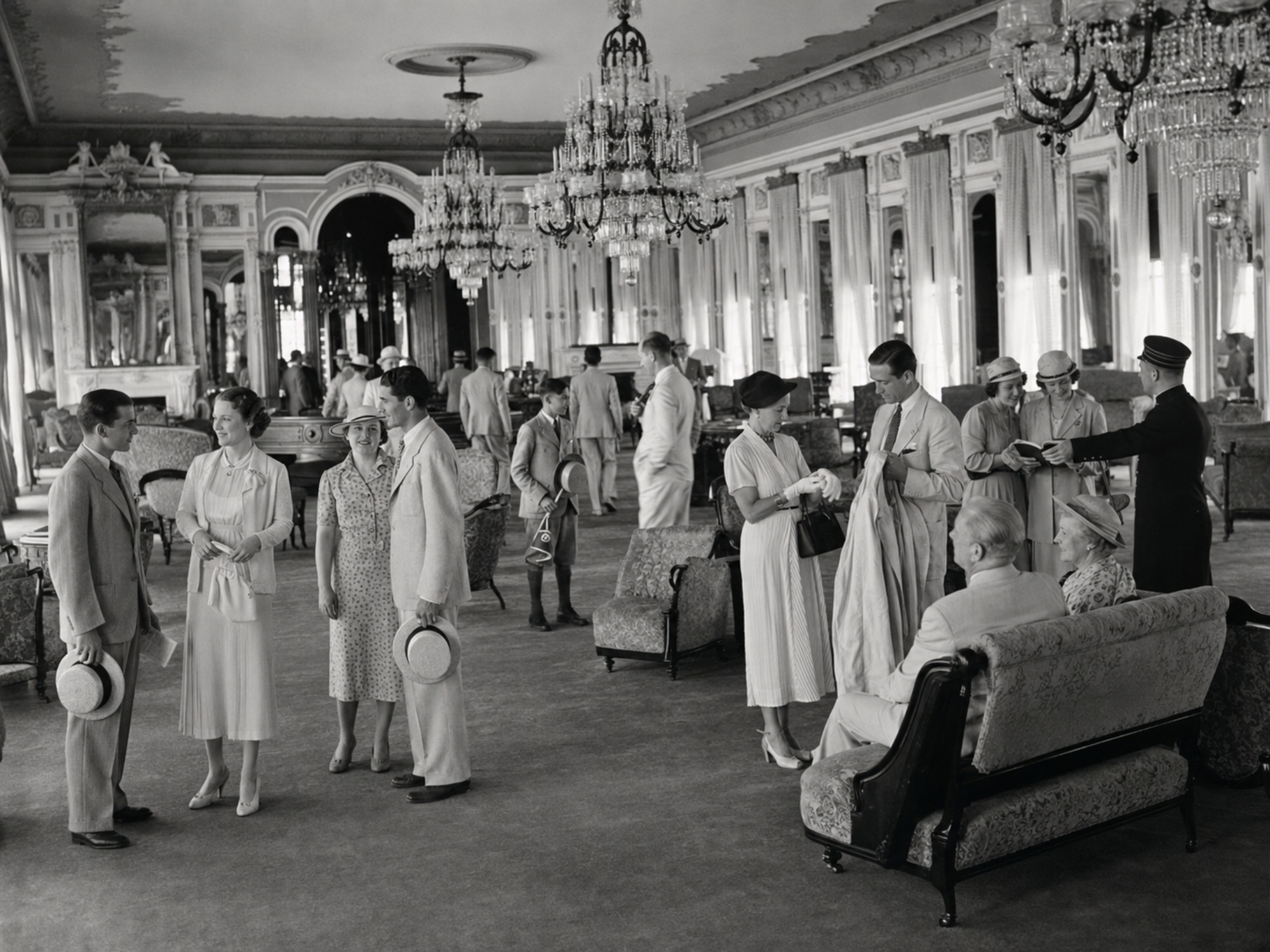
![Guests carrying Fascinators programs prepare to leave the Grand Union Hotel for an evening game at The Hatbox.]()
Guests Departing for The Hatbox
Historical Photograph · c. 1930s
The lobby of the Grand Union Hotel as guests prepare to depart for The Hatbox. The club extended Saratoga’s social day naturally beyond the races and hotel parlors.
-
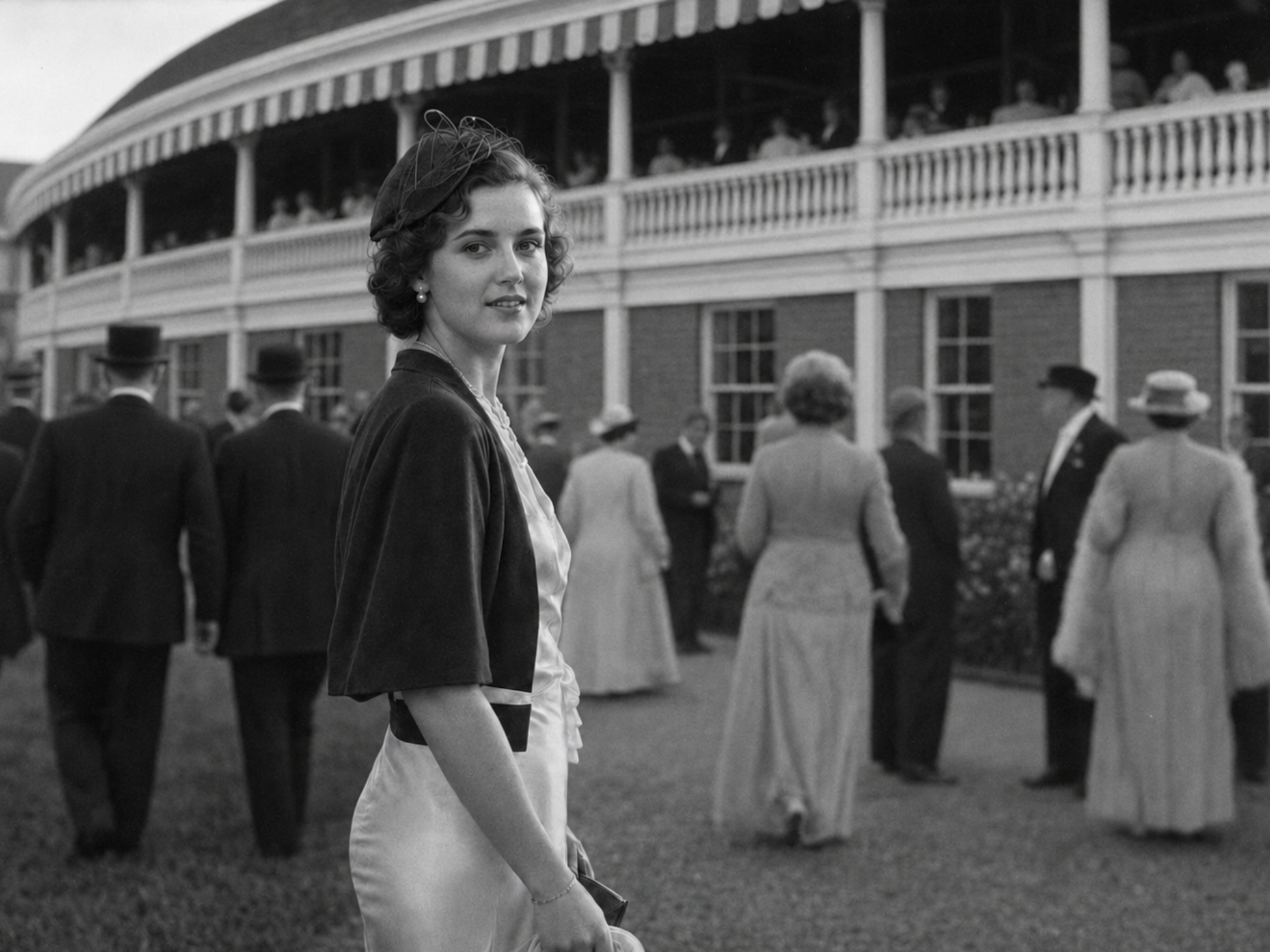
![An elegantly dressed young woman stands outside The Hatbox before a Saratoga Springs Fascinators game.]()
Portrait of a Fascinators Patron
Historical Photograph · c. 1930s
A young patron poses outside The Hatbox before first pitch, still dressed for an afternoon at the Race Course. Behind her, the brick lower level and open dining gallery reflect The Hatbox’s balance of Saratoga refinement and neighborhood baseball.
-
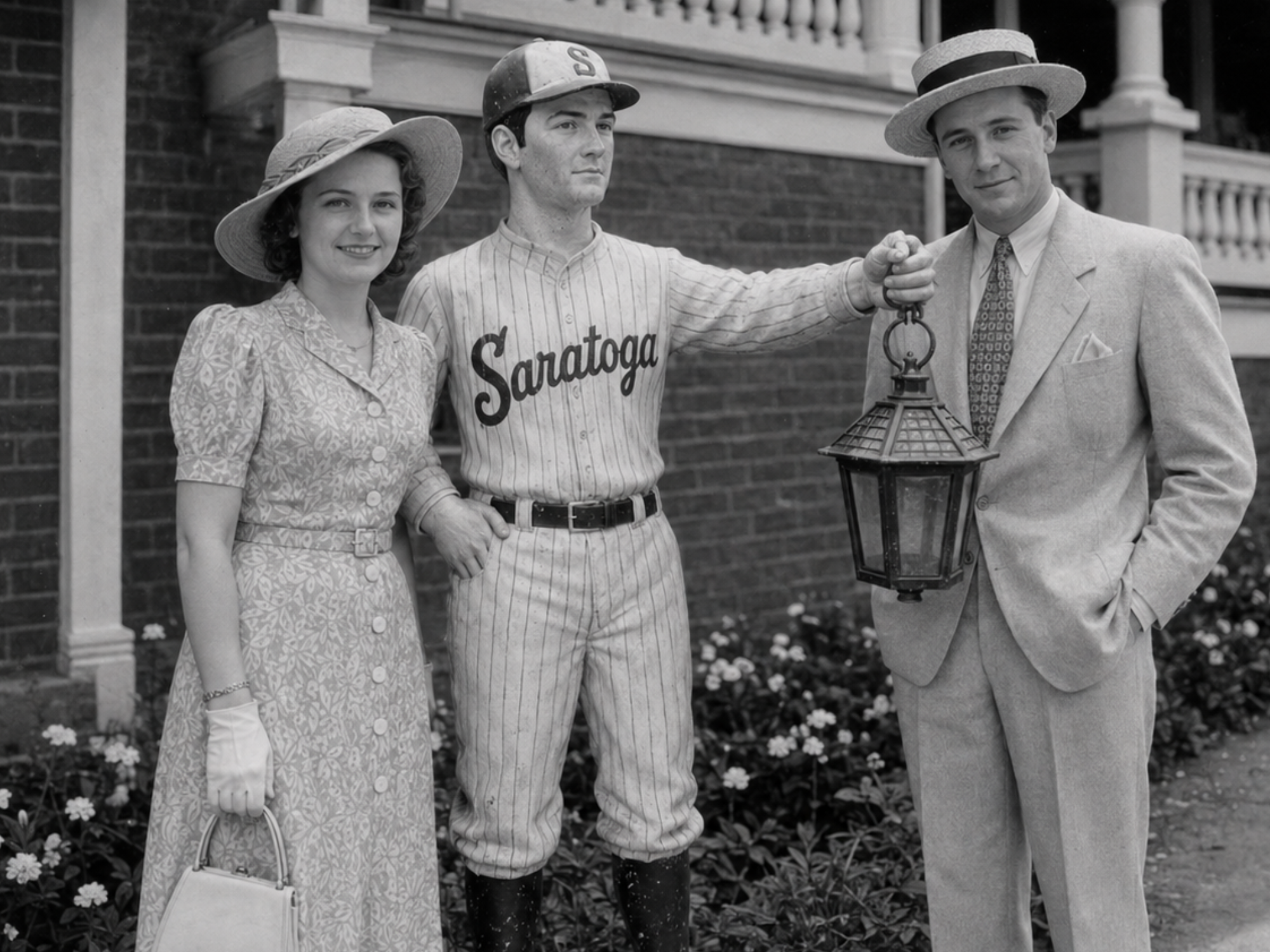
![Two well-dressed Saratoga patrons pose beside uniformed lawn-jockey lantern figures outside The Hatbox.]()
Patrons Among the Lawn Jockeys
Historical Photograph · c. 1930s
Two patrons pause beside the uniformed lantern figures before entering The Hatbox. Portraits such as this placed the Fascinators within Saratoga’s social season, where an evening at the ballpark followed naturally after the races.
-
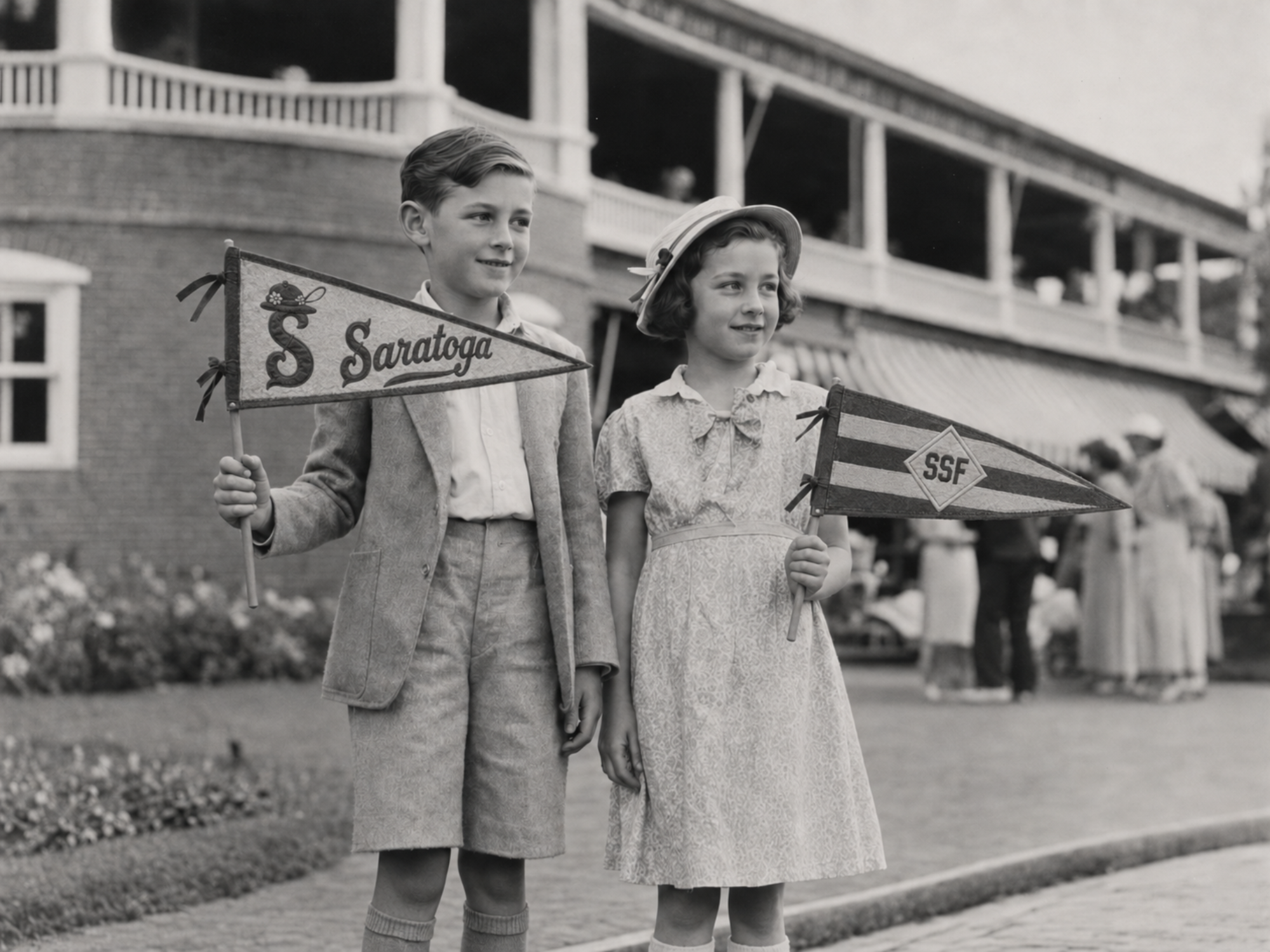
![Two children hold Saratoga Springs Fascinators souvenir pennants outside The Hatbox.]()
Young Fascinators Supporters
Historical Photograph · c. 1930s
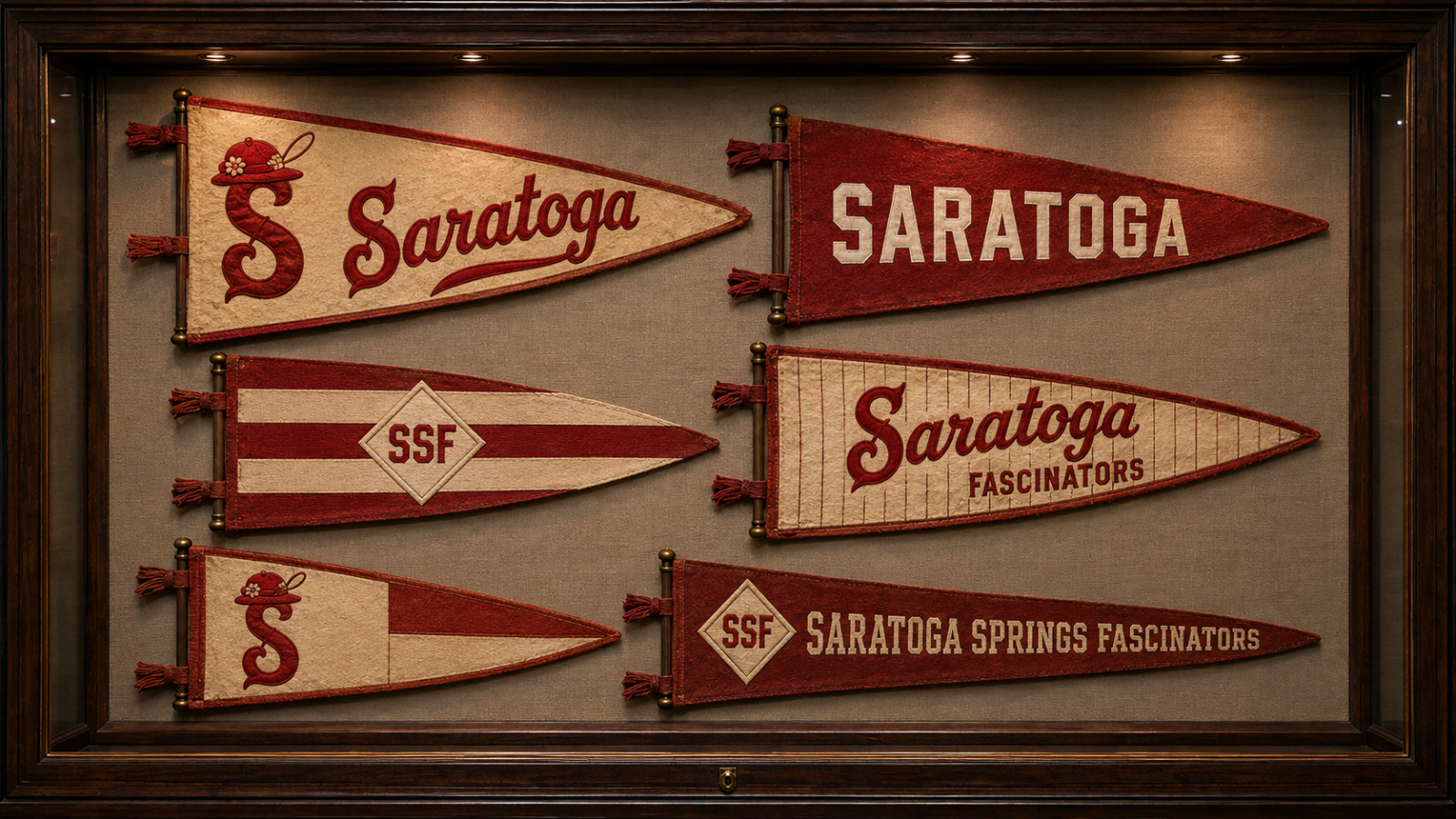
Two children display felt souvenir pennants before entering The Hatbox. The script Saratoga design and striped SSF diamond gave younger supporters inexpensive keepsakes from a summer evening at the park.
II · THE PLAYING SYSTEM
Two Squads, One Institution
White and Red were not permanent teams. They were temporary assignments made each afternoon from one shared roster. Players practiced together, lived together and entered the field through the same passage. At first pitch, they became opponents.
The Fascinators maintained a roster of twenty-eight to thirty-four college players during a typical summer. They came from schools across New York, New England, Pennsylvania and the Mid-Atlantic. Some remained for the entire racing season. Others arrived after summer classes, departed for family obligations or stayed only long enough to receive several weeks of concentrated instruction and regular play.
Players lived in rented rooms, hotel annexes and private homes throughout Saratoga Springs. During the day, some held jobs around town or assisted at local hotels. Others helped the grounds crew, repaired equipment or performed the small jobs required to prepare the park for the evening.
The arrangement initially sounded frivolous to Charles “Red” Mallory, the former minor-league catcher hired to manage the baseball operation. Mallory believed in fixed lineups, hard practices and opponents who took the field under their own name. He regarded the fancy hats, supper tables and nightly roster changes as distractions invented by hotel men.
Mallory could not change the format. He could make the baseball serious.
He held morning workouts away from the guests and refused to compromise the quality of play for the benefit of the spectacle. Infield drills, pitching sessions and individual instruction took place before the grandstand and dining room came alive. Mallory recruited capable college players, demanded clean defensive play and expected every game to be contested properly, regardless of how temporary the evening’s assignments might be.
By the second summer, the quality of play had become part of the attraction. Scouts learned that Saratoga offered several weeks of strong college baseball in one place. Players learned that a productive August at The Hatbox could carry farther than an ordinary summer at home. Patrons learned that the Red and White squads might share a clubhouse, but played like rivals once the game began.
Mallory usually assigned between thirteen and seventeen players to each side. The exact division changed according to the available roster. College pitchers required rest. Players arrived and departed according to different academic schedules. Minor injuries had to be managed without canceling a game. A squad weakened by a departing catcher or a tired pitching staff could be repaired before the following evening.
Two field coaches assisted Mallory, with each taking charge of one squad during the game. Mallory made the initial assignments, balancing the available pitchers, catchers and everyday players. The coach whose squad had lost the previous evening then received first choice from the remaining unassigned players. The system gave the losing side a modest advantage without allowing either squad to become dominant.
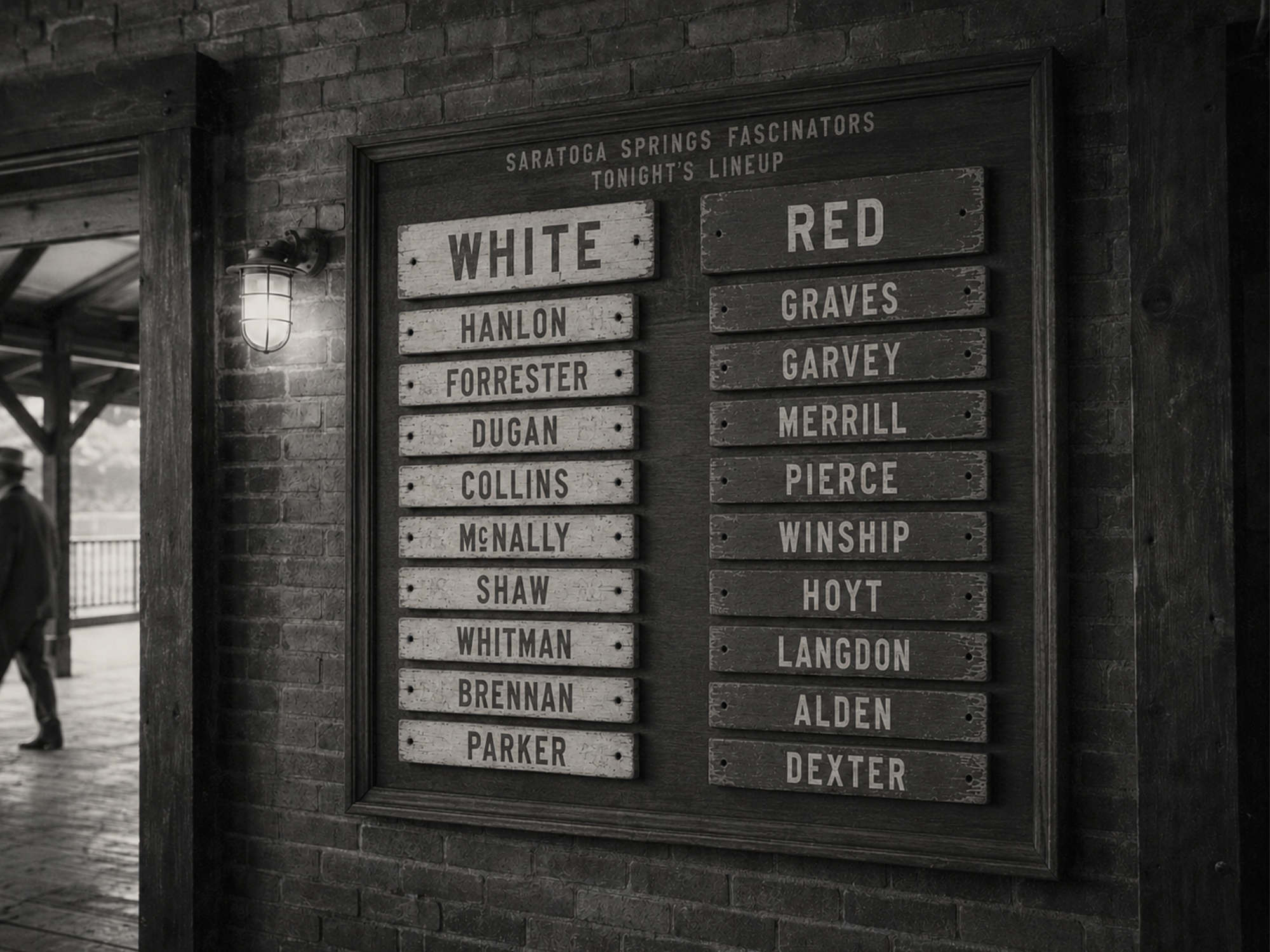
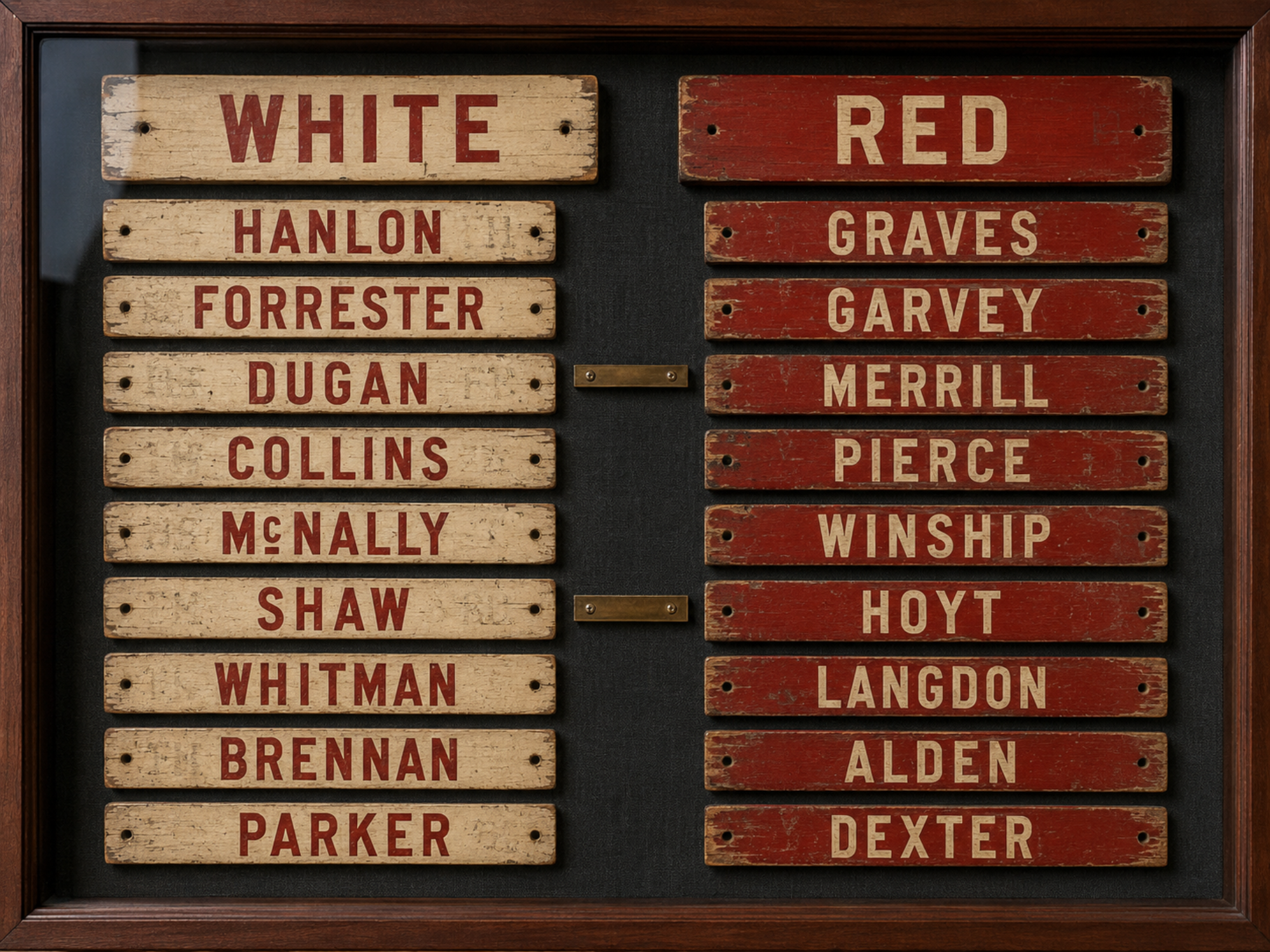
Once the squads were settled, Ruth Van Arsdale transferred the assignments into the official club ledger. The hospitality office prepared the lineup cards, and movable wooden name slats were arranged beneath WHITE and RED headings on the board in the entrance concourse. Patrons gathered there before taking their seats to discover which players would oppose one another that evening.
Although every result was recorded, White and Red did not accumulate meaningful season-long records.
Mallory measured the season differently. Every player was expected to leave Saratoga a better ballplayer than he had been when he arrived.
Each evening’s game stood on its own, and each was played to win. When the final out was recorded, the temporary division disappeared. The players returned through the same passage, changed in the same clubhouse and left the ballpark as teammates.
The crowd understood the arrangement quickly. Visitors adopted a color for the evening, and hotel desks kept red and white ribbons for guests who wished to declare their allegiance. Regular patrons argued that Mallory favored one side, though the evidence seemed to change from week to week. When newcomers asked which squad they ought to support, the answer was always the same: both.
By the following afternoon, Mallory was ready to divide the institution again.
The uniforms distinguished the evening’s squads. The cap united them as Fascinators.
III · UNIFORMS AND IDENTITY
The Club in Red and White
The Fascinators wore Saratoga red and white before the combination became inseparable from the Race Course in the public imagination. Club tradition later held that the track had borrowed the palette from the ball club. The claim was impossible to prove and repeated too happily to be entirely trusted.
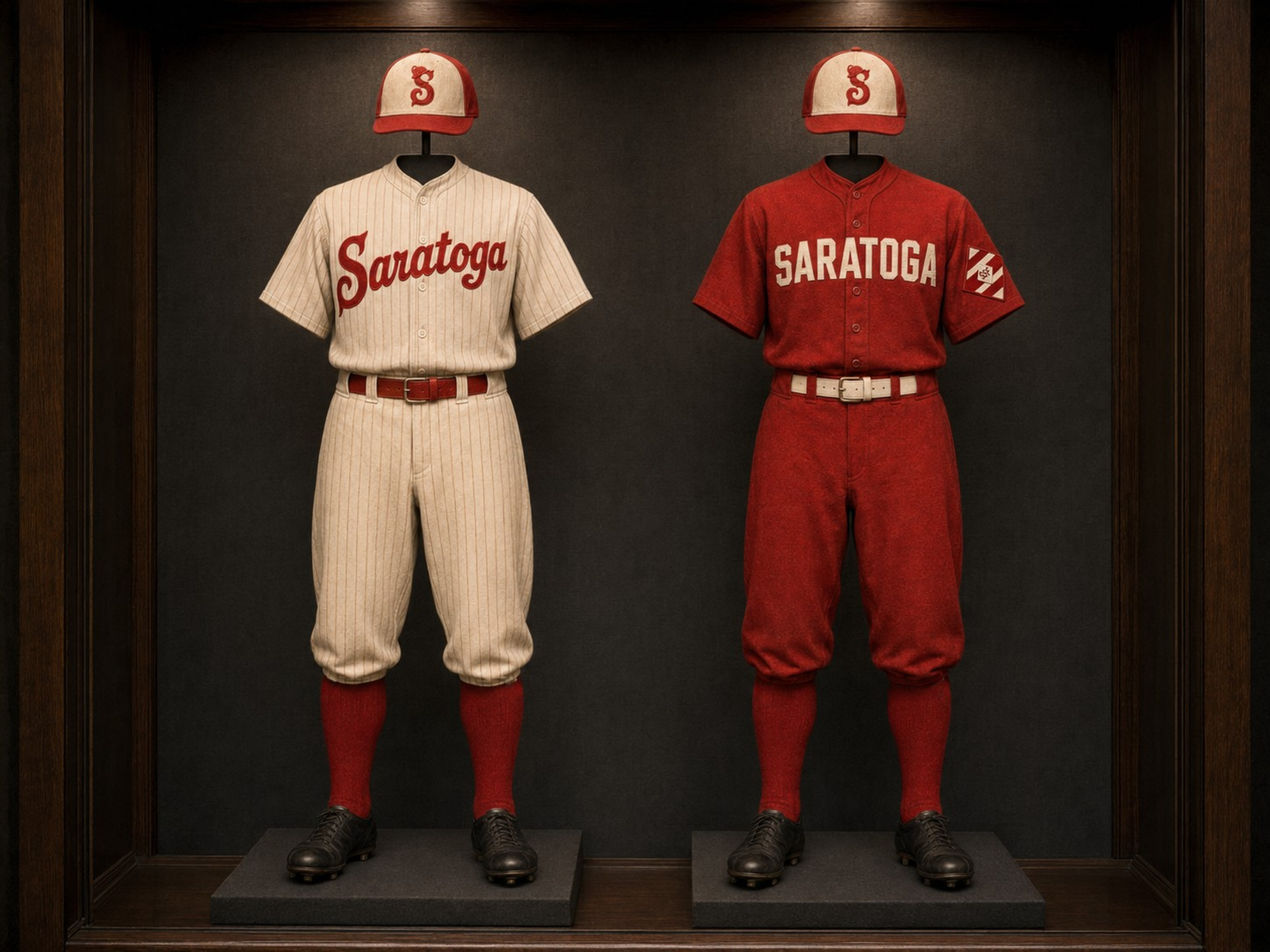
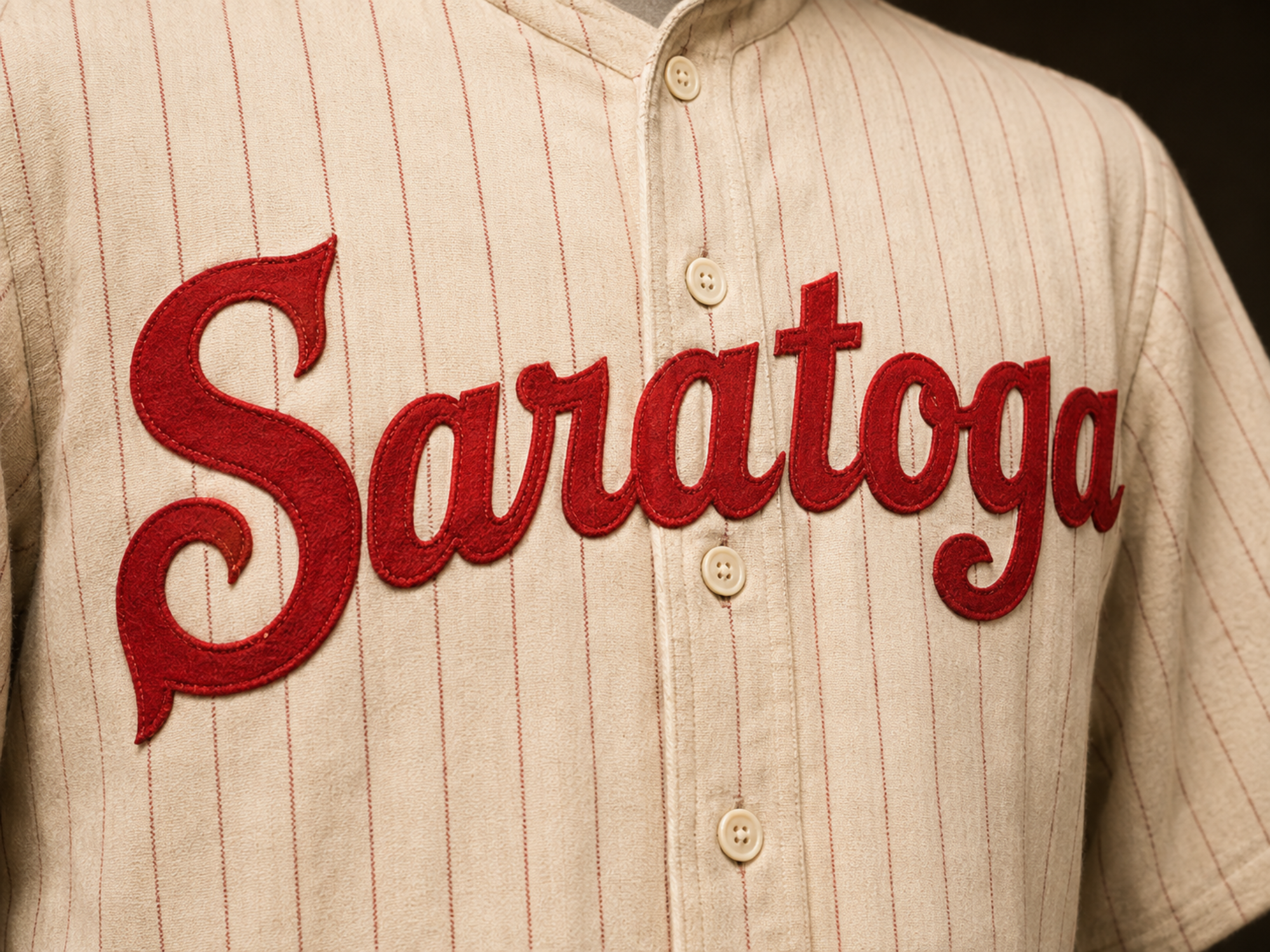
The White squad wore white wool flannel with narrow red pinstripes and a red felt Saratoga script across the chest. Its broad, ribbon-like S echoed the club’s cap mark, while the remaining letters carried the word cleanly across the jersey. Red felt numerals appeared on the back.
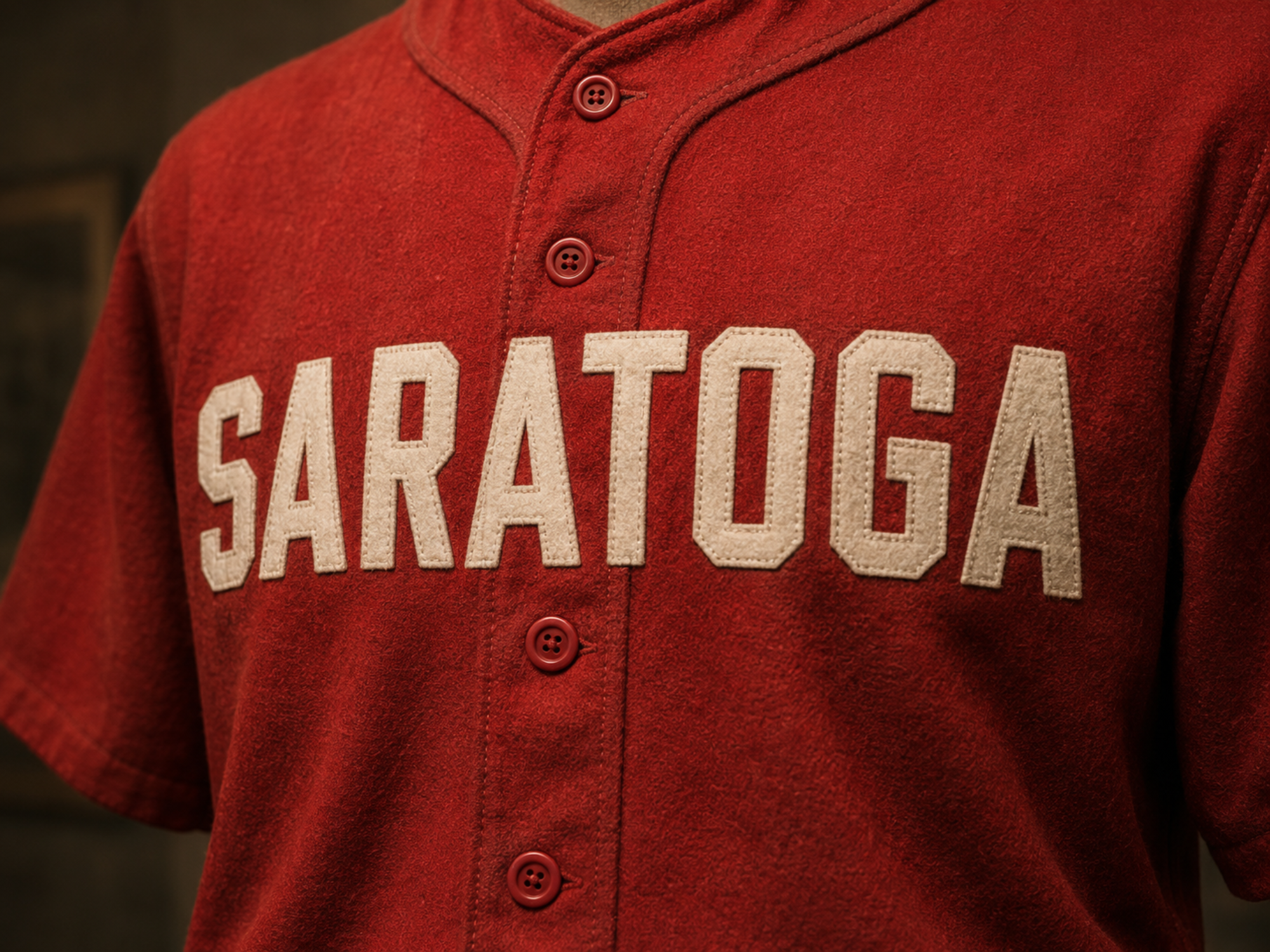
The Red squad wore solid red wool flannel with compact white SARATOGA lettering set straight across the chest. Its close-set block letters were sturdy and unornamented, providing a deliberate contrast with the White squad’s flowing script. White felt numerals appeared on the back, while a white leather belt broke the otherwise uninterrupted field of red.
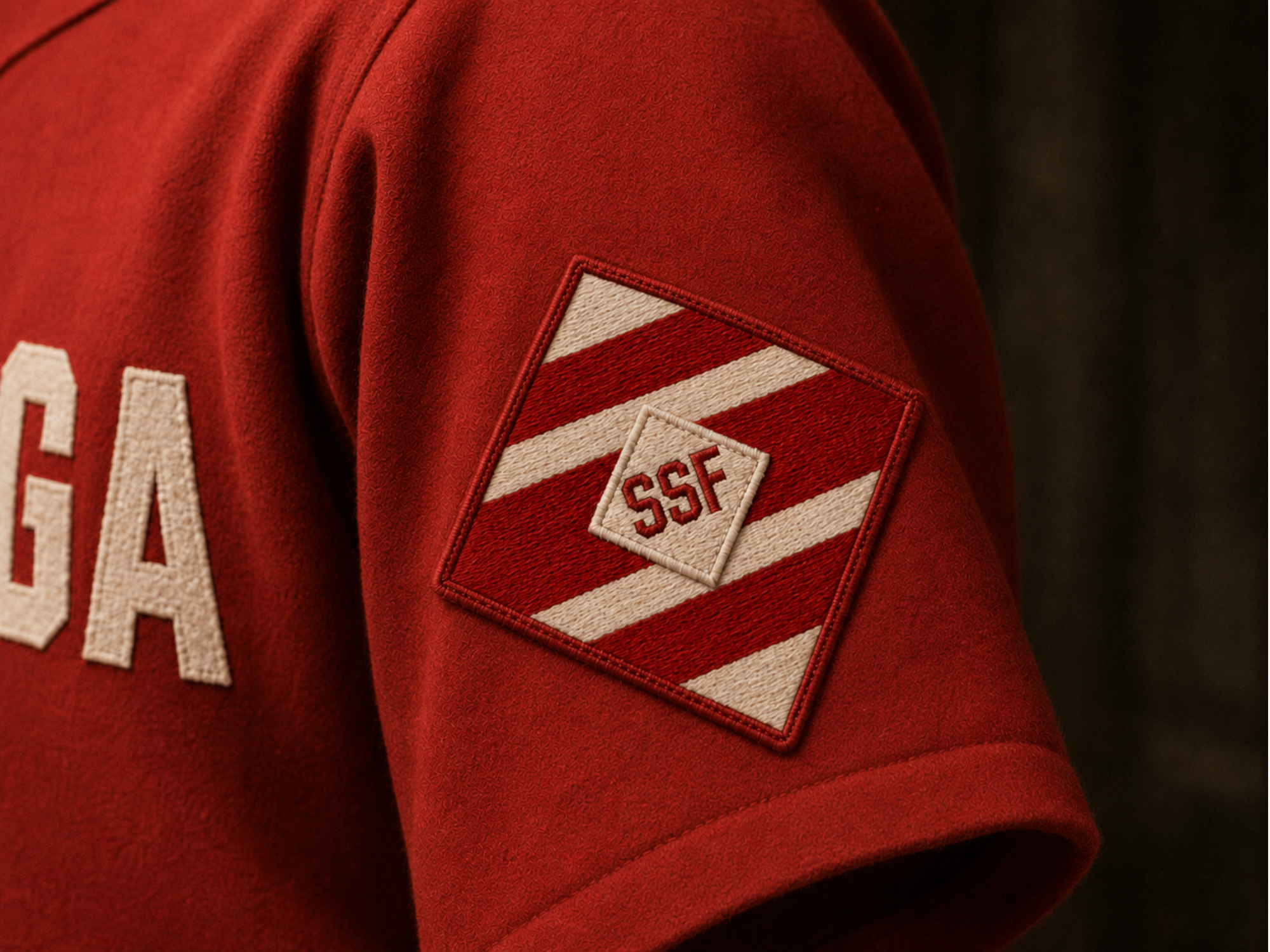
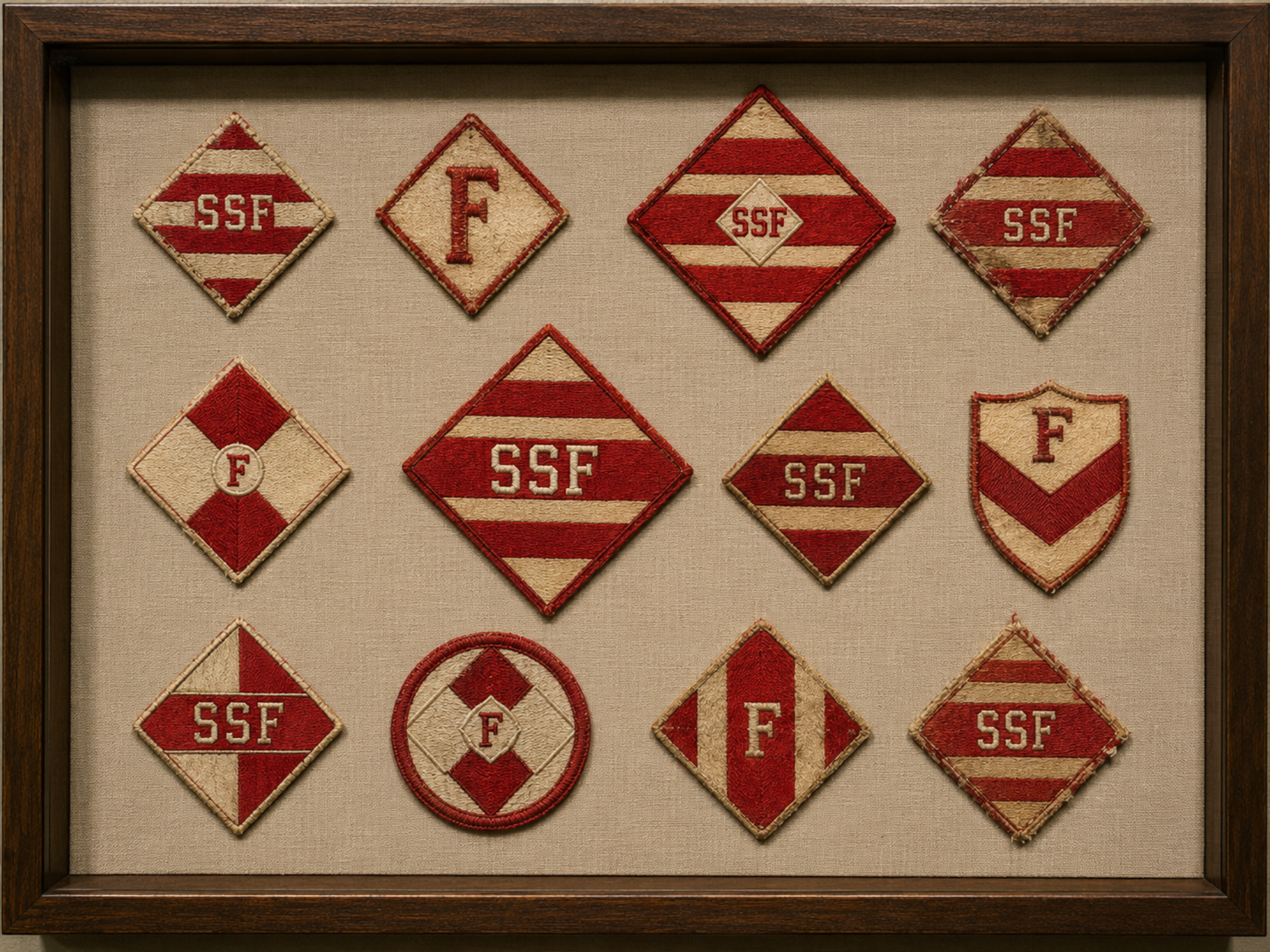
Only the Red squad wore a sleeve patch. The design placed a baseball diamond within the geometry of racing silks, divided into red-and-white sections with the letters SSF at its center. Its lower point faced the cuff when worn. The patch gave the club a compact identifying mark that could be reproduced on programs, table cards and pennants without requiring the more elaborate cap emblem.
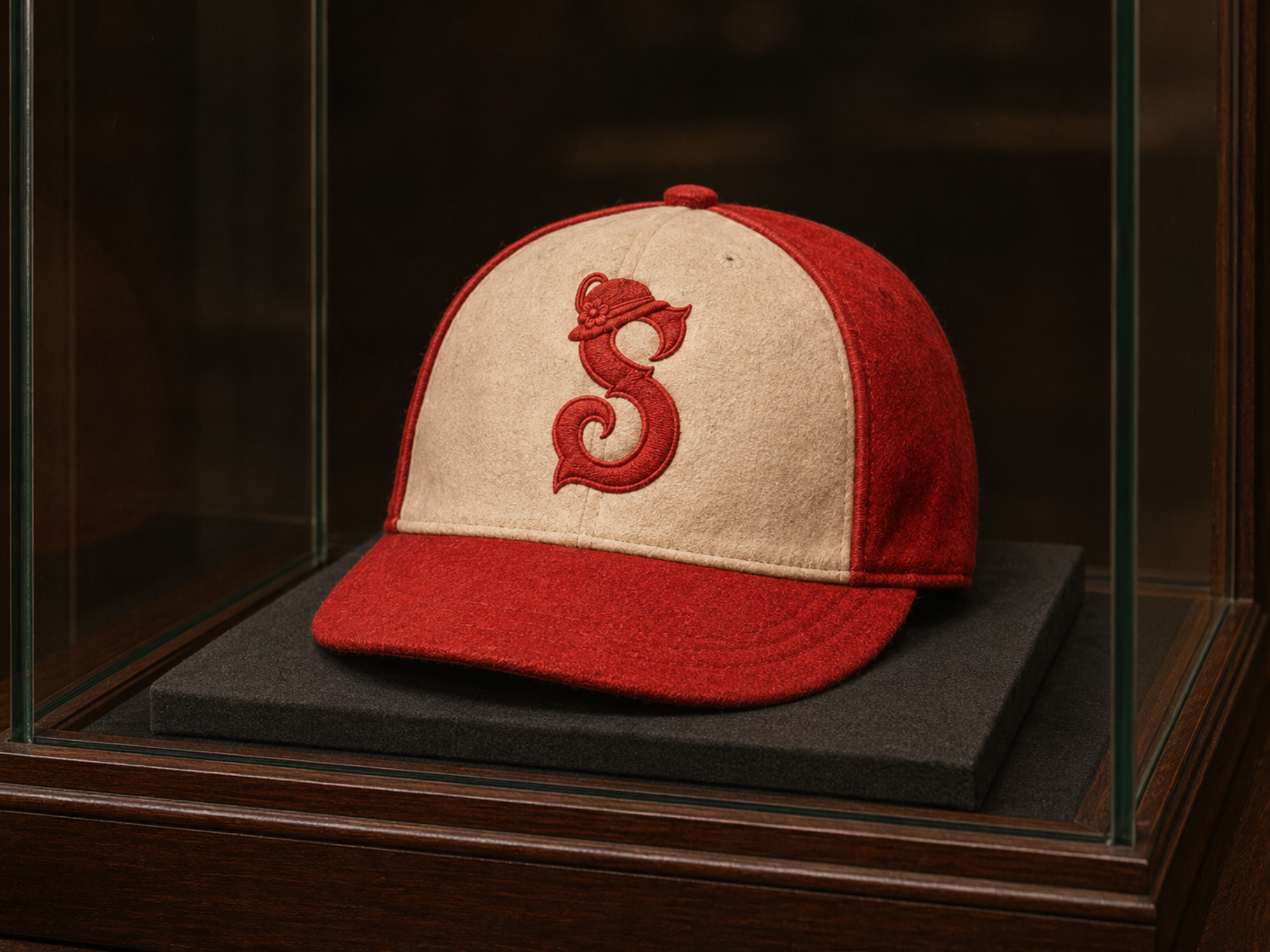
Both squads wore the same four-panel cap. Its white front and rear panels alternated with red panels at the sides, while a solid red bill completed the arrangement. Centered above the brow was a broad red S topped by a restrained late-1920s fascinator composed of a tilted cloche, a single flower and a narrow loop.
The Fascinators maintained no travel uniform. White and Red were not home and alternate sets in the conventional sense. They were the temporary colors of the evening’s opponents, worn in the same ballpark by players who might exchange assignments the following day.
-
![The complete White and Red Saratoga Springs Fascinators uniforms displayed together in a museum case.]()
Complete Field Sets
Museum Display · c. 1930s
Displayed together, the two surviving field sets explain the Fascinators’ nightly structure. White pinstripes and solid Red flannel distinguished the temporary squads, while the shared four-panel cap united every player beneath one permanent club identity.
-
![Close museum detail of red Saratoga script sewn across a white wool jersey with narrow red pinstripes.]()
White Squad Jersey Detail
Museum Display · c. 1930s
The White squad jersey carries a broad red Saratoga script sewn across narrow red pinstripes. Visible felt edges, stitch lines and slight puckering preserve the construction of a working period uniform.
-
![Close museum detail of white SARATOGA block lettering sewn across a solid red wool jersey.]()
Red Squad Jersey Detail
Museum Display · c. 1930s
The Red squad jersey uses compact white block letters placed flat across the chest. Its deliberately direct treatment gave the two uniforms distinct characters without suggesting separate clubs.
-
![A preserved red-and-white Saratoga Springs Fascinators field cap displayed on a museum pedestal.]()
Shared Field Cap
Museum Display · c. 1930s
White front and rear panels, red side panels and a red bill gave the Fascinators a distinctive shared cap. The red S and small fascinator identified the permanent club regardless of which jersey a player wore that evening.
-
![A preserved red-and-white SSF racing-silk diamond patch displayed on the sleeve of a Red squad uniform.]()
Red Squad Sleeve Patch
Museum Display · c. 1930s
The Red squad alone wore the SSF diamond, divided like a racing silk and oriented with its lower point toward the cuff. The insignia connected the uniform to Saratoga racing without borrowing a horse, jockey or track emblem directly.
-
![Rear views of the preserved Fascinators White and Red uniforms, both bearing the exhibit number 11.]()
Rear Uniform Study
Museum Display · c. 1930s
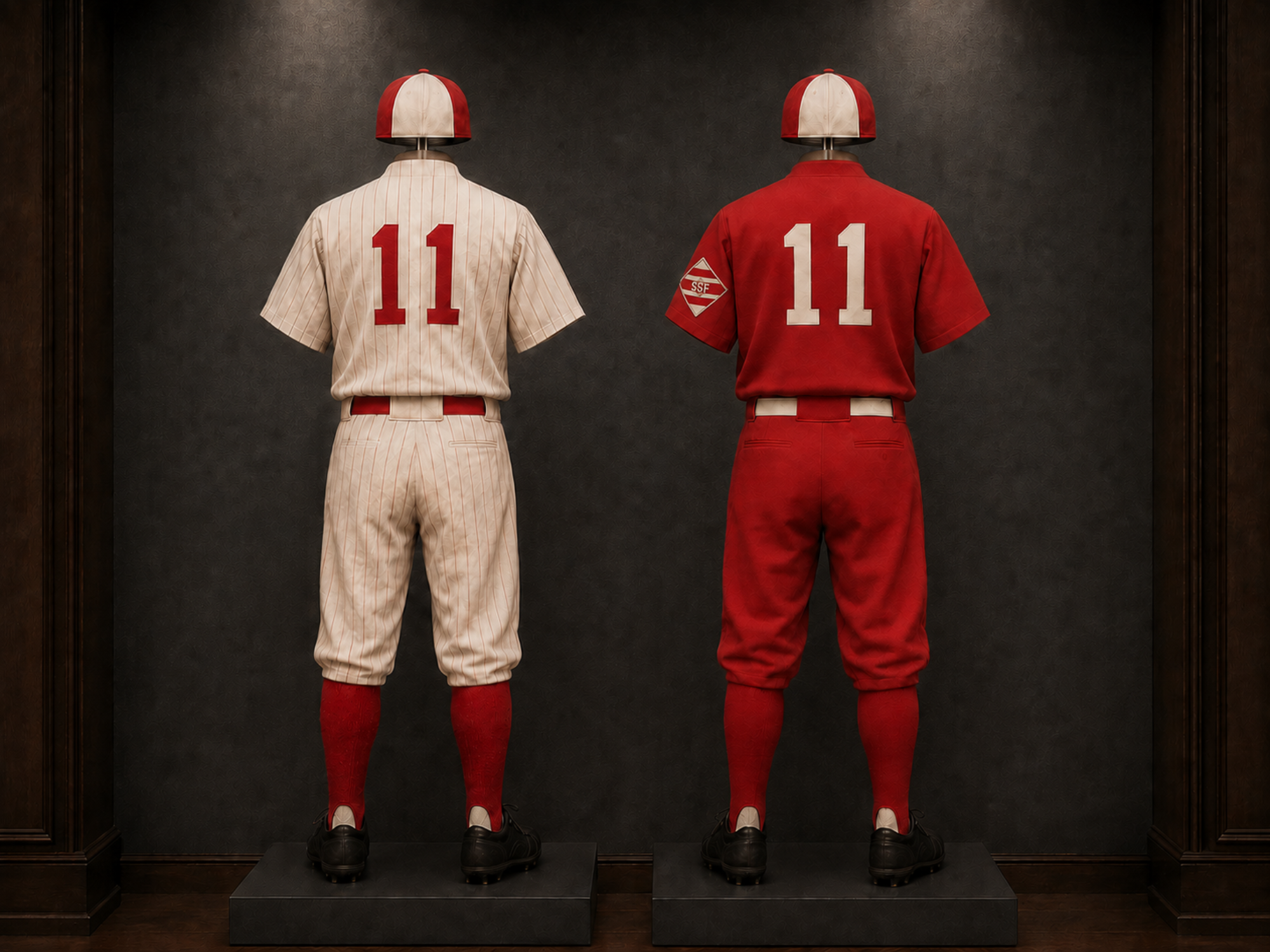
The rear views preserve the contrast established across the fronts: red felt numerals on White pinstripes and white felt numerals on solid Red flannel. Both examples carry number 11, the standard exhibit number used throughout the Register.
IV · THE BALLPARK
The Hatbox
The Fascinators’ home was not simply the place where the club played. The Hatbox’s location, architecture and service operation determined what the club could be.
Devereux chose open ground near Jefferson Street and Crescent Avenue, southeast of downtown Saratoga Springs. The site was close enough to receive the post-race crowd and far enough from the downtown hotels to accommodate a substantial ballpark. Built in the spring of 1928, The Hatbox combined a red-brick lower story with a timber-framed grandstand and covered dining gallery above it.
Later additions carried the brick base, galleries and grandstand roof farther down both foul lines, gradually absorbing the original central structure into a much larger building.
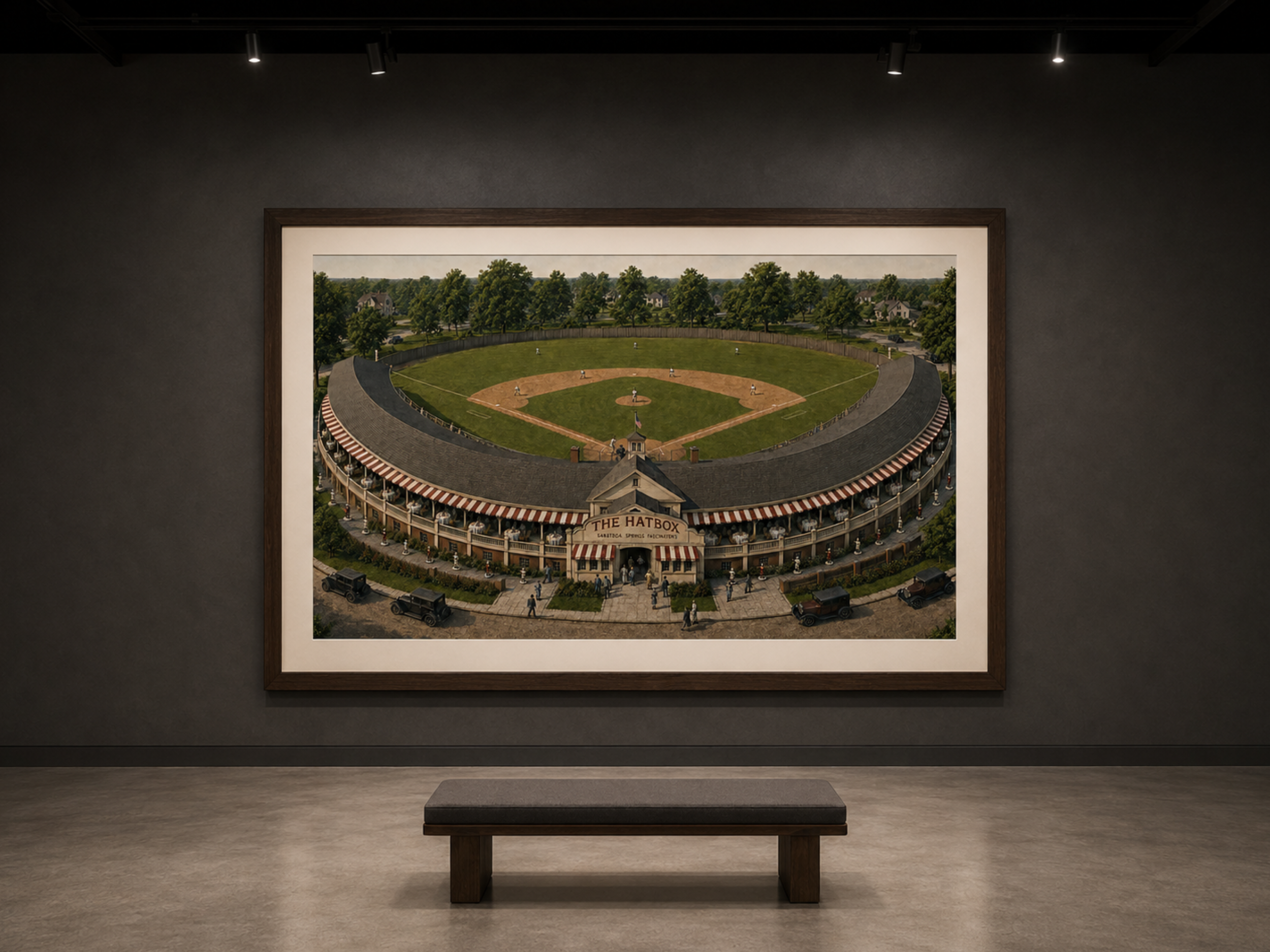
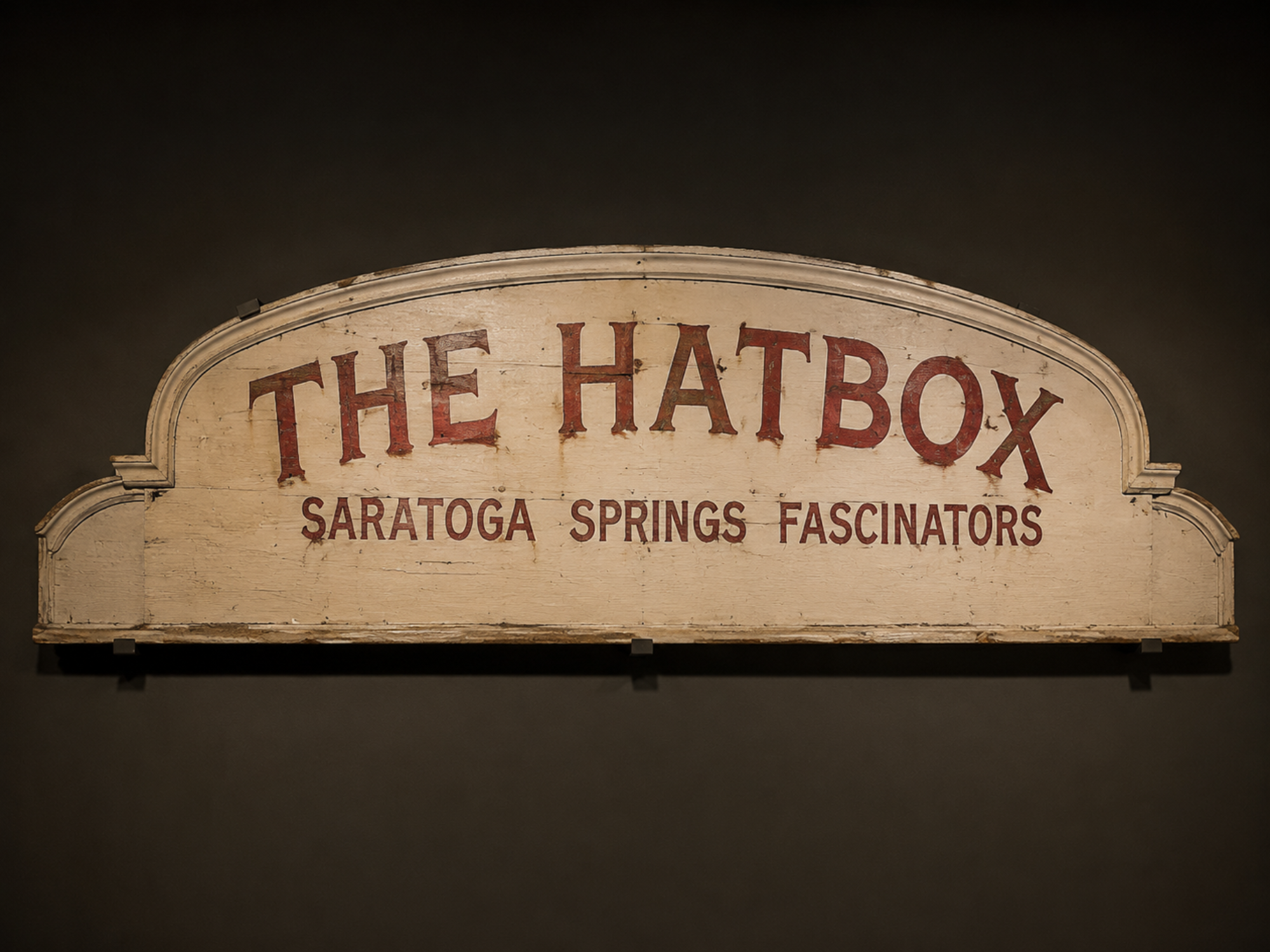
From the entrance, The Hatbox resembled an oversized resort pavilion arranged around a ballfield. A broad, horseshoe-shaped grandstand curved behind home plate and continued nearly to the foul poles. At its center, a gabled entrance projected from the otherwise continuous façade, with THE HATBOX painted above the main passage.
The enclosed brick level contained the kitchen, club offices, ticket room, restrooms, storage rooms and player quarters. Above it rose an open grandstand framed by heavy timber posts and roof trusses. Painted railings, exposed beams and a deep overhanging roof gave the upper level the character of a Saratoga veranda.
Conventional grandstand seating occupied the inner sections nearest the field. Behind it, a continuous covered gallery curved around home plate and extended along both foul lines. This was the feature that made the park famous: the Hatbox Supper Club.
Ninety tables, each seating four, were arranged across the stepped dining gallery, with the largest concentration behind home plate and along the first-base side. Every table was covered in white linen and set with simple china and a shaded lamp. Service aisles allowed waiters to move behind the tables without obstructing the view of the field. Supper seats were reserved by the evening or included in hotel packages. Conventional grandstand seats, bleachers and standing admission remained available to guests who came only for the game.
Red-and-white canvas awnings ran along the outer edge of the dining gallery and shaded the open bays between its timber posts. Smaller awnings covered the ticket windows and entrance doors below. The pattern was visible before the roofline and made the building recognizable from the approaching road.
The foul poles repeated the striping of the awnings. Each was slender, only modestly higher than the outfield fence and topped by a small gold ball finial.
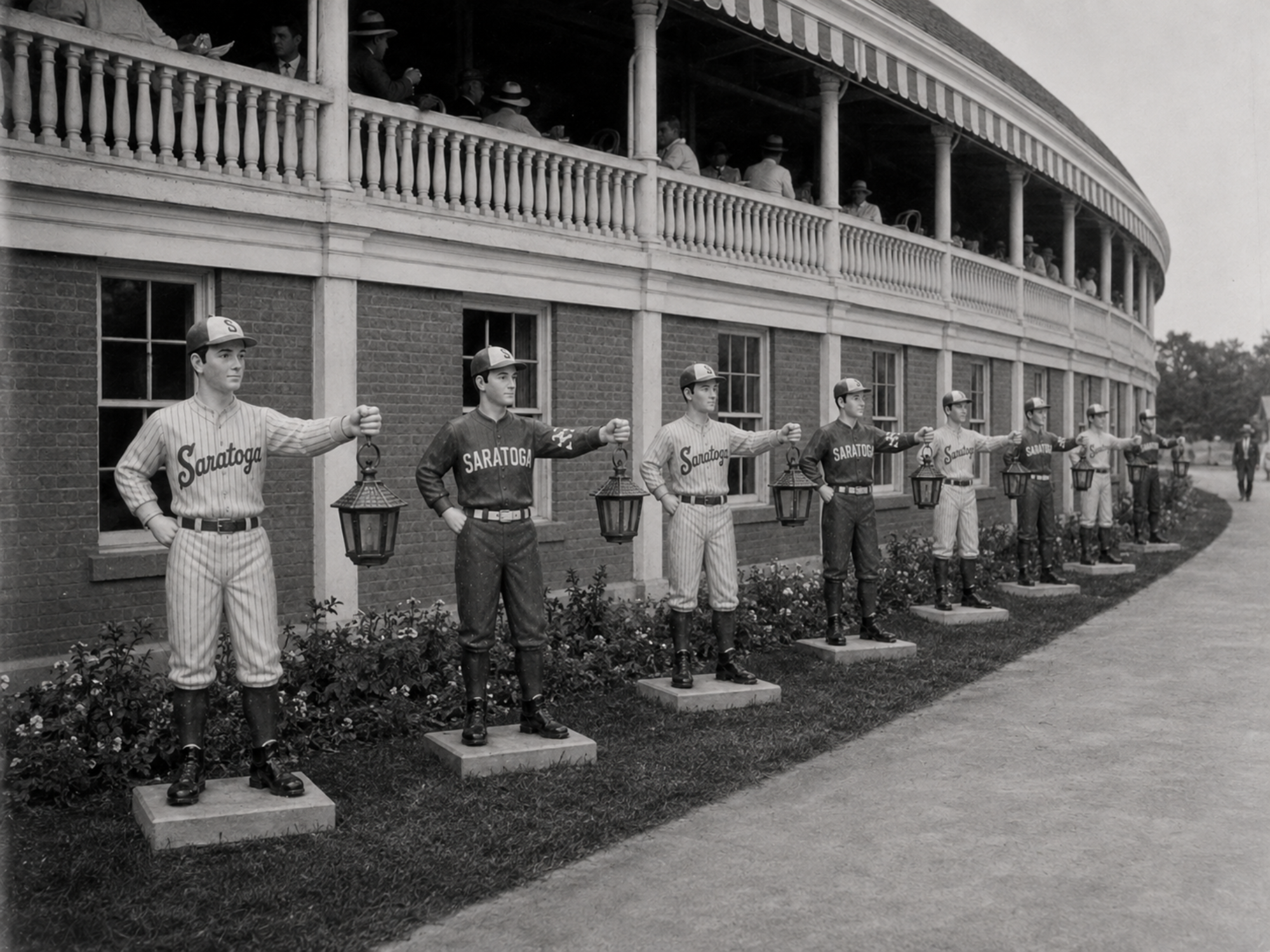
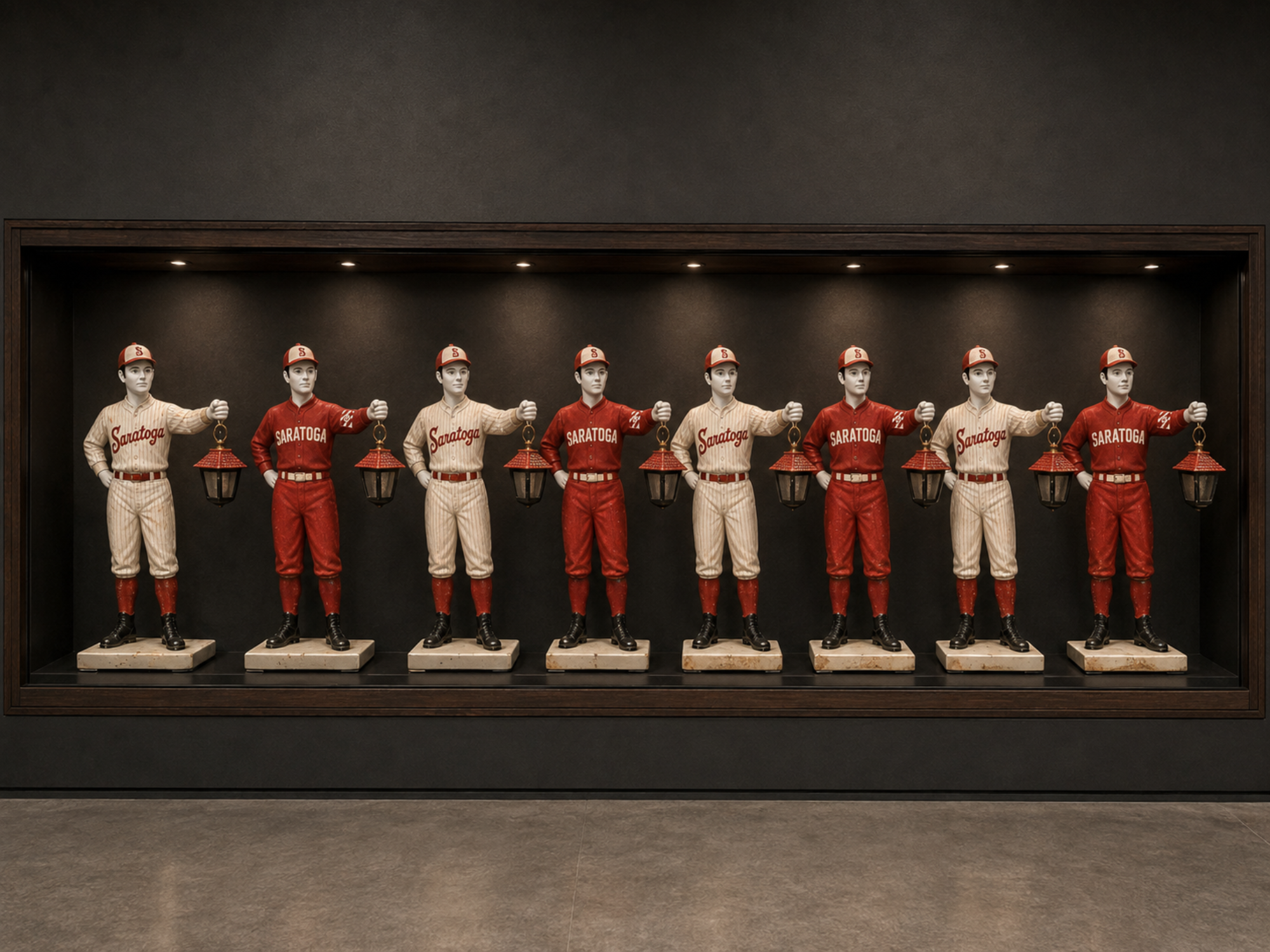
A row of cast lawn-jockey figures stood along the entrance walk, each painted in one of the club’s two uniforms and holding a lantern toward arriving guests. The figures were eccentric even by Saratoga standards and quickly became one of the park’s most popular details.
The field itself remained compact and serious. The grandstand wrapped closely around home plate, concentrating the sound of the crowd. The White dugout stood along the first-base line and the Red dugout along the third. Beyond the outfield fence, the open ground and scattered houses of southeastern Saratoga remained visible.
The grandstand supplied its own name. Its curved form enclosed the crowd and field like the lower half of a round carrying case, while the broad roof rested over the gathering like a lid. From the entrance road, the building resembled a hatbox opened toward the diamond.
-
![Cast lawn jockeys wearing alternating White and Red Fascinators uniforms line the entrance walk outside The Hatbox.]()
The Lawn Jockey Walk
Historical Photograph · c. 1930s
Cast lawn jockeys line the entrance walk in alternating White and Red uniforms, each holding a lantern toward arriving guests. Eccentric even by Saratoga standards, they became one of The Hatbox’s most frequently photographed details.
-
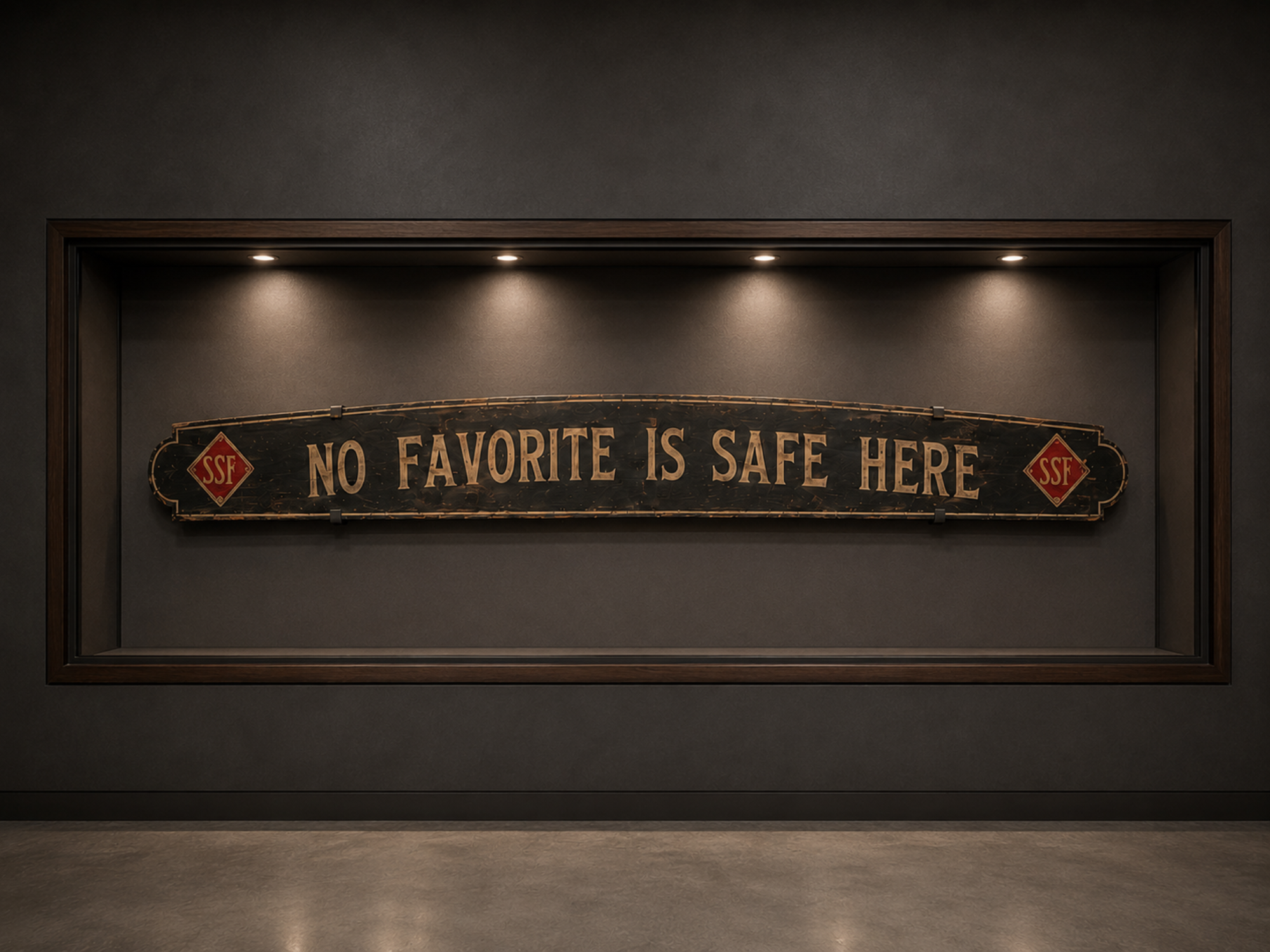
![The painted “No Favorite Is Safe Here” sign hangs above the shared players’ passage inside The Hatbox.]()
No Favorite Is Safe Here
Historical Photograph · c. 1930s
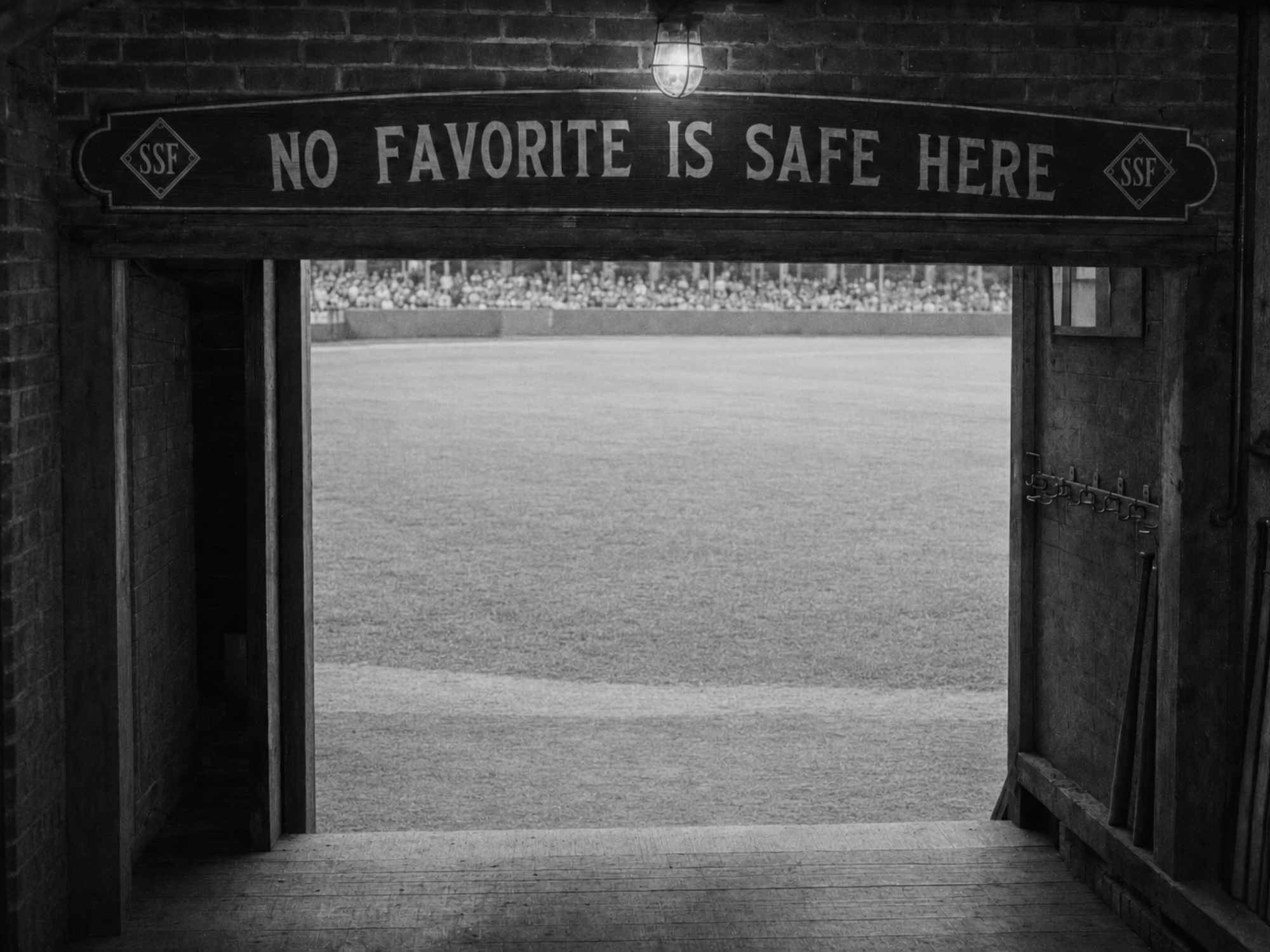
The painted wooden sign hangs above the passage connecting the shared clubhouse to the field. Its racing language reflected Saratoga, while its placement reminded every player that reputation and previous results offered no protection once the game began.
-
![The White and Red player lineup board is posted on a walnut panel inside The Hatbox entrance concourse.]()
Entrance Lineup Board
Historical Photograph · c. 1930s
Movable wooden slats announce the evening’s White and Red assignments inside the entrance concourse. Because players changed squads throughout the summer, patrons consulted the board before taking their seats to learn who would oppose whom that night.
-
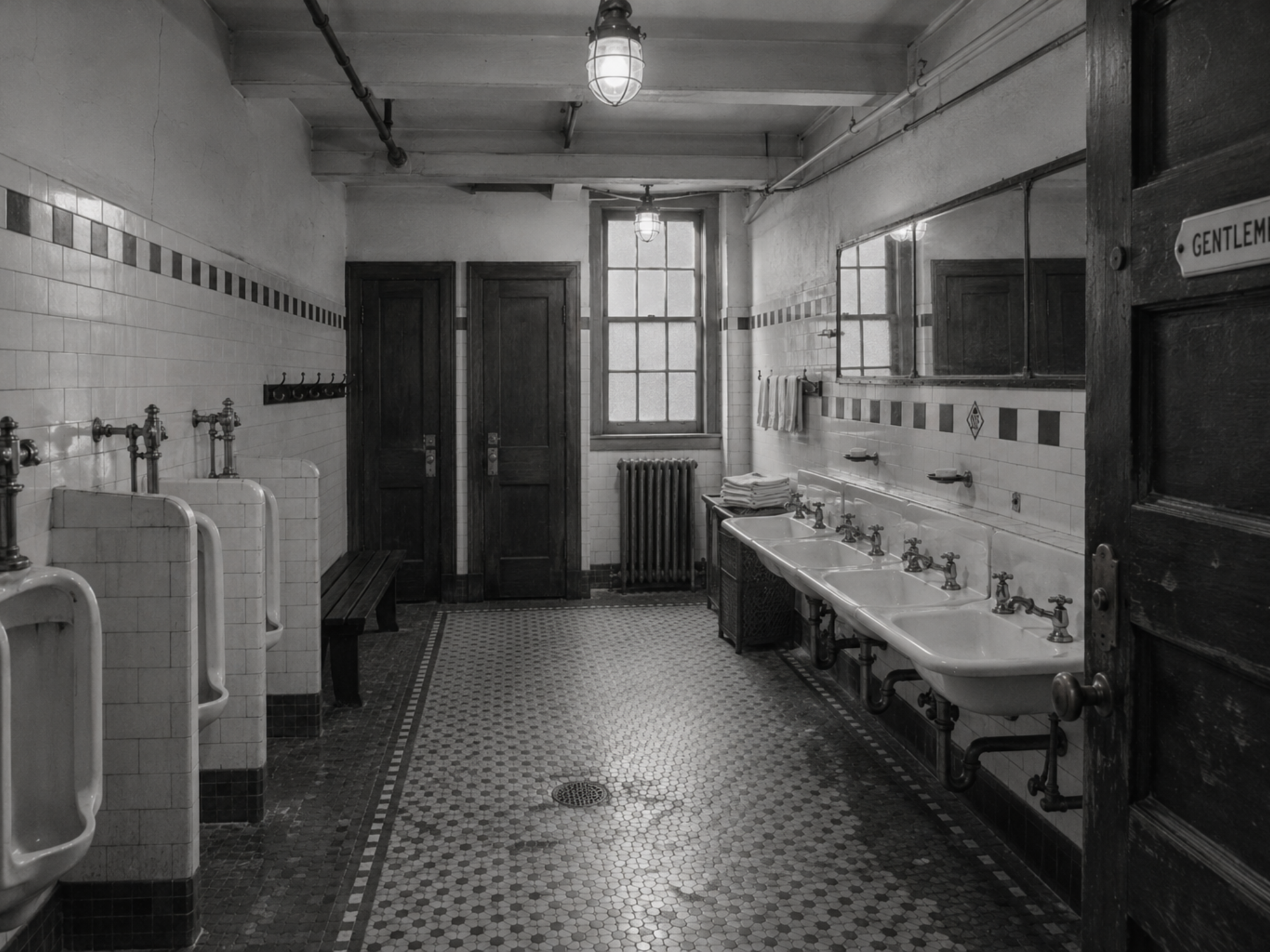
![White tile, exposed plumbing and a striped border inside the gentlemen’s washroom at The Hatbox.]()
Gentlemen’s Washroom
Historical Photograph · c. 1930s
White tile, exposed plumbing and a striped border made the washroom unusually considered for a small period ballpark. Its durable finishes reflected the larger Hatbox philosophy that hospitality extended beyond the supper tables.
-
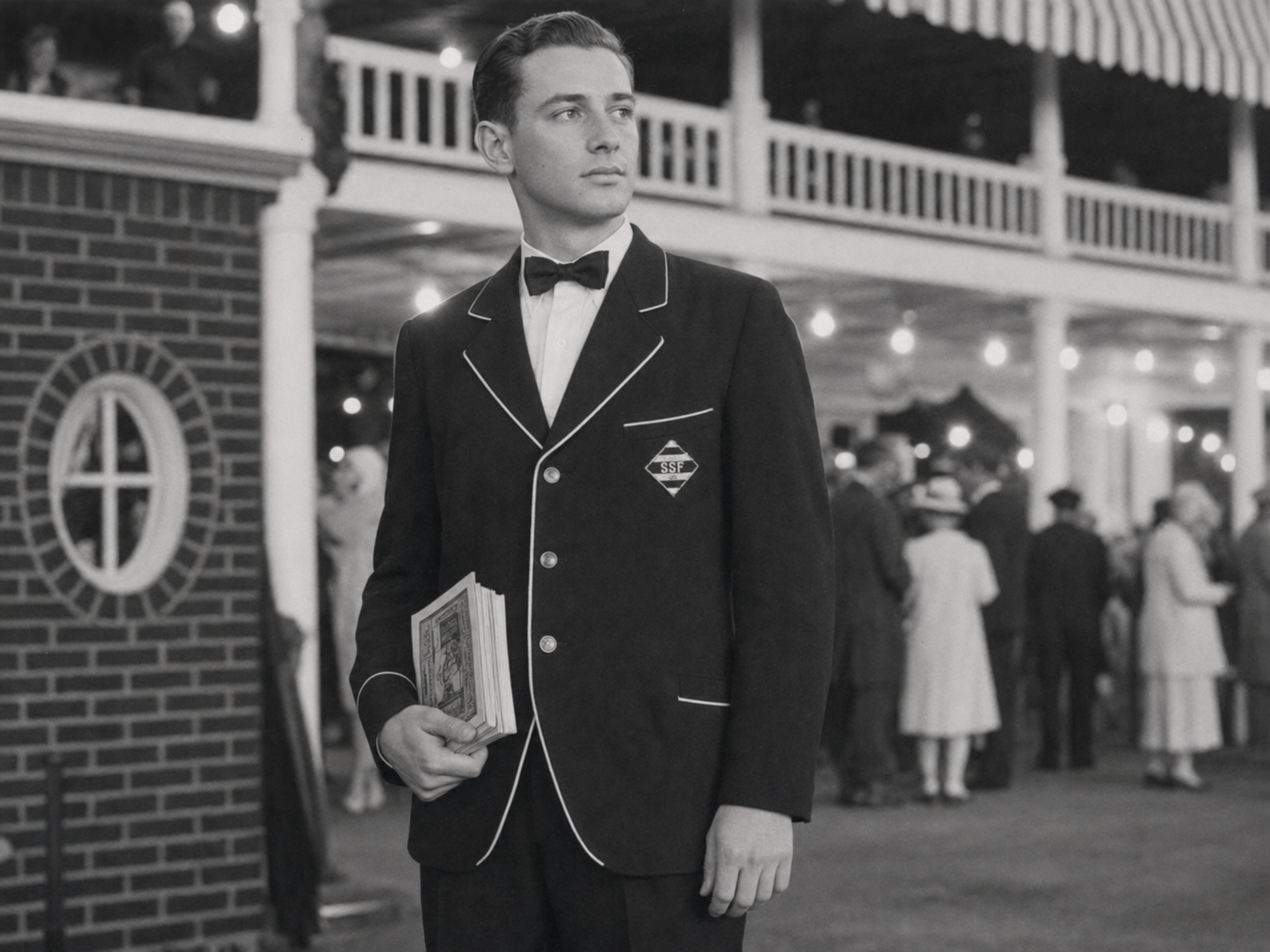
![Hatbox ushers in dark jackets distribute programs and direct arriving patrons to their seats.]()
Front-of-House Staff
Historical Photograph · c. 1930s
Hatbox ushers distribute programs and direct patrons toward supper tables and conventional grandstand seats. Dark wool jackets, pale piping and small SSF badges gave the staff an identity distinct from the players on the field.
Supper at the Ballpark
The Hatbox dining gallery did not operate as an oversized concession stand. It functioned as a seasonal restaurant whose dining room happened to overlook a ballfield.
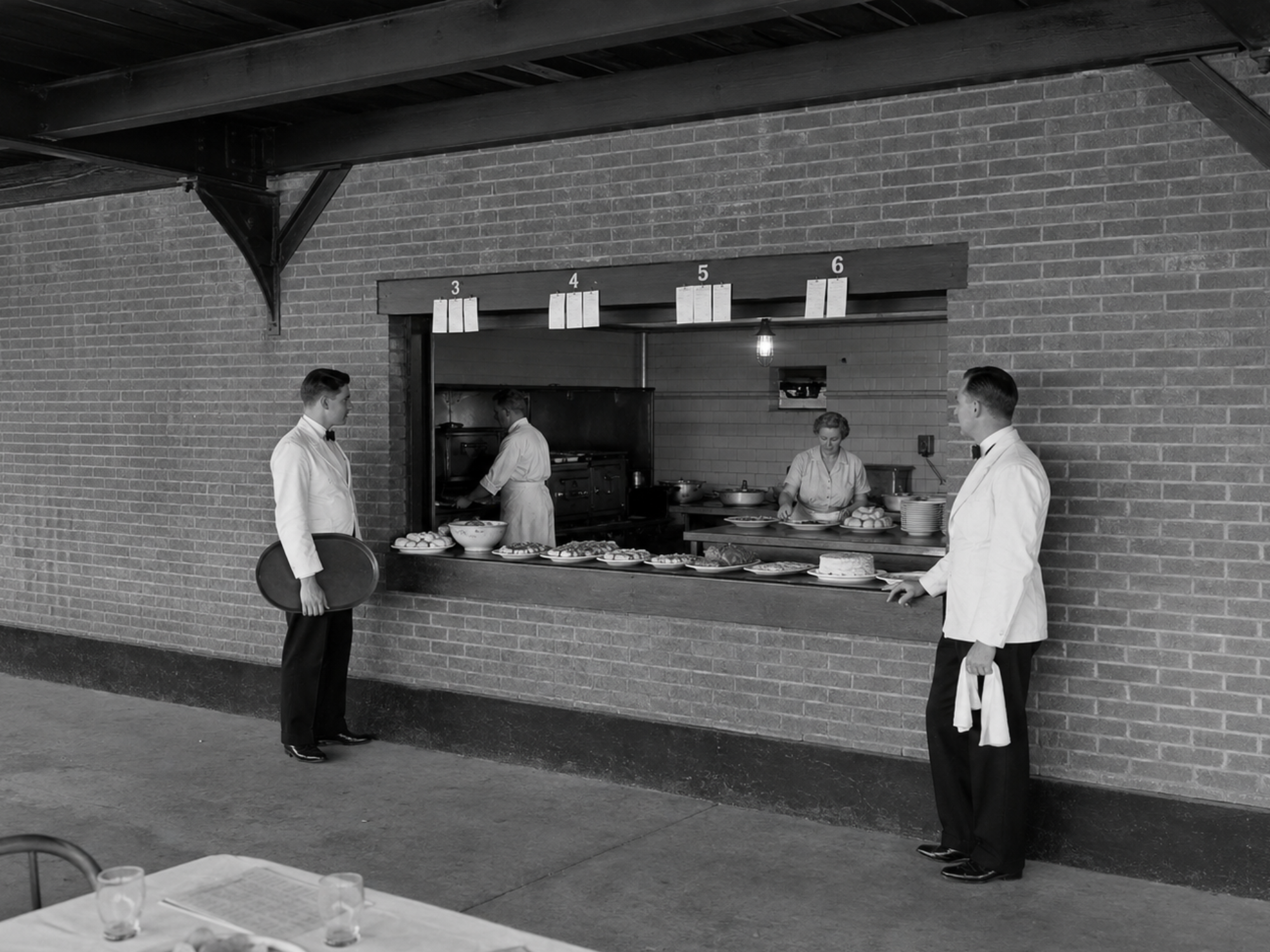
The kitchen occupied the brick level beneath the third-base section of the grandstand, with a broad service pass opening toward the dining gallery and the field beyond. Cast-iron ranges lined one wall, while preparation tables and dish stations filled the center of the room. From the pass, cooks and waiters could follow the game as they worked. Orders were arranged by table number and inning, allowing the staff to time each course to the progress of play. Finished plates moved directly from the kitchen into the covered gallery.
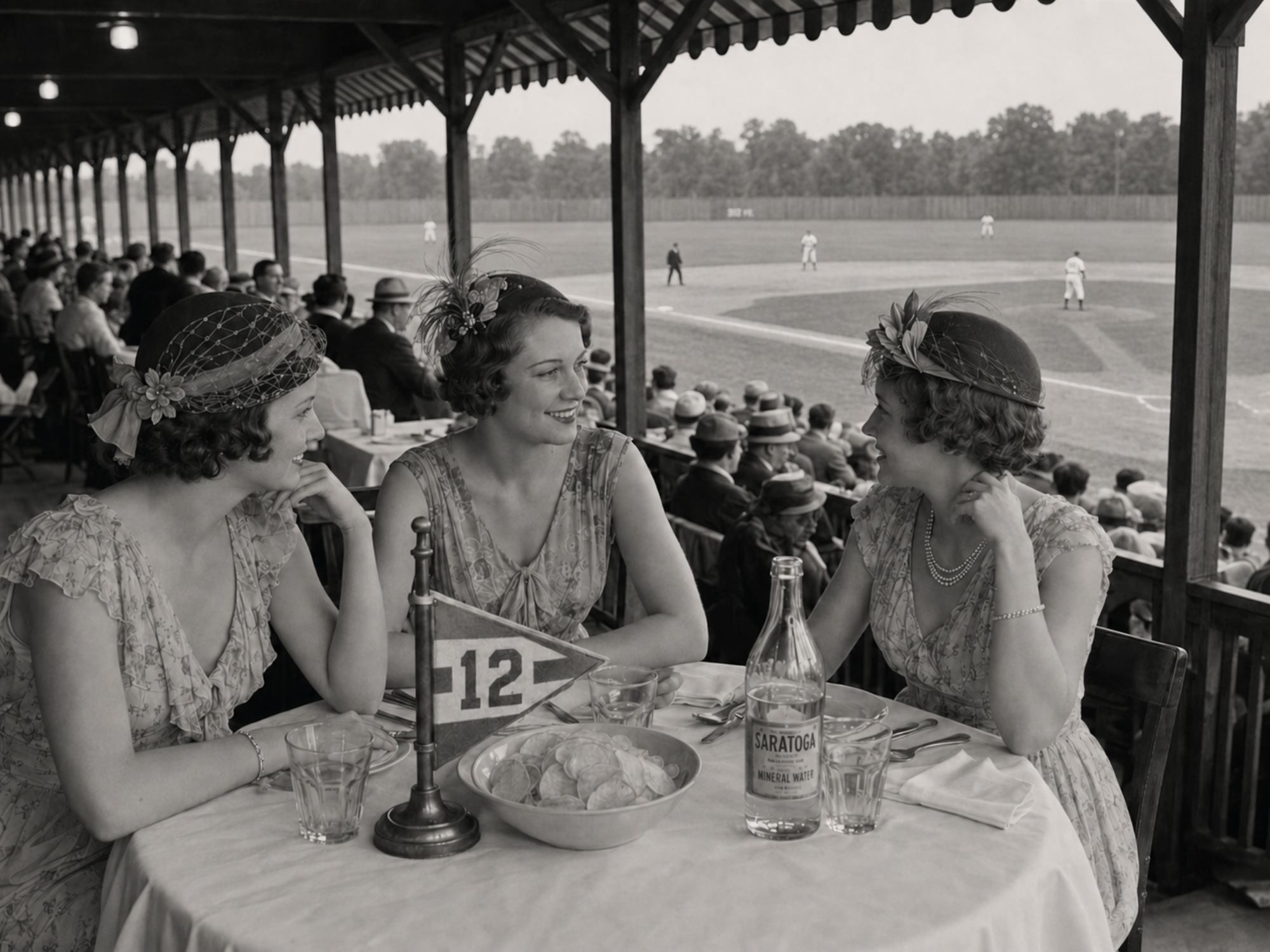
Saratoga chips appeared on every supper table. Bowls of thin, crisp potatoes were set out before first pitch and replenished through the early innings. They accompanied sandwiches, lake trout and cold chicken, leaving enough salt on a guest’s fingers to mark the edge of a scorecard.
The Hatbox also had its own summer drink.
Nell Vredenburgh developed the Hatbox Cup during the park’s first season from fresh lime juice, raspberry syrup and cold sparkling mineral water poured over cracked ice. It arrived in a tall glass with a thin wheel of lime, a single raspberry and a red-and-white striped paper straw. The drink was light enough to last through several innings, and rows of pale red glasses became part of the dining gallery’s appearance before first pitch.
When The Hatbox opened in 1928, the Cup was necessarily alcohol-free. After repeal in 1933, dry gin became an official addition. The original mineral-water version remained on the supper card and was served from pitchers at larger tables, while the gin Cup became the familiar evening order. Regulars rarely used its full name. They asked for “a Cup,” adding “straight” when they wanted the original without gin.
The first round usually reached the tables as guests arrived from the Race Course. A second moved through the gallery near the fourth inning. Each glass rested on a small linen coaster bearing the SSF racing-silk diamond. Together with the Saratoga chips, the Hatbox Cup became one of the objects most closely associated with an evening at the park.
The supper changed through the season, but familiar dishes included roast-beef sandwiches, fried or roasted chicken, lake trout, summer salads, corn, sliced tomatoes and shortcake. Coffee and Saratoga mineral water were constant. During the final years of Prohibition, the printed menu remained dry. What passed privately between certain guests and certain waiters was wisely omitted from club records.
Service was managed by Vredenburgh, a Saratoga native and Skidmore graduate who became the club’s hospitality director at twenty-seven. She established the service routes, trained the seasonal waitstaff and refused to let the supper club become a costume party built around baseball.
Her most important source of seasonal talent was Skidmore College.
Skidmore had become a four-year women’s college in 1922 and remained woven through downtown Saratoga during the Fascinators’ years. Students and recent graduates worked in the Hatbox office, designed menus and programs, managed reservations, kept correspondence, assisted with accounting and served as official scorers. Art students produced posters and the first finished drawings of the club’s marks. Business students helped Vredenburgh impose order on an operation whose starting time changed with the racing card.
The women were not decorative hostesses. They made the place run.
-
![Kitchen staff prepare and organize supper orders during a Saratoga Springs Fascinators game at The Hatbox.]()
The Hatbox Kitchen During a Game
Historical Photograph · c. 1930s
Cooks, servers and dining-room staff move table orders through the kitchen shortly after first pitch. Saratoga chips, mineral water, plated suppers and numbered service tickets reveal an operation closer to a restaurant kitchen than a conventional ballpark concession room.
-
![Three elegantly dressed women take supper at Table Twelve while watching a Fascinators game from the covered gallery.]()
Supper at Table Twelve
Historical Photograph · c. 1930s
Three young patrons take supper at Table Twelve while the Fascinators play below. Saratoga chips, mineral water and the numbered table pennant reflect the carefully appointed hospitality that distinguished The Hatbox from a conventional ballpark.
-
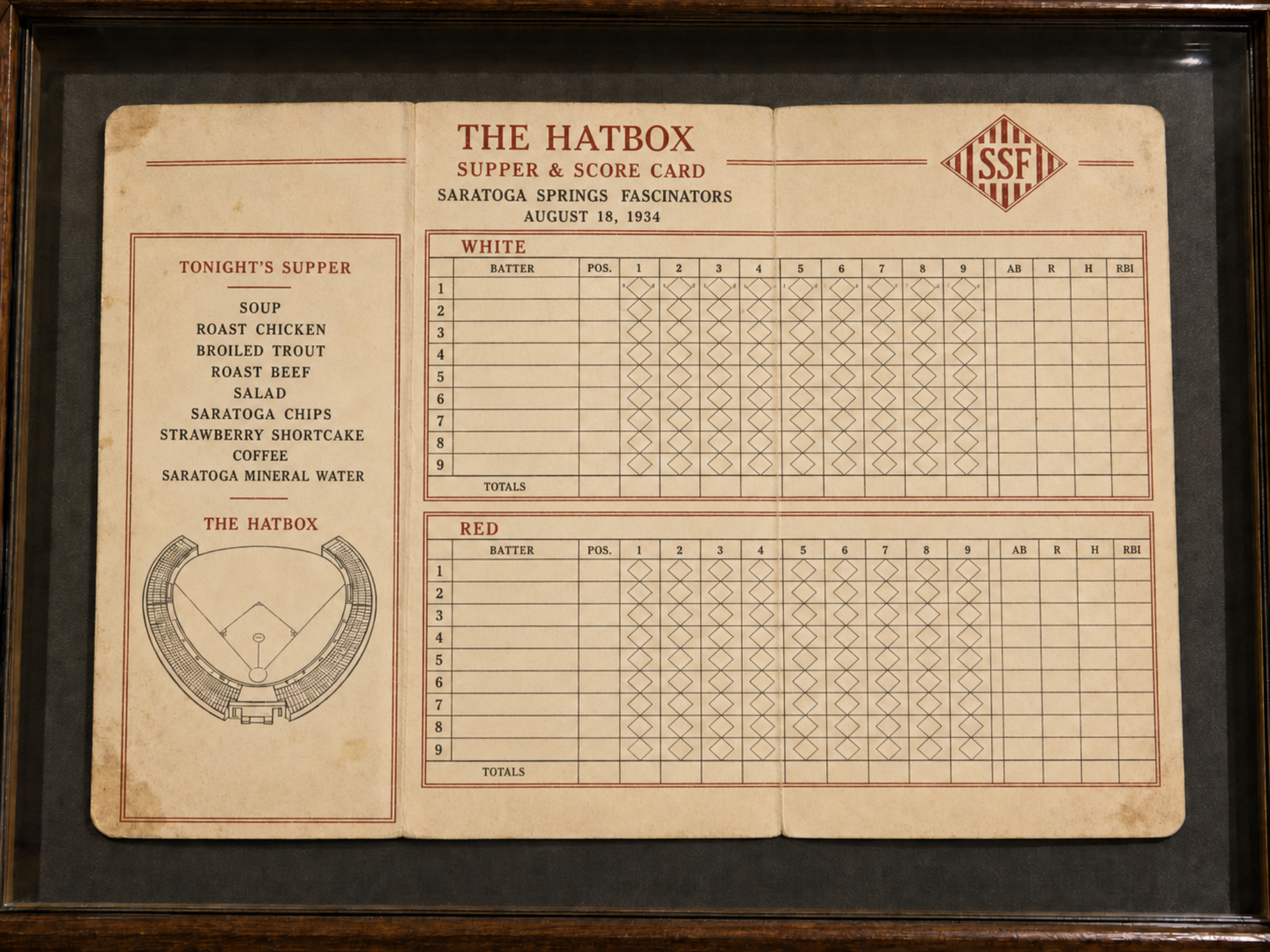
![A preserved Hatbox supper menu and two-team baseball scorecard displayed open in a museum case.]()
Combined Menu and Scorecard
Museum Display · c. 1930s
Issued at the supper tables, the folded card combined the evening menu with separate scorekeeping grids for the White and Red squads and a small diagram of The Hatbox. Surviving examples preserve the practical record of individual evenings rather than a generic season program.
-
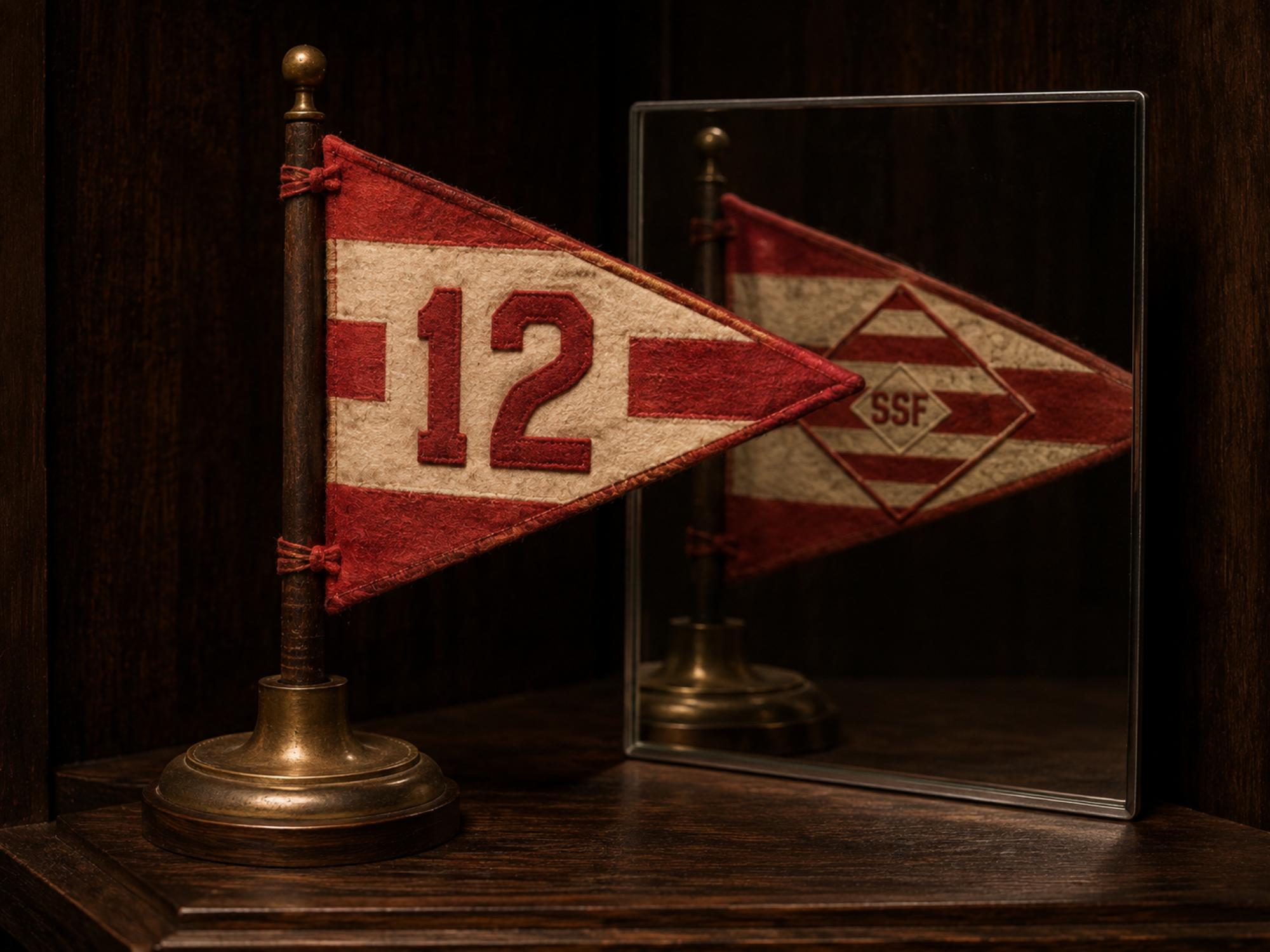
![A preserved red-and-white Hatbox table-number pennant displayed with its brass holder.]()
Supper Club Table Marker
Museum Display · c. 1930s
Small red-and-white pennants identified reserved supper tables throughout the covered gallery. One side carried the table number and the other the SSF diamond, while a narrow wooden staff fitted into a brass holder beside the table lamp.
-
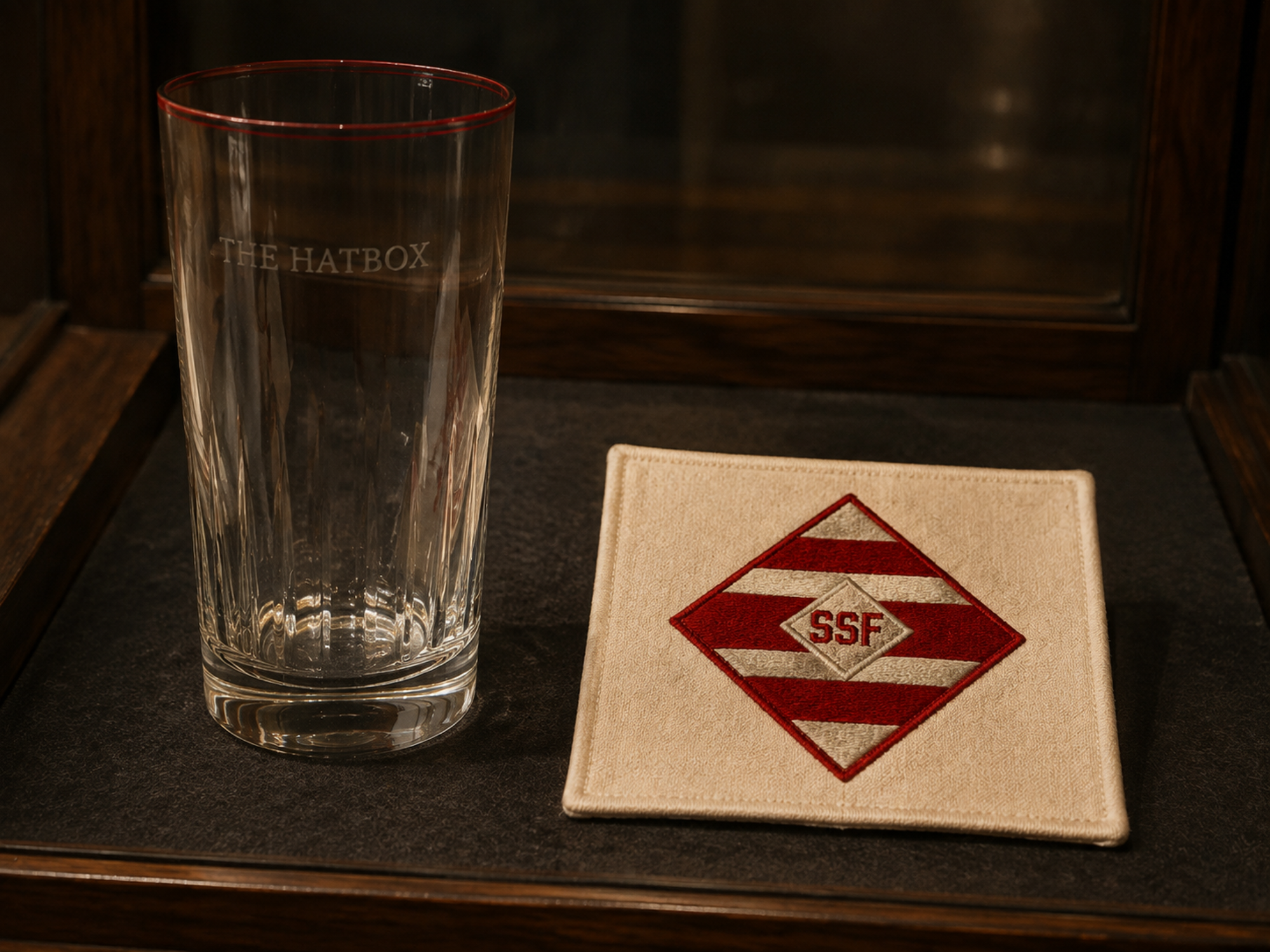
![A preserved Hatbox Cup glass and embroidered SSF linen coaster displayed together in the museum.]()
Supper Club Service Pieces
Museum Display · c. 1930s
The tall Hatbox Cup glass was served on a small linen coaster embroidered with the SSF racing-silk diamond. Together, the surviving pieces preserve the park’s signature drink in the visual language used on its table cards and Red squad sleeve patch.
V · DAILY LIFE
One Day at The Hatbox
The Fascinators were best understood not through a single season, but through the repeated work of an ordinary game day. From morning practice through the final out, the club turned the end of the racing card into a complete evening of baseball.
The process began in the morning. Mallory held workouts before the heat settled over the field, using the quiet hours for infield drills, pitchers’ work and instruction that would have been difficult once the dining room and grandstand came alive. Players with hotel or park jobs left after practice. Others remained to help the grounds crew, repair equipment or sleep in the shade beneath the grandstand.
By early afternoon, Mallory had begun arranging the two sides. The previous night’s score mattered, but so did tired arms, minor injuries, departures, new arrivals and the need to give scouts a proper look at particular players. Ruth Van Arsdale transferred the assignments into the official book. The hospitality office prepared lineup cards and the wooden slats for the concourse board.
The kitchen and dining room worked against the same moving clock. The day’s race card supplied an expected final post, but weather, racing delays and stewards’ inquiries could move it. Hotel desks telephoned the Hatbox office. Shuttle drivers waited for confirmation. Vredenburgh held the final seating instructions until the Race Course had nearly finished.
Following the final post, the park changed quickly.
Automobiles, hired cars, hotel shuttles and pedestrians began arriving together. The lineup board drew a crowd in the entrance concourse. Saratoga chips reached the tables first, followed by Hatbox Cups rising pale red above the linen.
Fifteen minutes after the final post, the two squads entered through the shared passage beneath NO FAVORITE IS SAFE HERE. One turned toward the first-base dugout, the other toward third.
Supper began shortly after first pitch. Waiters moved during natural breaks and held trays when play tightened around the plate. By the fourth inning, second rounds of Hatbox Cups circulated through the grandstand. By the seventh inning, shaded table lamps and entrance lanterns glowed beneath the roof while the field remained in daylight.
The Hatbox had no lights. Most games reached nine innings, but darkness remained part of the arrangement. A long argument, a slow pitcher or extra innings could leave the final outs in deep twilight. Mallory resisted proposals to shorten the schedule permanently. Resort baseball, he insisted, still had to be baseball.
After the game, the Red and White distinction disappeared. Players returned through the same tunnel and changed in the same clubhouse. Van Arsdale closed the scorebook. The kitchen counted its china. Hotel cars collected the remaining guests.
By morning, Mallory was ready to divide the club again.
The Daily Schedule
| Morning | Player workout, pitching sessions, field maintenance and equipment repair |
|---|---|
| Early Afternoon | Mallory reviews player availability, injuries and pitching rest |
| Mid-Afternoon | White and Red assignments entered into the club ledger |
| Before Final Post | Kitchen preparation, table setting, lineup cards typed and name slats arranged |
| Final Post | Hotel desks and shuttle drivers receive confirmation; the gates open fully and supper seating begins |
| Five Minutes After Final Post | Lineups posted; Saratoga chips and first Hatbox Cups reach the tables |
| Fifteen Minutes After Final Post | First pitch and supper service begin |
| Fourth Inning | Principal supper service and customary second round of Hatbox Cups |
| Seventh Inning | Table lamps and entrance lanterns are lit as daylight begins to fall |
| Final Out | Scorebooks closed, player statistics transferred and hotel cars called |
| Following Morning | Players return as one roster; preparation begins for the next evening’s assignments |
VI · PEOPLE
The People Who Made the Institution
The Fascinators depended on more than the players. Baseball management, hospitality, recordkeeping and seasonal labor operated beneath one roof. Together, these figures turned an unusual idea into a summer institution capable of beginning again each afternoon.
-
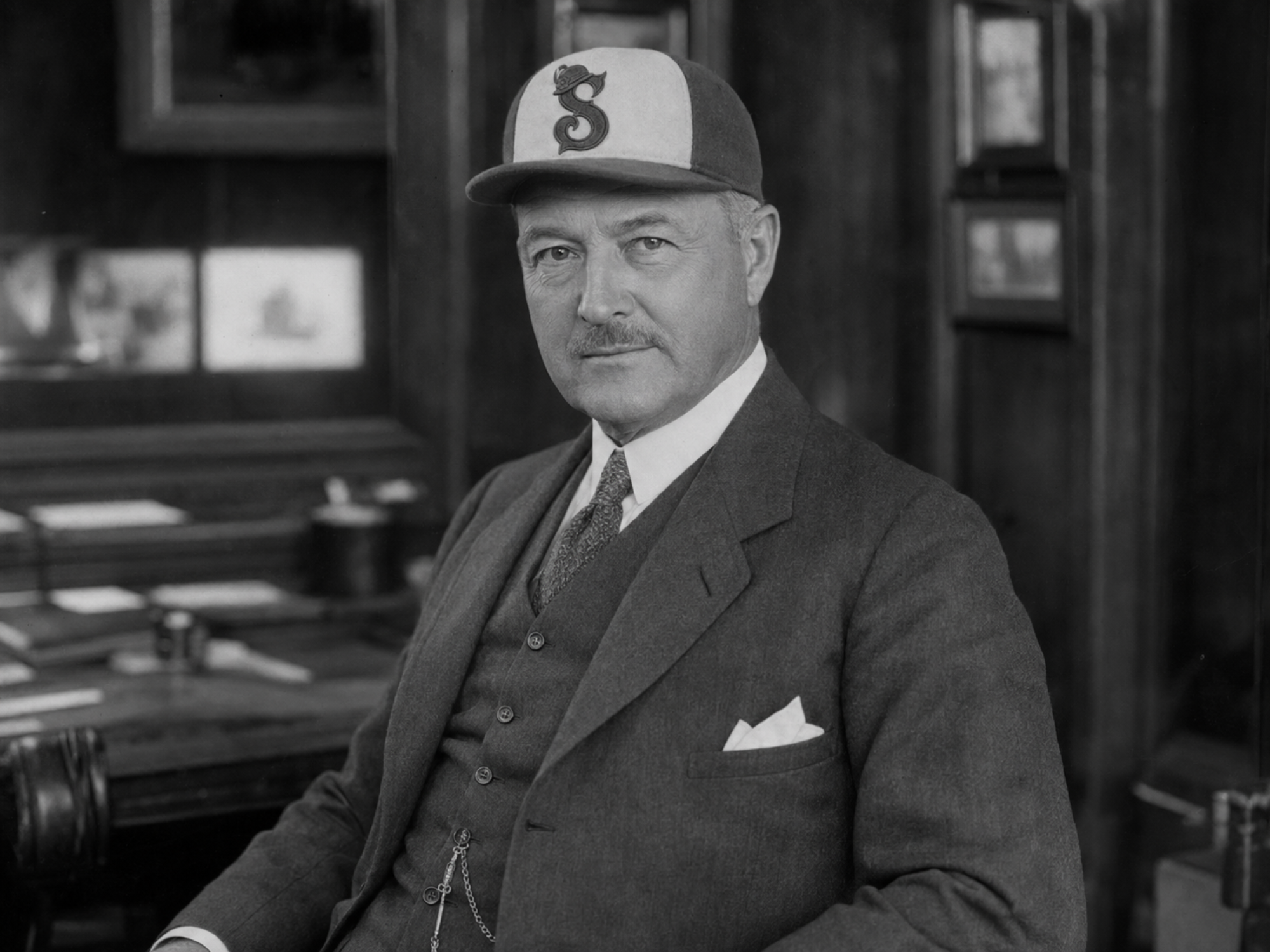
![Jules Devereux, founder and president of the Saratoga Springs Fascinators, poses in a suit and the club’s four-panel cap.]()
Jules Devereux
Historical Photograph · c. 1936
Devereux recognized that Saratoga’s attractions succeeded when they reinforced one another. He supplied the original capital, built The Hatbox and secured the support of the city’s hotels while leaving the baseball operation to Red Mallory.
-
![Fascinators manager Red Mallory poses in a club uniform at The Hatbox.]()
Red Mallory
Historical Photograph · c. 1932
A former catcher with little patience for resort theatrics, Mallory accepted the position believing it would last one summer. His insistence on nine-inning games, balanced assignments and individual statistics transformed an entertainment concept into a respected collegiate summer program.
-
![Hatbox hospitality director Nell Vredenburgh poses for a portrait inside The Hatbox in 1932.]()
Nell Vredenburgh
Historical Photograph · c. 1932
Vredenburgh organized the supper operation, trained seasonal staff, coordinated hotel reservations and established the visual standards of The Hatbox. Table cards, menu covers, staff instructions and the signature Hatbox Cup all originated in her office.
-
![Ruth Van Arsdale, official bookkeeper of the Fascinators, poses for a team portrait in 1935.]()
Ruth Van Arsdale
Historical Photograph · c. 1935
Van Arsdale arrived as a Skidmore business student and became the principal keeper of the Fascinators’ nightly books. She devised the notation that allowed each player’s statistics to follow him between Red and White assignments.
-
![Tom Kelleher poses for his official Saratoga Springs Fascinators portrait sitting in the dugout of The Hatbox.]()
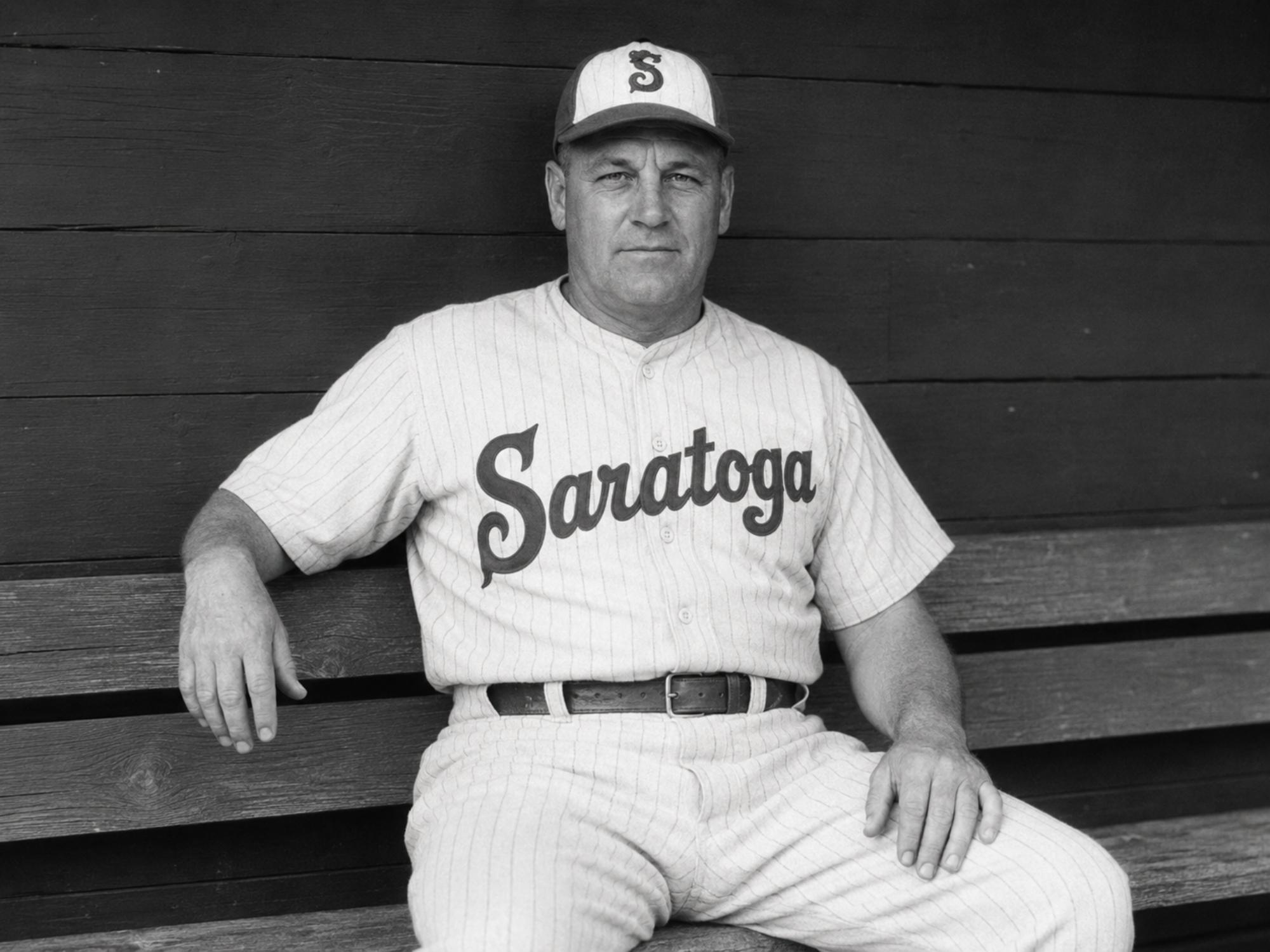
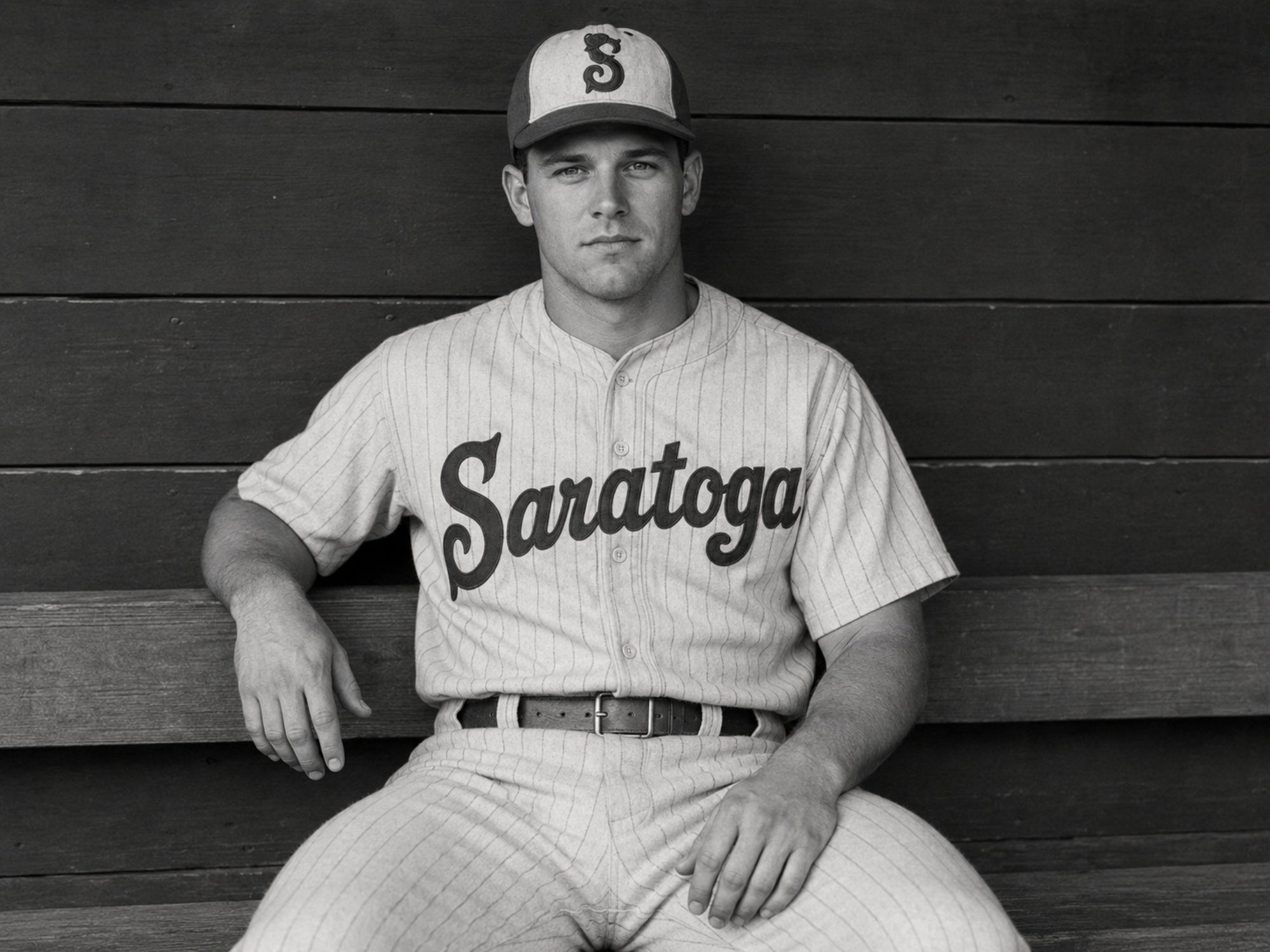
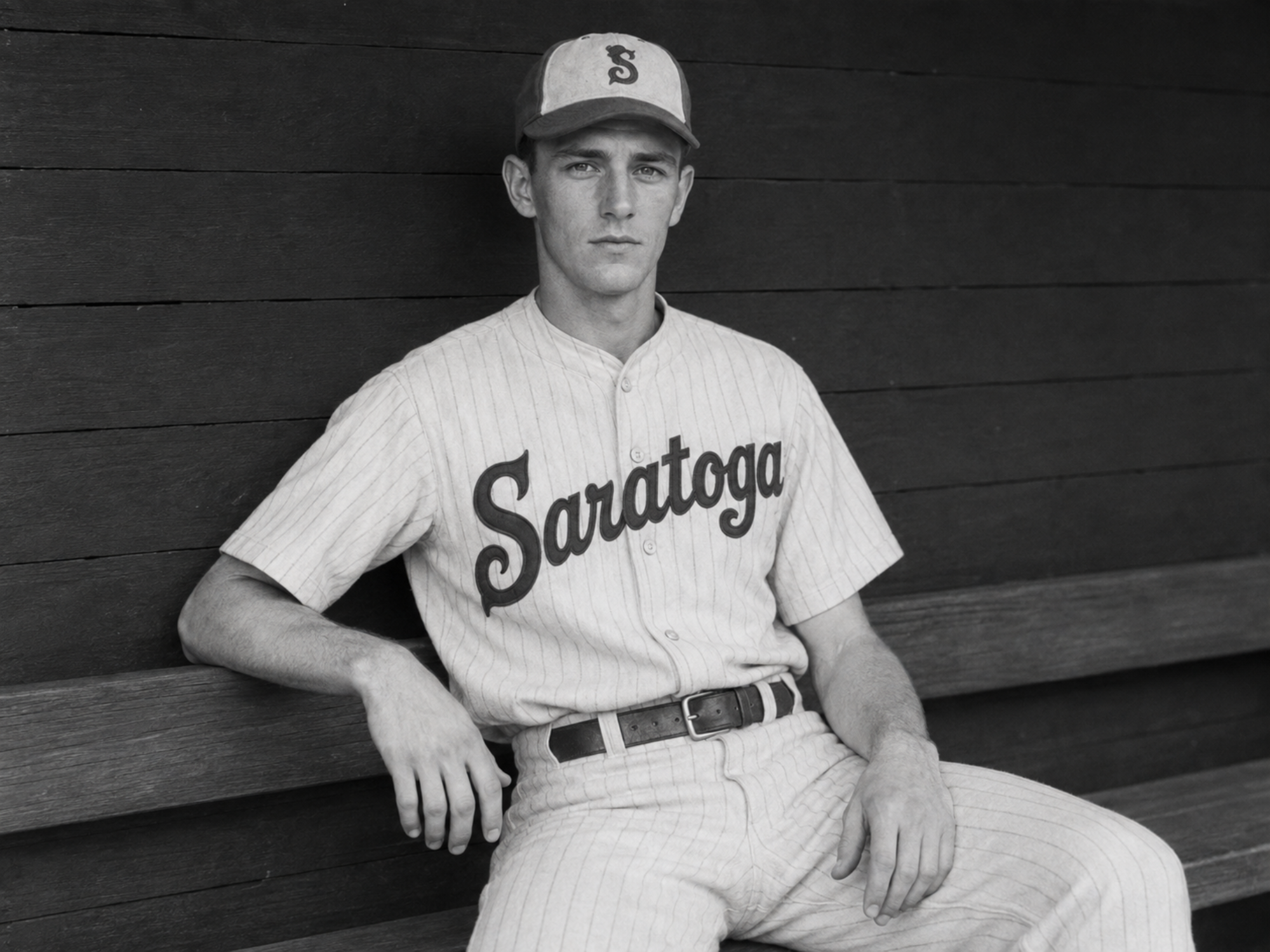
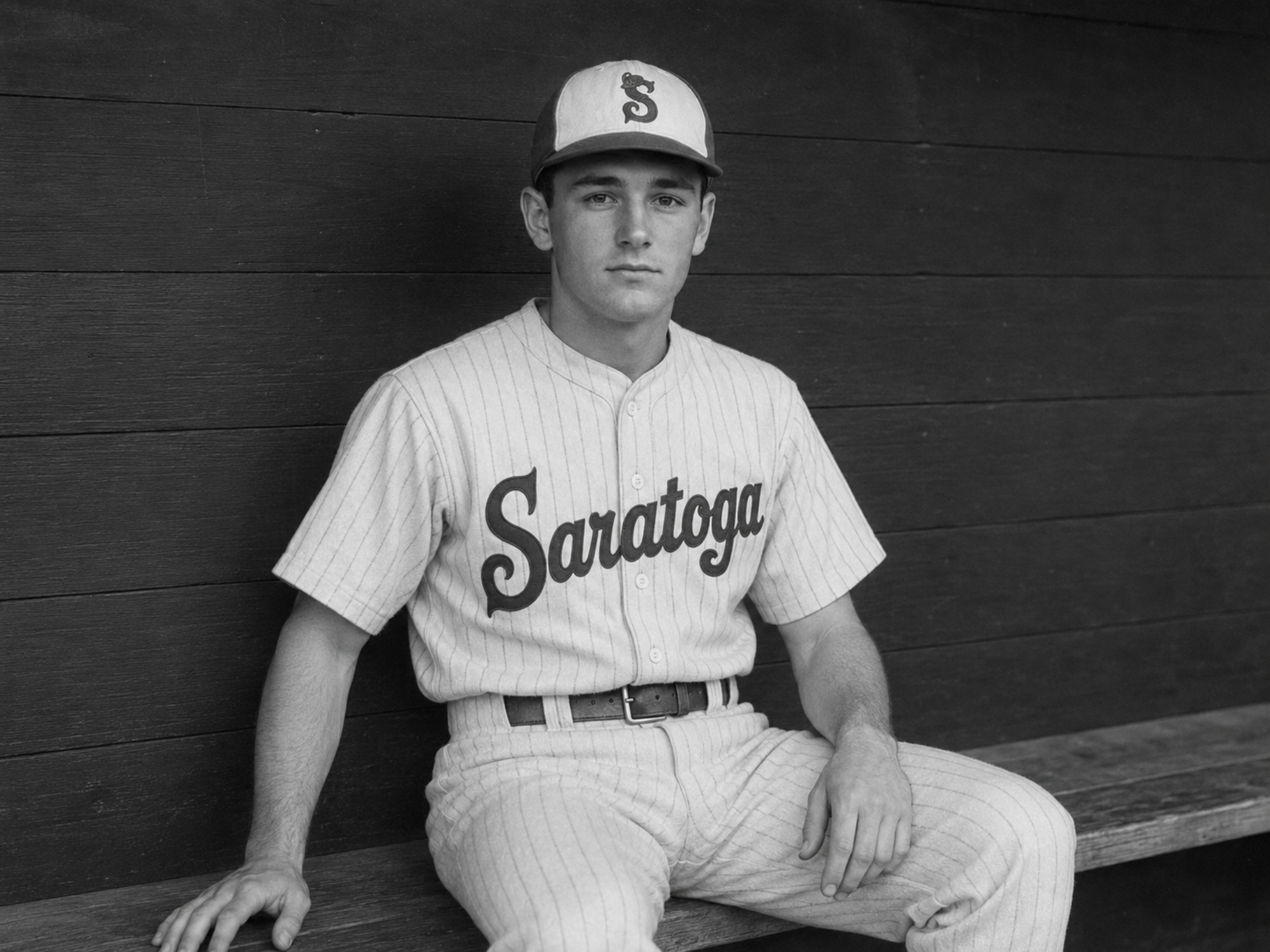
Tom Kelleher
Historical Photograph · c. 1932
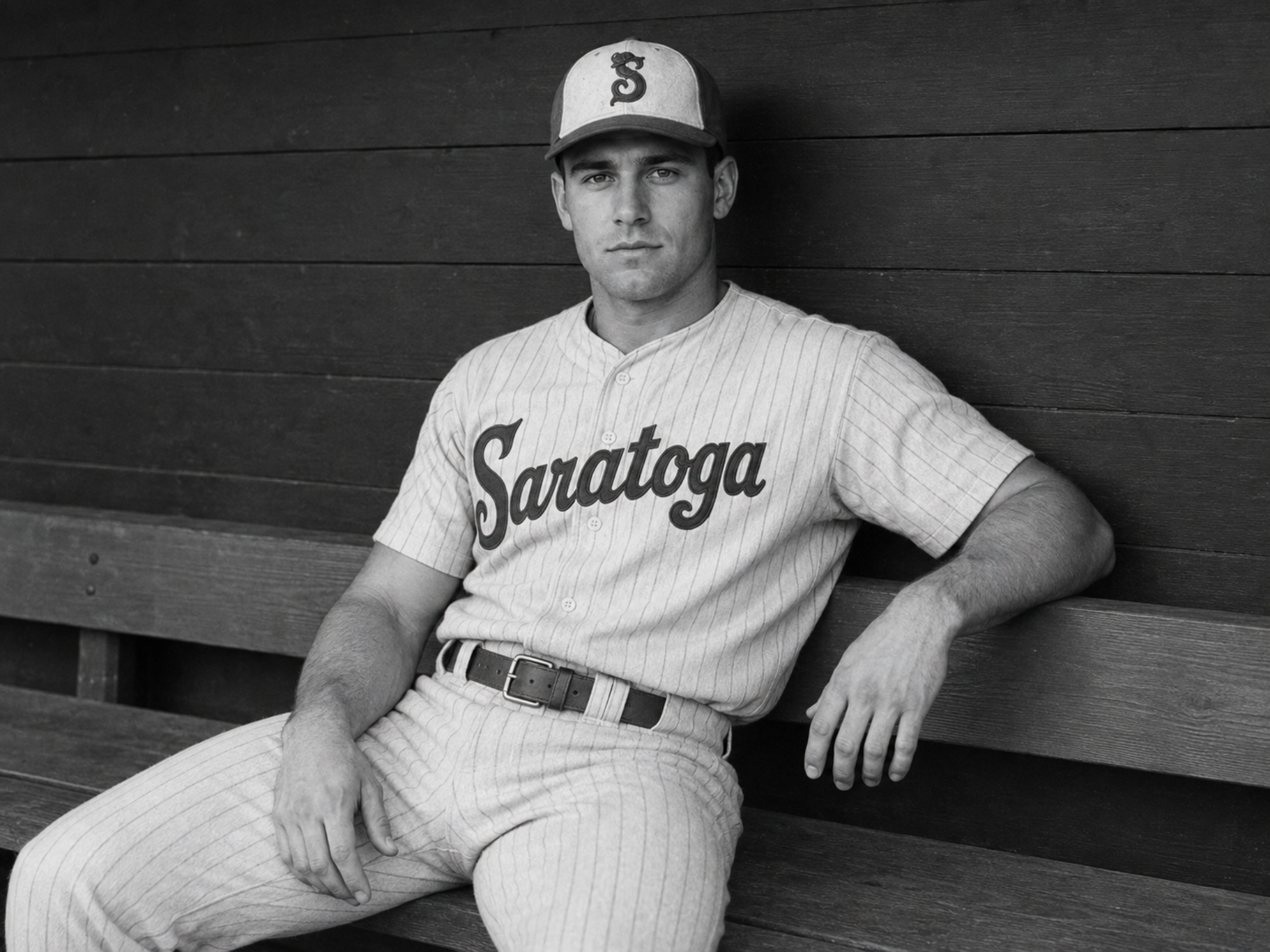
A durable catcher from Holy Cross, Kelleher became Mallory’s unofficial field lieutenant. He was usually assigned to the weaker pitching staff and therefore changed colors more often than any other regular.
-
![Sam Bell poses for his official Saratoga Springs Fascinators portrait sitting in the dugout of The Hatbox.]()
Sam Bell
Historical Photograph · c. 1932
Bell arrived from Colgate with a strong fastball and little command. After his dramatic improvement during August 1932, stories around the club credited Saratoga’s mineral water; Mallory credited regular work.
-
![Eddie Rowe poses for his official Saratoga Springs Fascinators portrait sitting in the dugout of The Hatbox.]()
Eddie Rowe
Historical Photograph · c. 1935
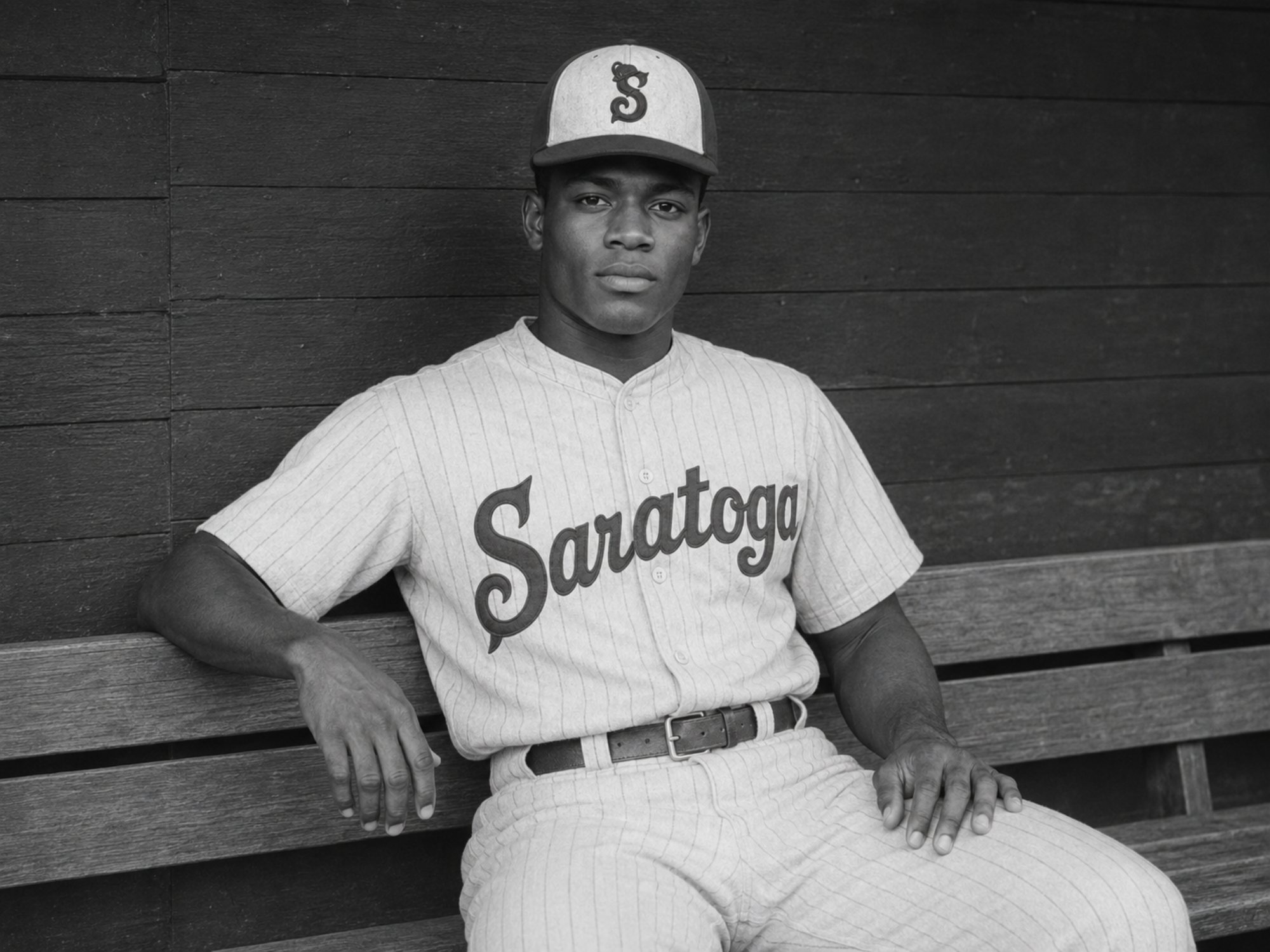
The Penn State shortstop led the club in total appearances during the 1934 and 1935 seasons. He was equally popular with scouts and the Skidmore scoring table because he played quickly and disputed nothing.
-
![Nat Price poses for his official Saratoga Springs Fascinators portrait sitting in the dugout of The Hatbox.]()
Nat Price
Historical Photograph · c. 1936
Price joined the club from Howard University in 1936 and became one of its most dangerous left-handed batters. The Fascinators’ independent structure allowed Devereux and Mallory to recruit beyond the restrictions of organized professional baseball.
-
![Frank Donnelly poses for his official Saratoga Springs Fascinators portrait sitting in the dugout of The Hatbox.]()
Frank Donnelly
Historical Photograph · c. 1938
Donnelly’s ability to pitch for one squad and play first base for the other made him an ideal Fascinator. In surviving club photographs, the Manhattan College player appears nearly as often in Red as in White pinstripes.
-
![Skidmore students and graduates work at reservation desks and scorebooks inside The Hatbox office.]()
Hatbox Office Staff
Historical Photograph · c. 1930s
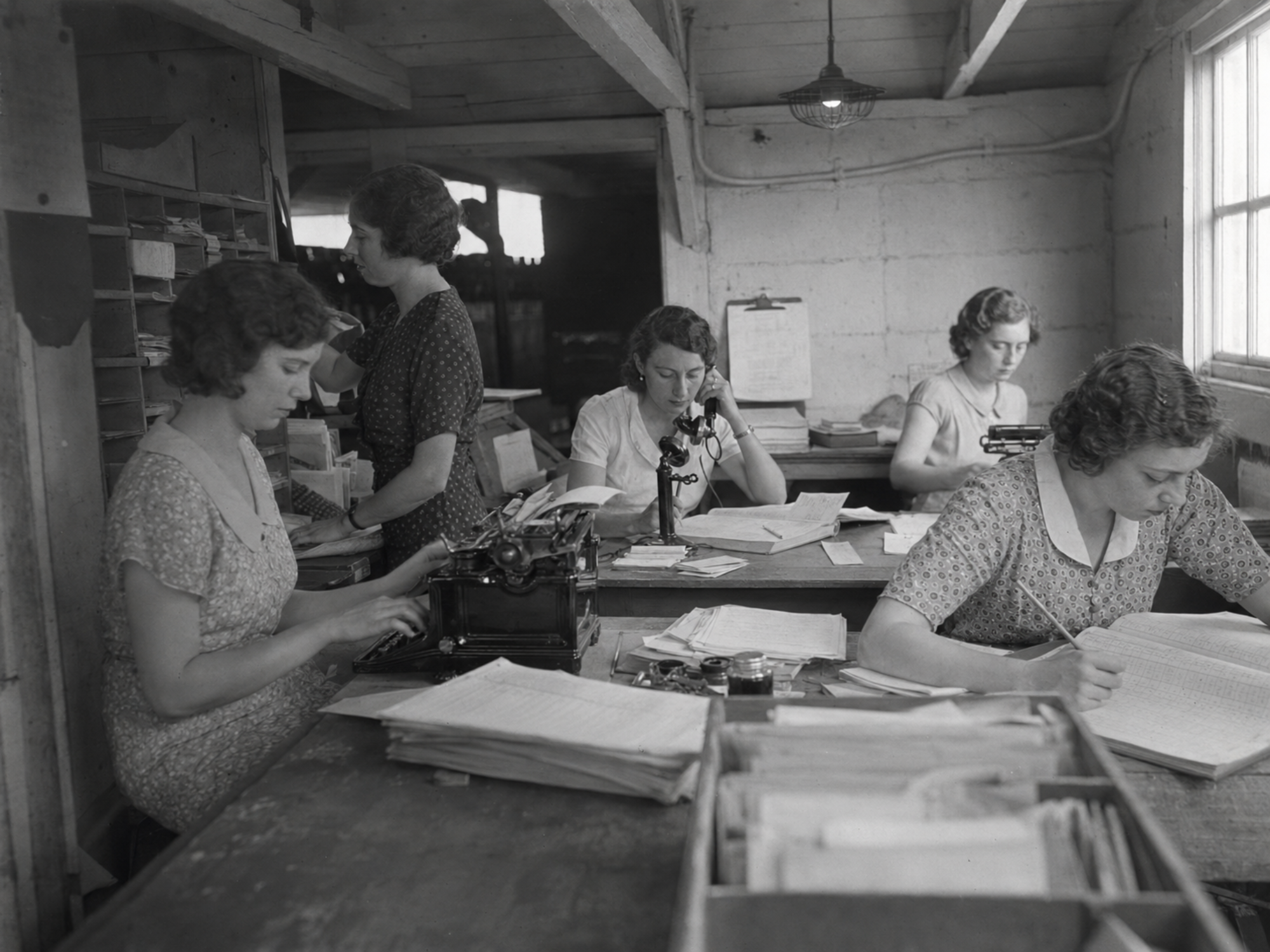
Skidmore students and graduates manage reservations, correspondence, accounts, lineup cards and official scorebooks from the office beneath the grandstand. Their work brought order to an operation whose starting time followed the Race Course and whose player assignments changed nightly.
-
![Two Fascinators bat boys in white pinstriped uniforms sit together on the dugout bench beside bats and equipment.]()
Fascinators Bat Boys
Historical Photograph · c. 1930s
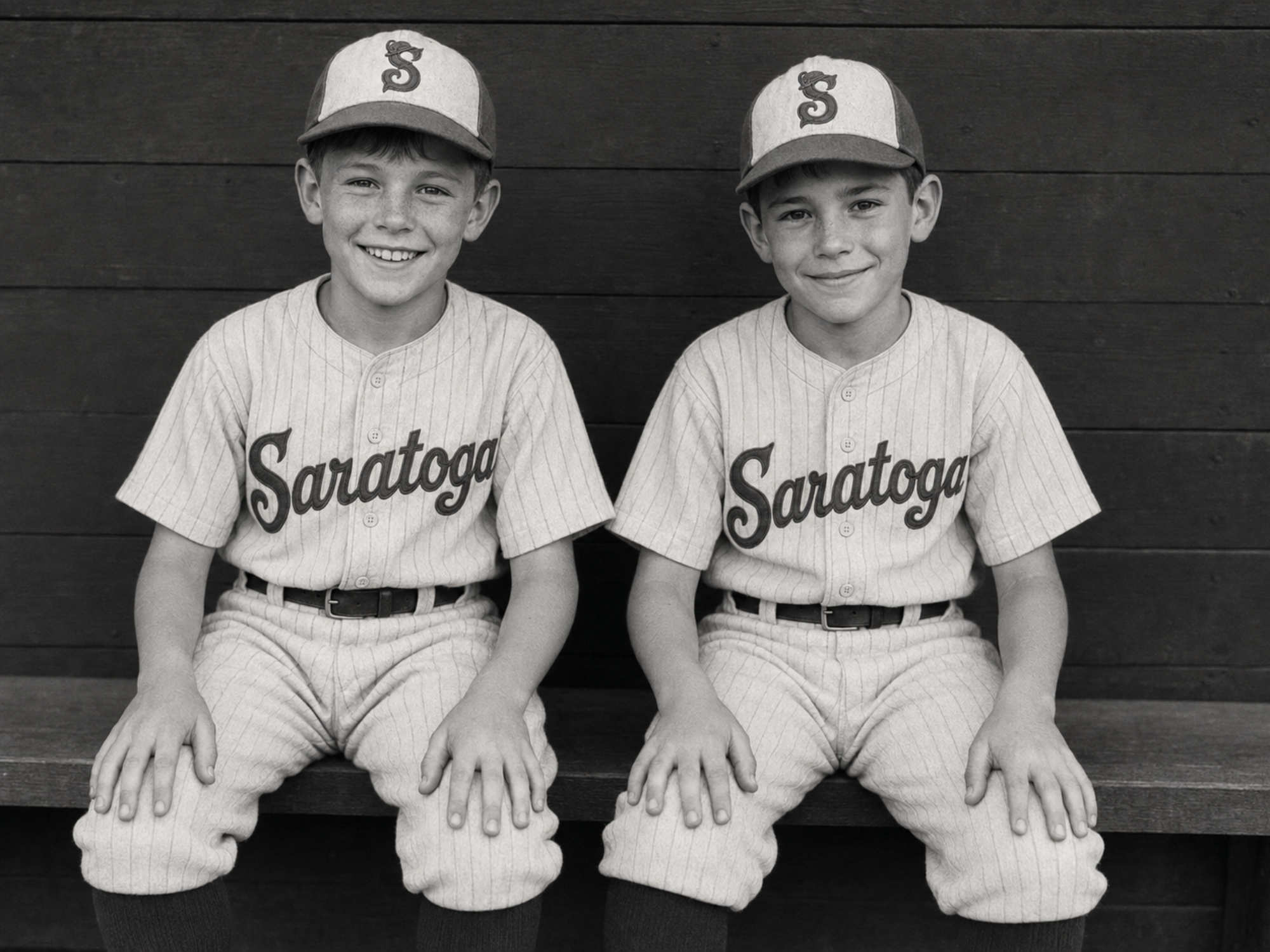
Two bat boys pose for their official team portrait in the dugout at The Hatbox. Wearing scaled-down versions of the White uniform, they gathered bats, carried equipment and kept baseballs ready for the evening’s game.


VII · FINAL YEARS
The Institution Did Not Travel
The Hatbox lasted through the summer of 1940. The Fascinators continued for two seasons afterward, but the essential institution had already disappeared.
By then, the value of the land had changed. New York’s adoption of pari-mutuel wagering and local interest in a permanent harness-racing facility gave the Jefferson Street and Crescent Avenue property a future that no seasonal ballpark could withstand. Plans for Saratoga Raceway moved quickly.
The Fascinators’ final game at The Hatbox followed the last card of the 1940 thoroughbred season. There was no ceremonial opponent. Red played White. Former players filled both benches. Vredenburgh kept to the usual supper card and Hatbox Cups rather than prepare a commemorative menu. Mallory declined to make a speech before the game.
The White squad won in the ninth inning.
During the months that followed, the grandstand was dismantled and the field disappeared beneath construction of the new harness track. Saratoga Raceway opened in June 1941 with night racing and pari-mutuel wagering. The new attraction occupied the same ground and, in a different form, the same evening hours Devereux had identified thirteen years earlier.
The Fascinators attempted to continue at Recreation Field in 1941 and 1942. The baseball remained credible, but the institution did not travel. There was no covered dining gallery, no Hatbox kitchen, no familiar entrance walk and none of the simple elegance the old park had provided. Attendance fell. Wartime travel restrictions and the declining availability of college players made the model more difficult to sustain.
The club suspended operations before the 1943 season.
Devereux insisted that the suspension was temporary. Mallory did not. After the war, several former players and supporters discussed a revival, but the essential site was gone. Rebuilding elsewhere would have produced another ball club with the same name. It would not have restored the Fascinators.
Legacy
The Saratoga Springs Fascinators left behind no league pennant and no record against rival clubs. Their legacy was The Hatbox itself: a summer ball club shaped entirely by the town that sustained it.
The Race Course determined the schedule. Saratoga’s hotels supplied the standards of hospitality. Local kitchens, racing customs and the city’s summer social life gave the club its character. Skidmore women managed design, accounting, scoring and hotel coordination, while varied admission prices ensured that The Hatbox remained more than a supper club for resort guests. Each element belonged to Saratoga. Together, they created an institution that could have existed nowhere else.
For thirteen summers at The Hatbox, the Fascinators occupied a precise place in the rhythm of the city. The races ended, Broadway filled and the crowd moved toward The Hatbox for supper and baseball in the fading light. The club did not compete with Saratoga’s other attractions. It connected them.
The ballpark eventually gave way to another racetrack, an ending that returned the property to the world from which the Fascinators had emerged. What endured were photographs of the red-and-white awnings, the shared cap and the promise that had defined every evening:
After the last race, first pitch.
Collection Study
-
![Eight weathered Hatbox lantern figures in alternating White and Red uniforms are preserved in a museum display case.]()
The Hatbox Lawn Jockeys
Museum Display · c. 1928
These cast figures once stood along the exterior of The Hatbox, alternating between White and Red uniforms while holding lanterns toward the entrance walk. Removed before the grandstand was dismantled, the surviving examples have been restored to showcase their original hand-painted details.
-
![The preserved wooden entrance sign from The Hatbox is mounted on a museum wall.]()
The Hatbox Entrance Sign
Museum Display · c. 1928
Workers removed the wooden entrance sign before the grandstand was dismantled. Its painted surface, mounting holes and weathered lower edge make it the largest surviving object from The Hatbox and the clearest physical record of the building’s name.
-
![A preserved “Follow Me to The Hatbox” cloth banner and a historical winner’s-circle photograph are displayed in a museum case.]()
Follow Me to The Hatbox
Museum Display · c. 1930s
Carried by a mounted jockey during winner’s-circle appearances, the hand-painted banner linked the afternoon race card directly to the evening at The Hatbox. Faded lettering, softened hems and old mounting points preserve the modest construction of an object intended to be seen briefly, photographed and reused.
-
![Preserved White and Red wooden player-name slats from The Hatbox lineup board are arranged in a museum display.]()
White and Red Lineup Slats
Museum Display · c. 1930s
These painted wooden slats carried player names beneath the White and Red headings on the entrance lineup board. Nail holes, erased positions and successive layers of lettering record how frequently the assignments changed during a single summer.
-
![The preserved “No Favorite Is Safe Here” wooden sign is illuminated inside a museum display case.]()
Shared Players’ Passage Sign
Museum Display · c. 1928
The painted wooden sign originally hung above the passage connecting the shared clubhouse to the field. Its racing language reflected Saratoga, while its placement expressed Mallory’s conviction that White and Red began each game on equal terms.
-
![Twelve preserved red-and-cream Fascinators player and employee sleeve patches are arranged in a museum case.]()
The Fascinators Patch Collection
Museum Display · 1928–1940
Variations of the racing-silk diamond distinguished players from the ushers, kitchen workers, office staff and other employees who operated The Hatbox. Differences in striping, monograms and construction trace the mark’s development, while clipped threads and needle holes identify patches removed from working uniforms.
ARCHIVAL RECORD
Saratoga Springs Fascinators
Complete Club Register Entry
The following entry consolidates the known organizational, competitive and material record of the Saratoga Springs Fascinators. It is preserved as supporting documentation for Gallery 001.
Club Record
| Club | Saratoga Springs Fascinators Baseball Club |
|---|---|
| Location | Saratoga Springs, New York |
| Established | 1928 |
| Years Active | 1928–1942 |
| Hatbox Seasons | 1928–1940 |
| Recreation Field Seasons | 1941–1942 |
| Operations Suspended | 1943 |
| Classification | Independent collegiate summer club |
| Club Type | Resort club operating during the Saratoga thoroughbred racing season |
| League | None |
| Format | Two internally selected squads operating under one club name |
| Squads | White and Red |
| Outside Opponents | None; games matched White and Red squads drawn from the shared roster |
| League Titles | None; the club did not participate in league competition |
| Home Park | The Hatbox, 1928–1940; Recreation Field, 1941–1942 |
| Ballpark Capacity | Approximately 2,700 seated; more than 3,400 with standing room |
| Club Colors | Saratoga red and white |
| White Squad Uniform | White flannel with narrow red pinstripes and red Saratoga script |
| Red Squad Uniform | Solid red flannel with compact white SARATOGA lettering |
| Travel Uniform | None; the Fascinators played exclusively in Saratoga Springs |
| Cap | Four-panel wool cap with white front and rear panels, red side panels and red bill |
| Primary Cap Mark | Broad red S topped by a tilted cloche, flower and narrow fascinator loop |
| Uniform Mark | Red-and-white SSF racing-silk diamond, worn by the Red squad only |
| Primary Club Emblem | SSF racing-silk diamond |
| Official Mascot | None |
| Common Shortened Name | The Fascinators |
| Informal Nickname | The Hatbox Club |
| Club Motto | After the last race, first pitch. |
| Clubhouse Sign | No Favorite Is Safe Here. |
| First Pitch | Fifteen minutes after final post |
| Signature Food | Saratoga chips |
| Signature Drink | Hatbox Cup |
| Cap Mark Adopted | 1928 |
| SSF Patch Adopted | 1929 |
| Motto First Used | 1928 hotel cards and opening-season newspaper notices |
| Founder and President | Julian P. “Jules” Devereux |
| Manager | Charles “Red” Mallory |
| Hospitality Director | Eleanor “Nell” Vredenburgh |
| Official Scorer | Ruth Van Arsdale |
| Final Hatbox Game | 1940, following the final race card of the season |
| Final Season | 1942 |
| Recordkeeping Note | Official statistics followed individual players across changing White and Red assignments; the club maintained no season-long squad standings |
The Hatbox
Complete Park and Field Record
This building record documents the known dimensions, capacity, public facilities, field features and operating spaces of The Hatbox during its principal period of use.
| Ballpark | The Hatbox |
|---|---|
| Location | Near Jefferson Street and Crescent Avenue, Saratoga Springs |
| Setting | Resort ballpark southeast of downtown Saratoga Springs, close enough to receive the post-race crowd |
| Opened | 1928 racing season |
| Final Season | 1940 |
| Surface | Natural grass |
| Left Field | 320 feet |
| Center Field | 386 feet |
| Right Field | 308 feet |
| Foul Poles | Red-and-white finish-post pattern with small gold ball finials |
| Lighting | None; all games were played in late-afternoon and early-evening daylight |
| Construction | Enclosed red-brick lower level supporting an open, timber-framed upper grandstand and dining gallery beneath a deep roof |
| Primary Grandstand | Curved horseshoe-shaped structure behind home plate extending nearly to both foul poles |
| Exterior Finish | Cream-painted stucco, pointed timber railings and red-and-white canvas awnings along the upper gallery |
| Conventional Grandstand Seating | Approximately 1,900 |
| Supper Club Seating | 90 four-person tables; approximately 360 seats |
| Bleacher Seating | Approximately 440 |
| Total Seated Capacity | Approximately 2,700 |
| Largest Crowds | More than 3,400, with standing room along the foul-line rails and outfield ropes |
| General Admission | 35¢ |
| Reserved Grandstand | 55¢ |
| Children | 15¢ |
| Supper Club Seat | $1.25, including admission, Saratoga chips and a combined supper-and-score card; meals and drinks ordered separately |
| Dry Hatbox Cup | 20¢ |
| Gin Hatbox Cup | 35¢ after repeal |
| Typical Supper Prices | Roast beef sandwich 40¢; cold chicken plate 55¢; lake trout 65¢; summer salad 20¢; shortcake 25¢; coffee 10¢; mineral water 10¢ |
| Public Restrooms | Four within the brick lower level: two women’s rooms and two men’s rooms |
| Public Amenities | Three drinking fountains, two pay telephones, first-aid room, coat and parcel check, lost-and-found desk and hotel-shuttle board |
| Kitchen | Full working kitchen in the brick level beneath the third-base section, with cast-iron ranges, preparation tables, dish stations and a broad service pass overlooking the field |
| Shared Clubhouse | Located beneath the third-base grandstand, with open lockers, showers, training table and movable player nameplates |
| Manager’s Office | Small room adjoining the clubhouse with roster board, desk, telephone and individual player ledger |
| Players’ Passage | Shared tunnel connecting the clubhouse to the field beneath the sign No Favorite Is Safe Here |
| Lineup Board | Movable White and Red name slats displayed in the entrance concourse |
| Entrance Feature | Gabled central entrance beneath THE HATBOX sign, approached by lawn-jockey lantern figures painted in alternating Fascinators uniforms |
| Signature Food | Saratoga chips served at every supper table |
| Signature Drink | Hatbox Cup made with lime, raspberry syrup and sparkling mineral water; dry gin optional after 1933 |
| Closure | Dismantled after the 1940 season for construction of Saratoga Raceway |
| Successor on Site | Saratoga Raceway, opened June 1941 |
MUSEUM SHOP · GALLERY 001
Take a Piece of the Exhibition Home
Coming soon.